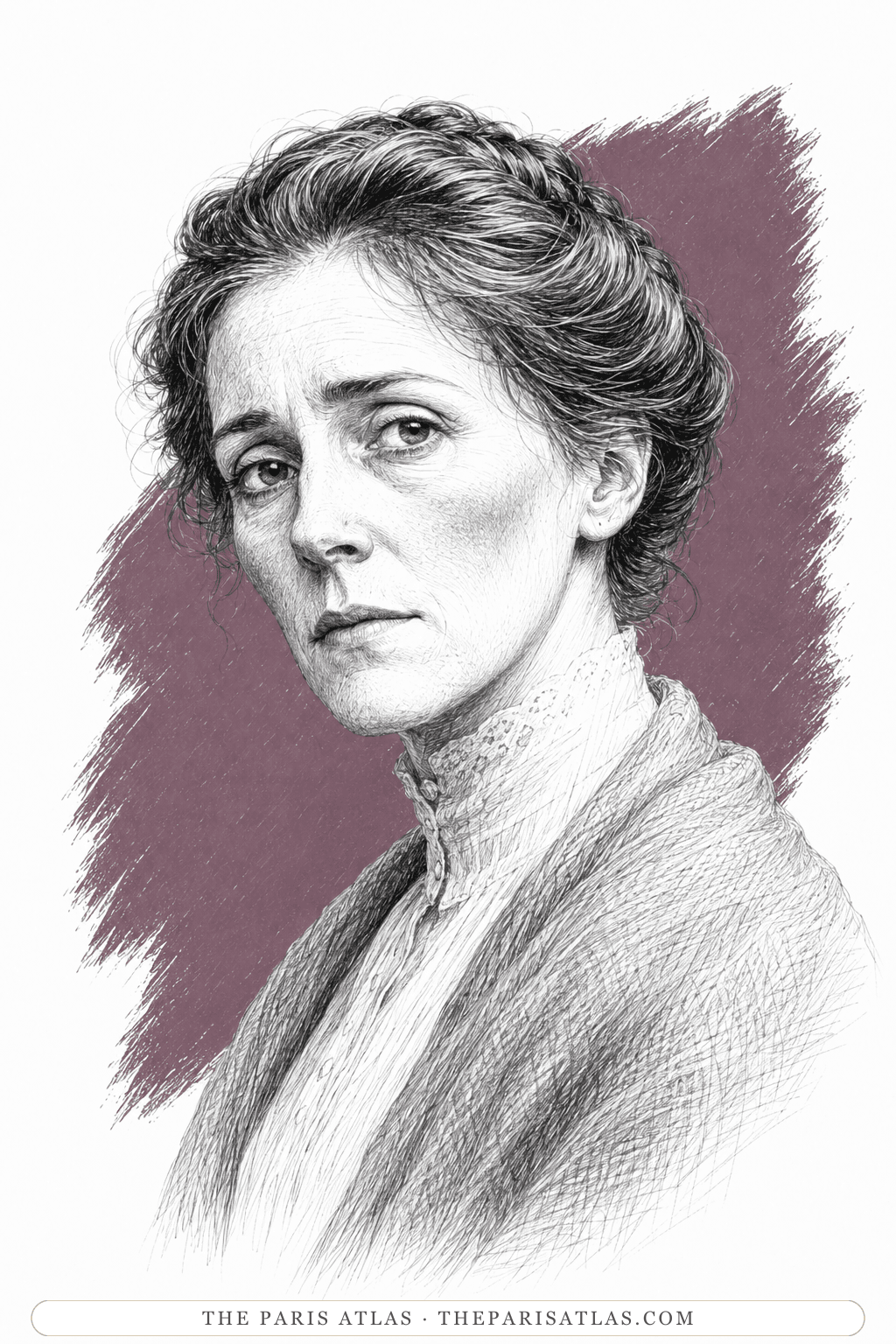
Mrs Comstock
Gordon and Julia's mother: faded, nervy and delicate, a music teacher before her marriage who had sat on comfortless piano stools in draughty drawing-rooms. She and Julia refused to let Gordon leave school, and she was already coughing and bringing up blood while the fees were being found. Gordon's private accounting of it is that his mother killed herself to keep him there.
To keep Gordon at school to the end. She and Julia decide they would sooner go to the workhouse than take him out early, and they spend the money that would have set Julia up in business.
The book

At a glance
- Gordon and Julia's mother; dead before the novel's present day
- Music teacher before her marriage, and piano lessons at two shillings an hour after it
- Weak lungs; warned by a doctor to avoid fatigue and did not
- 1922, with about two hundred pounds
- When Gordon was twenty-four
- Chapter 3, in the family history
Who they are in the book
Spoiler-freeMrs Comstock is the mother of Gordon Comstock, the poet whose year is followed in Keep the Aspidistra Flying, the novel George Orwell published in 1936, and of Gordon's older sister Julia. She is dead before the novel's present day and appears entirely in the chapter that sets out how the family got to where it is.
She was a music teacher before she married, and she went back to giving piano lessons whenever money ran short, which was often. Orwell describes her as faded, nervy and delicate, and adds the detail that mattered: her lungs were none too strong. The family lived in Acton and she went out to teach in other people's houses at two shillings an hour, sitting on comfortless piano stools in draughty drawing rooms.
Her husband died in 1922 and left about two hundred pounds. The sensible thing, at that point, was to take seventeen-year-old Gordon out of his expensive school, put him to work, and give the money to Julia so she could open a teashop of her own. Mrs Comstock would not hear of it. She and Julia agreed they would go to the workhouse before they would let Gordon leave school before eighteen, and more than half the two hundred pounds went on the school fees.
The doctor who had attended her husband listened to her chest, looked serious, and told her to keep warm, eat well and above all avoid getting tired. She went on teaching. Julia knew what the doctor had said. Gordon was not told.
How Mrs Comstock Is Portrayed
- The piano lessonsTwo shillings an hour, given in other people's houses around Acton, walking there and back in all weathers. Orwell keeps returning to the same two details: the comfortless piano stools and the draughty drawing rooms.
- The word the family used about herDelicate, said in the way families say it to avoid saying anything worse. Orwell also calls her faded and nervy. By the time her husband died her lungs had gone past delicate, and the doctor said so.
- The secret between the two womenJulia knew the doctor's warning and her mother knew, and the two of them kept it from Gordon carefully. He was seventeen and had no idea that the school fees were costing her anything more than money.
- The night at the supper tableGordon refused a job his uncle had lined up for him and there were three days of family rows. On the third day, in the middle of supper, his mother was seized by a violent fit of coughing, put her hand to her chest, fell forward, and began bleeding at the mouth. She lay near death for several days. It was the walking about in all weathers, Orwell says, that had done it.
- What Gordon took from itHe stopped arguing and took the job in the red lead firm at twenty-five shillings a week, and stayed there six years. He did not know the doctor's warning, but he half worked it out for himself, and the way he put it privately was that his mother had killed herself to pay his school fees.
- The end of itShe recovered enough to give occasional lessons again after the family moved to a flat in Paddington. Gordon was twenty-four when she died. Four months later he walked out of his job without giving the firm any reason.
If you like Keep the Aspidistra Flying


If you like George Orwell
Explore authors with a similar voice, perspective, and influence.

Henry Miller
The Brooklyn dropout who arrived in Paris broke at thirty-eight and wrote the exuberant, banned books that ended American censorship.
View author
Louis-Ferdinand Céline
The doctor of the Paris slums who wrote the century's blackest, funniest novel — and changed the sound of French prose.
View author
Simone de Beauvoir
French writer and philosopher whose novels, memoirs, and social analysis examined freedom, gender, responsibility, aging, and the material conditions that shape a life.
View author