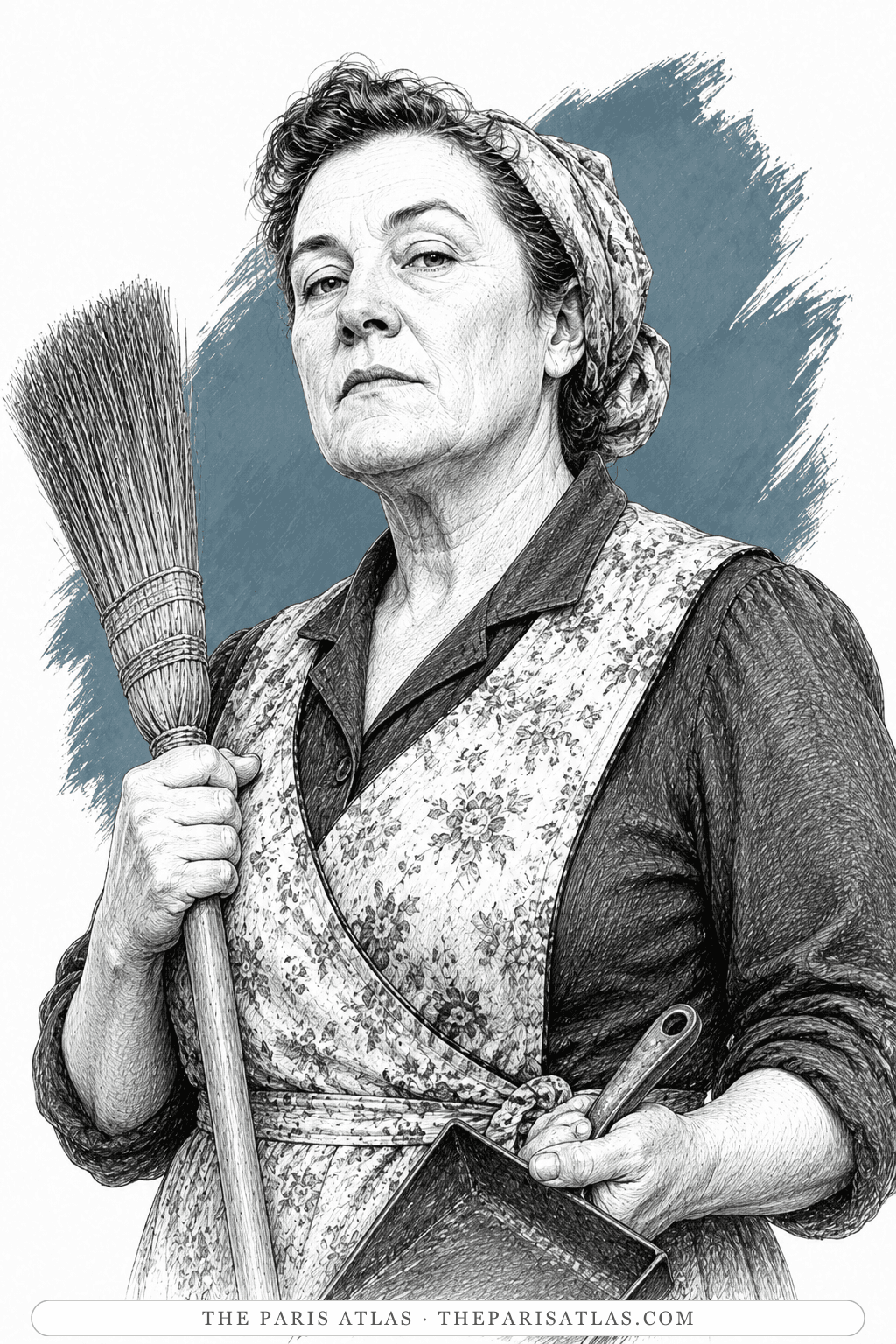
Mrs Beaver
Ravelston's charwoman, who arrives at eight with the Telegraph and the Herald and has seen through Gordon Comstock as thoroughly as everyone else who comes to the flat. Her favourite move is to rout him out of the sitting room with broom and pan, announcing that she has got to do this room out, if you please.
To get the rooms done. She says so out loud every time she finds Gordon sitting in one.
The book

At a glance
- The charwoman at Philip Ravelston's flat
- Arrives at eight each morning
- The Telegraph and the Herald
- Chapter 9, during the week Gordon stays at the flat
Who they are in the book
Spoiler-freeMrs Beaver cleans Philip Ravelston's flat in Keep the Aspidistra Flying, the novel George Orwell published in 1936. A charwoman was a woman paid by the hour to do the housework, coming in daily rather than living in, and hers is the only paid help Ravelston keeps. He is rich and edits a socialist magazine, and he lives in a small flat without servants partly on principle, which is a decision Mrs Beaver has to work around every morning.
She arrives at eight. Ravelston believes he gets up at seven, an hour he thinks of as properly working class, but Orwell notes drily that he rarely stirs until she is in the building.
She matters because of how she treats Gordon Comstock, the broke poet at the centre of the book, during the week he spends sleeping at the flat with nowhere else to go. Everyone else at the flat is polite to him. Mrs Beaver has worked out exactly what he is and does not trouble to hide it.
How Mrs Beaver Is Portrayed
- The eight o'clock arrivalShe lets herself in at eight and brings the morning papers up, the Telegraph and the Herald. Ravelston's day does not really begin until she is there.
- The morning after the arrestGordon has spent a night in the cells and is terrified it has reached the newspapers. Mrs Beaver brings the usual two papers up and Ravelston sends her straight back out for the Mail and the Express, and the two men go through the police-court columns. Nothing. She is not told why she was sent.
- What she thinks Gordon isShe has seen his type before: another good-for-nothing young writing gentleman sponging on poor Mr Ravelston. Orwell says she has seen through him, and she is not wrong. Gordon is living there for nothing and has stopped looking for work.
- The broom and panHer method of making a guest uncomfortable is to appear in whichever room he has settled in, cleaning equipment in hand: "Now, Mr Comstock, I've got to do this room out, IF you please." It works every time.
If you like Keep the Aspidistra Flying


If you like George Orwell
Explore authors with a similar voice, perspective, and influence.

Henry Miller
The Brooklyn dropout who arrived in Paris broke at thirty-eight and wrote the exuberant, banned books that ended American censorship.
View author
Louis-Ferdinand Céline
The doctor of the Paris slums who wrote the century's blackest, funniest novel — and changed the sound of French prose.
View author
Simone de Beauvoir
French writer and philosopher whose novels, memoirs, and social analysis examined freedom, gender, responsibility, aging, and the material conditions that shape a life.
View author