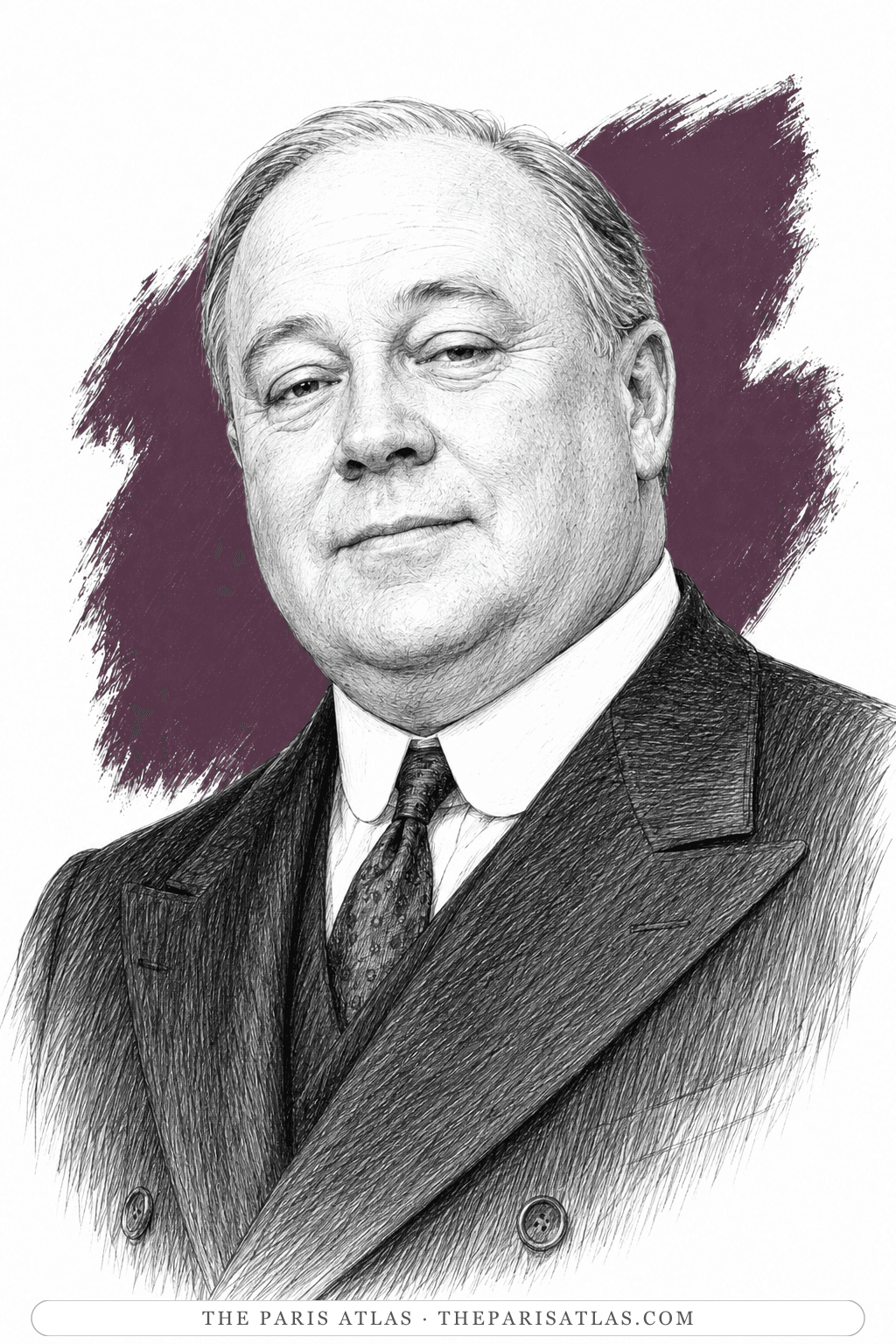
Mr Erskine
Managing director of the New Albion Publicity Company: a large, slow-moving man who says "Hm, hm, hm" instead of listening, moves Gordon to the copywriting side because the agency is short of people who can write, and tells him as he leaves that there will be a job waiting if he ever wants one.
People who can write. He promotes Gordon once word gets round that there is a poet in the accounts department, and in the interview when Gordon resigns tells him to come back any time, because the firm can do with his sort.
The book

At a glance
- Managing director of the New Albion Publicity Company, Gordon's old employer
- A small rising advertising agency; posters, cosmetics, and small ads in twopenny weeklies
- Three pounds a week as a clerk, raised by ten shillings after the deodorant campaign
- Slow speech, no expression, and "Hm, hm, hm" in place of listening
- Chapter 3, in the account of Gordon's advertising years, and by report afterwards
Who they are in the book
Spoiler-freeMr Erskine runs the New Albion Publicity Company, a London advertising agency, in George Orwell's 1936 novel Keep the Aspidistra Flying. He is the boss Gordon Comstock walked out on. Gordon is the poet the novel follows, and by the time the book opens he is selling second-hand books for two pounds a week, having deliberately given up an advertising job that was about to make him comfortable.
Orwell describes Erskine as a large, slow-moving man with a broad, healthy, expressionless face, and says that from his appearance and the slowness of his speech you would guess he had something to do with agriculture or cattle-breeding. His wits are as slow as his movements. He is the kind of man who never hears about anything until everybody else has stopped talking about it. How he came to be running an advertising agency, Orwell writes, only the strange gods of capitalism know.
Being slow turns out to be an advantage in one respect. Erskine is too slow to pick up other people's prejudices, so he judges people on what they can actually do, and he is very good at hiring as a result. He is the man who spots Gordon, and he is also the reason Gordon can never quite get away from the advertising business.
How Mr Erskine Is Portrayed
- The interview where he does not listenWord gets round the office that a clerk has had a poem printed in a magazine. Erskine sends for Gordon, looks at him sideways in a sleepy way and asks a string of questions without waiting for the answers, punctuating each one with a noise like "Hm, hm, hm." "Poetry? Hm. A bit difficult, that must be. Getting the lines the same length, and all that."
- The promotionHe is not shocked that Gordon writes poetry; he is vaguely impressed, because the agency is always short of people who can think up slogans. He moves Gordon out of the accounts department and makes him secretary, in practice apprentice, to the head copywriter. The wages stay at three pounds a week for the moment, and go up by ten shillings once Gordon's first campaign lands.
- How he takes a resignationHe does not want Gordon to leave and says so frankly. Orwell writes that with a sort of elephantine politeness he refrains from calling Gordon a young fool. He asks the reason and gets a mumbled answer about wanting to go in for writing. "Poetry, eh? Hm. Poetry? Make a living out of that sort of thing, do you think?"
- The sentence Gordon cannot get rid of"If you want a job any time, come back to us. I dare say we could find room for you. We can do with your sort here. Don't forget." Gordon leaves feeling ungrateful, and the offer stays in his head for the next two years. He describes the agency to himself afterwards as a doom behind him and in front of him at once.
- The kindness that is not a strategyNothing Erskine does to Gordon is calculated. Orwell says plainly that he is genuinely kind and quite a likeable person, and that he lacks the sniffish, buttoned-up spirit that usually goes with the ability to make money.
Rosemary Waterlow, Gordon's girlfriend, still works at the New Albion, and late in the novel she asks for a few minutes with the managing director and pleads Gordon's case. Erskine says trade is bad and they cannot afford new staff, then remembers what he told Gordon and agrees to find him a job. Rosemary was in real fear of being sacked for asking, and does not tell Gordon that part. Gordon is furious that she went behind his back.
He takes the job in the end, at four pounds ten a week, and admits to himself that Erskine's offer was always going to be accepted. By then the head copywriter he trained under has left the firm and been replaced by a Canadian called Warner, and Gordon's first assignment back is a slogan for the same deodorant he was writing about six years earlier.
If you like Keep the Aspidistra Flying


If you like George Orwell
Explore authors with a similar voice, perspective, and influence.

Henry Miller
The Brooklyn dropout who arrived in Paris broke at thirty-eight and wrote the exuberant, banned books that ended American censorship.
View author
Louis-Ferdinand Céline
The doctor of the Paris slums who wrote the century's blackest, funniest novel — and changed the sound of French prose.
View author
Simone de Beauvoir
French writer and philosopher whose novels, memoirs, and social analysis examined freedom, gender, responsibility, aging, and the material conditions that shape a life.
View author