Ko Ba Sein
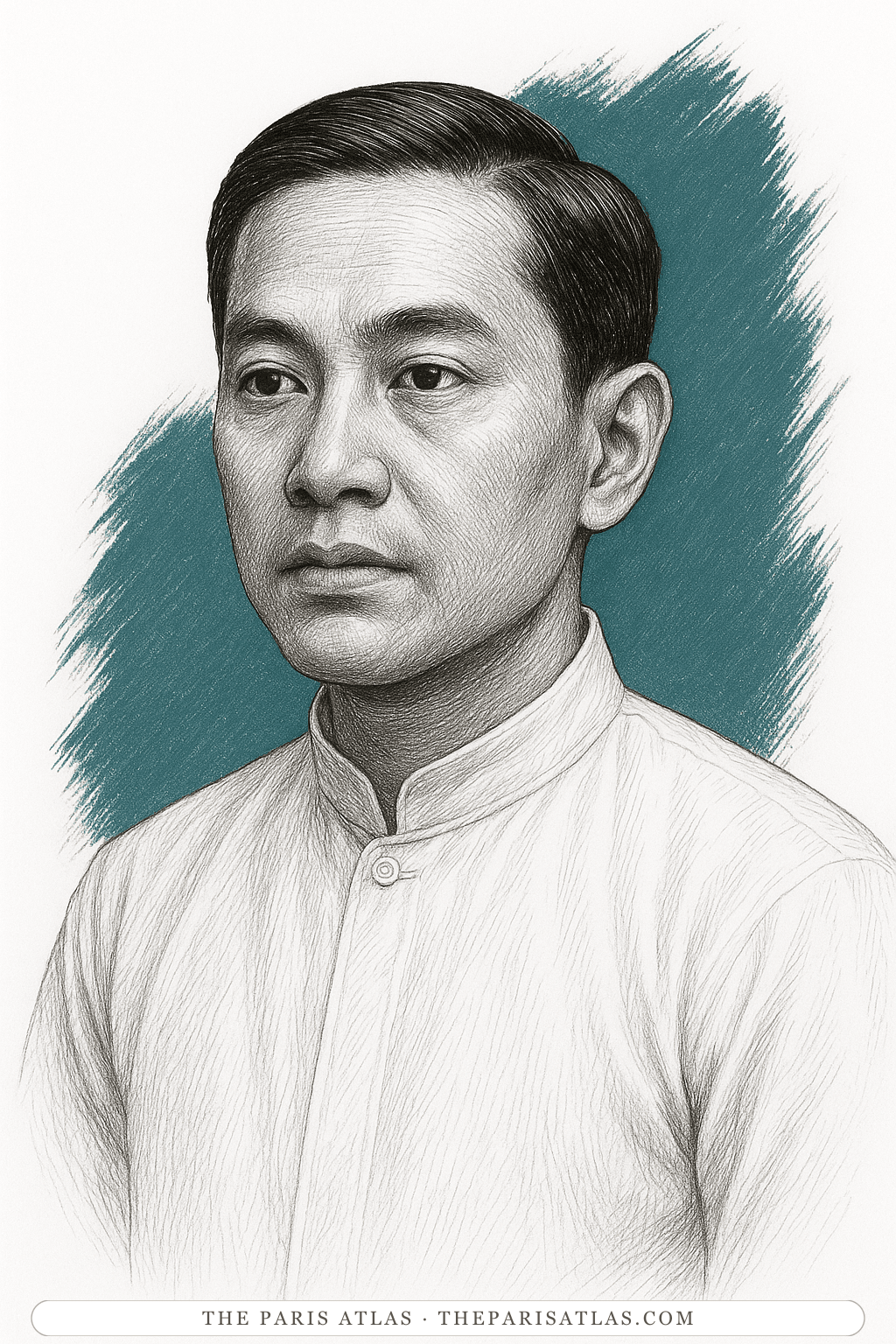
Head clerk of the Deputy Commissioner's office and U Po Kyin's most useful instrument: an erect, narrow-shouldered man with a curiously smooth face, trusted by Mr Macgregor with most of his official secrets.
To be on the winning side of whatever U Po Kyin is doing. He never proposes a scheme of his own that survives a minute's examination, and every scene he appears in is one where he asks a sensible question and is corrected.
The book

At a glance
- Head clerk of the Deputy Commissioner's office; U Po Kyin's chief agent
- Very tall for a Burman, erect, narrow-shouldered, smooth-faced
- Most of Mr Macgregor's official secrets
- Chapters 1, 20 and 23
Who they are in the book
Spoiler-freeBa Sein is very tall for a Burman, erect and narrow-shouldered, with a curiously smooth face that Orwell says recalls a coffee blancmange. He sits stiff and long-backed, bows angular as a jointed ruler, and seldom laughs. U Po Kyin's assessment of him is exact and unflattering: unimaginative and hardworking, an excellent clerk, and a useful tool.
His value is his position. As head clerk he has Mr Macgregor's confidence and most of his official secrets, which means he can report on the Deputy Commissioner's confidential correspondence — steamed open, read, and resealed — and can time U Po Kyin's anonymous letters to arrive when they will do most damage. He also supplies the paperwork: it is his apprentice clerk, Hla Pe, who writes the libellous newspaper article and then the eighteen letters, absenting himself from the office with a convenient attack of dysentery.
He is the practical objector in the conspiracy, and his objections are the reader's. He suggests arranging a mutiny in the jail and is told it is too dangerous and too expensive. He points out that it will be hard to prove disloyalty against a doctor who is famously loyal, and gets U Po Kyin's answer about how little proof matters. He asks how a white man can possibly be accused of anything, and is told that a white man is not accused, only caught.
How Ko Ba Sein Is Portrayed
- The faceCuriously smooth, recalling a coffee blancmange. He does not smile at U Po Kyin's jokes, does not laugh, and bows on leaving with a movement Orwell compares to a jointed ruler.
- Very tall, and very straightHe is unusually tall, erect and narrow-shouldered, and sits stiff and long-backed in whatever chair he is offered. The height and the stiffness are the whole of the physical idea.
- The steamed letterAsked whether Mr Macgregor has written confidentially to the Commissioner lately, he reports that one went two days ago and that when they steamed it open it was nothing of importance.
- The jail mutinyHis single strategic contribution: arrange a mutiny among the prisoners and the doctor, as superintendent, will be blamed. It is rejected as too dangerous — U Po Kyin does not want the warders firing rifles in all directions — and, decisively, too expensive.
- The newspaperHe brings in the copy of the Burmese Patriot with the libel against Mr Macgregor, produced by his own apprentice clerk, and it is he who is sent to make sure the Deputy Commissioner receives a copy.
- The grinWhen U Po Kyin whispers the final plan against Flory into his ear, a broad, unwilling, incredulous grin steals slowly across the face of the man who seldom laughs — and then even he bursts out laughing with the rest.
If you like Burmese Days


If you like George Orwell
Explore authors with a similar voice, perspective, and influence.

Henry Miller
The Brooklyn dropout who arrived in Paris broke at thirty-eight and wrote the exuberant, banned books that ended American censorship.
View author
Louis-Ferdinand Céline
The doctor of the Paris slums who wrote the century's blackest, funniest novel — and changed the sound of French prose.
View author
Simone de Beauvoir
French writer and philosopher whose novels, memoirs, and social analysis examined freedom, gender, responsibility, aging, and the material conditions that shape a life.
View author