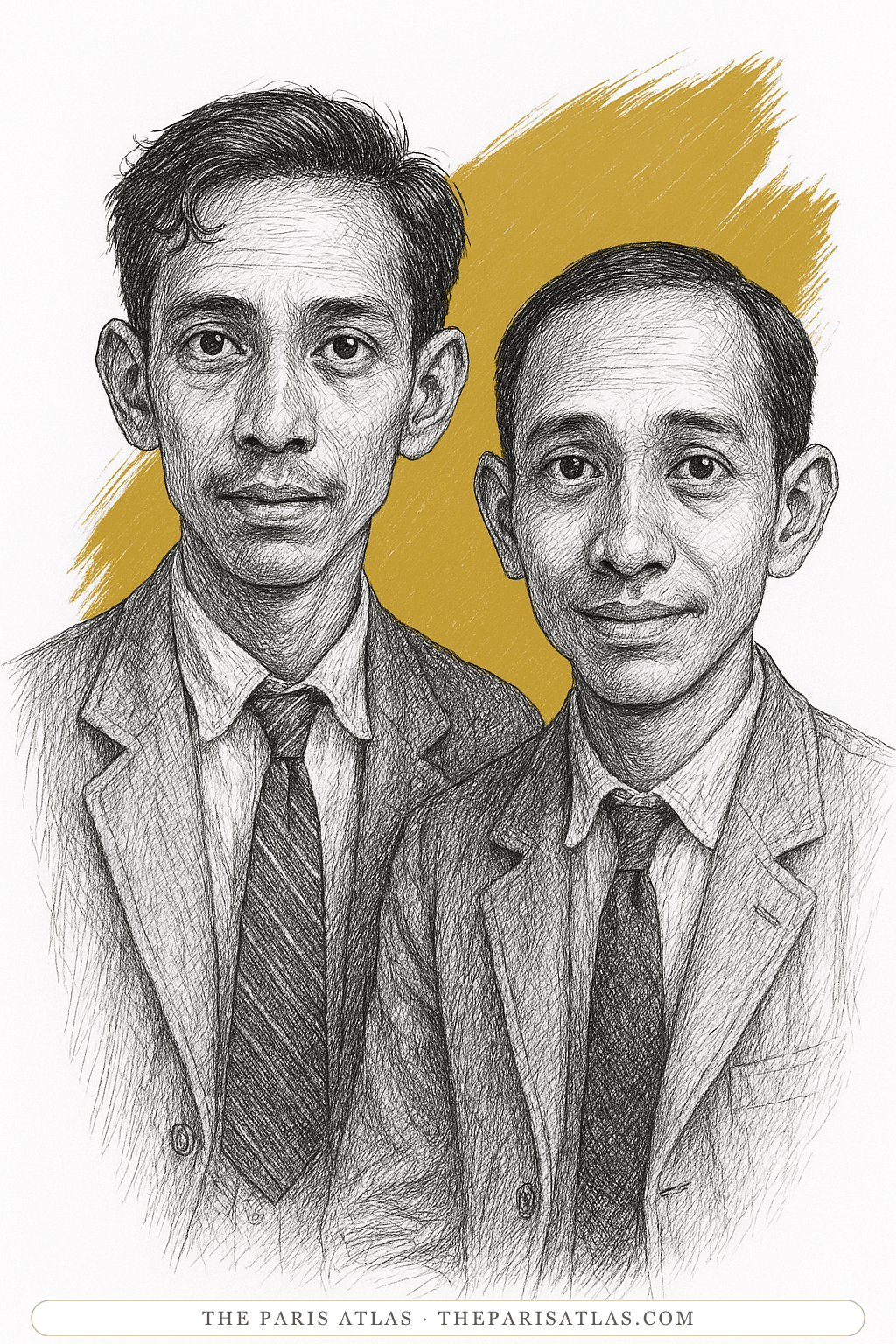
Mr Francis and Mr Samuel
The two Eurasian clerks of Kyauktada, sons of an American Baptist missionary and a Roman Catholic missionary respectively. They live in the bazaar on charity, and the six-weekly church service is the great social event of their lives.
To be counted European. Everything about them — the topis, the drill suits, the pronunciation, the prickly-heat remedies offered to a stranger — is aimed at a line they are never going to be allowed across.
The book

At a glance
- The two Eurasians of Kyauktada
- An American Baptist missionary and a Roman Catholic missionary
- A South Indian woman; a Karen woman
- Clerk to an Indian money-lender; clerk to the pleaders
- Complete outcasts. Most Europeans say good morning to them; Ellis will not
- Chapters 10 and 24, and at every church service
Who they are in the book
Spoiler-freeFrancis and Samuel are the town's two Eurasians and the book almost never separates them. Francis, the son of a South Indian woman, is meagre and excitable and as brown as a cigar-leaf; Samuel, whose mother was a Karen, is pale yellow with dull red hair. Both wear shabby drill suits and enormous topis beneath which their slender bodies look like the stalks of toadstools. Francis clerks for an Indian money-lender and Samuel for some of the pleaders, and Flory's explanation is that they would probably starve now and then if it were not for the charity of the Burmese, who will not let anyone starve.
The position they are in is set out plainly. Eurasians brought up in the bazaar with no education are done for from the start: the Europeans will not touch them, and they are cut off from the lower-grade Government services. There is nothing they can do except cadge, unless they abandon all claim to being European, and their drop of white blood is the only asset they have. Hence the topis, worn to remind everyone that they have European skulls, which Flory calls a kind of coat of arms — the bend sinister, you might say.
Talking to white men, and for choice about himself, is the great joy of Francis's life, and when he finds a European to listen his life-history pours out in unquenchable torrents. He is careful, in the same breath, to include himself among 'we Europeans'. Elizabeth, meeting them at the club gate, decides it is impertinent that they should speak to her at all, and snubs them; Flory follows her reluctantly, not liking to snub the wretched Francis, bore though he is.
How Mr Francis and Mr Samuel Is Portrayed
- The two of them side by sideThe book describes them in a single sentence and almost never separates them afterwards. Francis is meagre and excitable and deep brown; Samuel is noticeably paler and sallow, with dull red hair. Both wear shabby drill suits under topis so large that the bodies beneath look like the stalks of toadstools. For the six-weekly church service the suits are freshly laundered.
- The autobiographyDelivered nasally and at incredible speed: a choleric missionary father, whackings with a knobbed bamboo, being dressed in a longyi and sent among the Burmese children to preserve incognito during a bishop's visit, four converts in twenty-eight years, and a fondness for Chinese rice-spirit that spoiled the sales of his father's booklet, The Scourge of Alcohol.
- Prickly heatFrancis's opening subject with any European. Pounded tamarind applied to the afflicted spot is infallible; he suffers torments each night; it is a very prevalent disease 'among we Europians'. Flory notes that natives are supposed not to suffer from it, which is bosh, and that people believe it.
- The front pewsThe last time the padre came they sat on the front pews with the white men, which Ellis regards as damned cheek and thinks someone ought to speak to the padre about.
- What Elizabeth seesDegenerate types, thin and weedy and cringing, without honest faces. She places them by film: dagoes, like the Mexicans and Italians who play the villain. It is the one conversation in which Flory tells her that the Europeans are responsible for their existence, because they all have fathers.
- The one useful deedWhen Ma Hla May breaks up the church service, Francis and Samuel are the two who spring from their pew, take her by the arms and haul her outside. Orwell calls it perhaps the first useful deed of their lives.
If you like Burmese Days


If you like George Orwell
Explore authors with a similar voice, perspective, and influence.
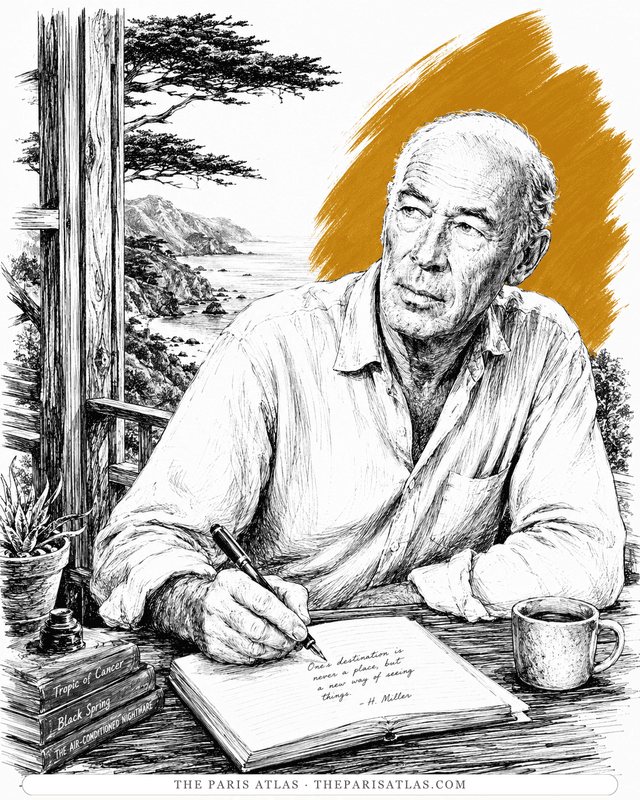
Henry Miller
The Brooklyn dropout who arrived in Paris broke at thirty-eight and wrote the exuberant, banned books that ended American censorship.
View author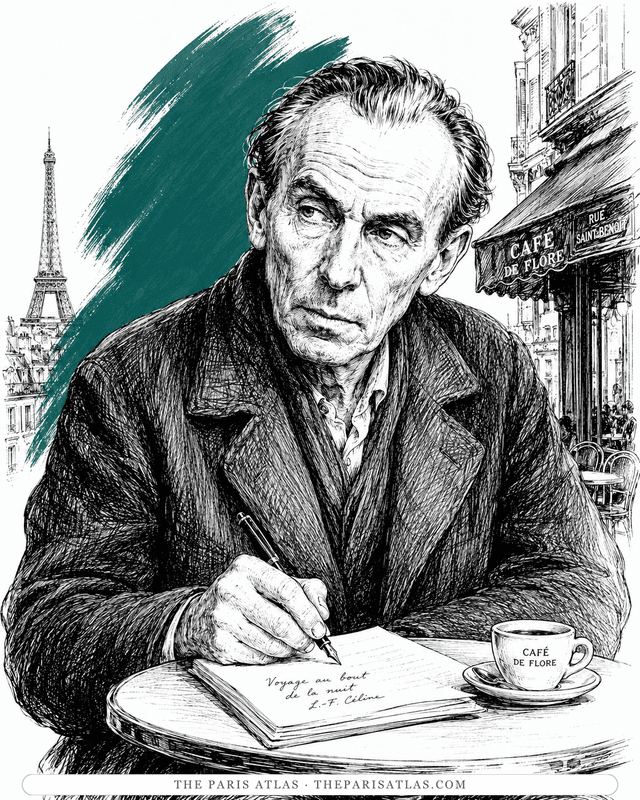
Louis-Ferdinand Céline
The doctor of the Paris slums who wrote the century's blackest, funniest novel — and changed the sound of French prose.
View author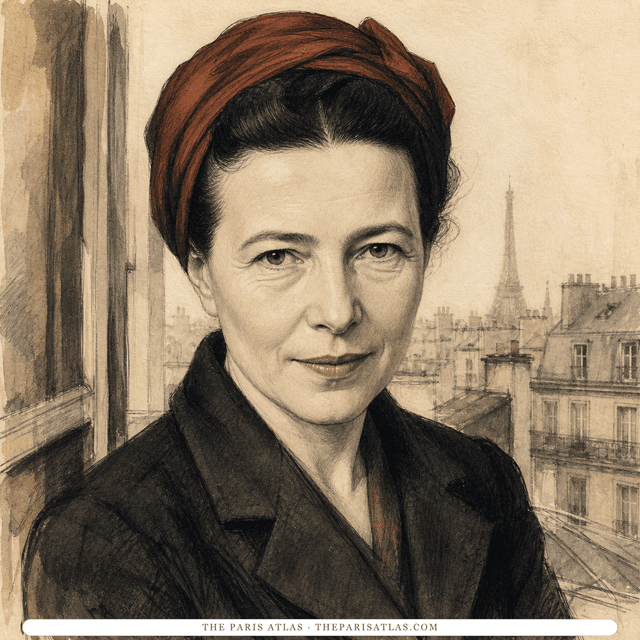
Simone de Beauvoir
French writer and philosopher whose novels, memoirs, and social analysis examined freedom, gender, responsibility, aging, and the material conditions that shape a life.
View author