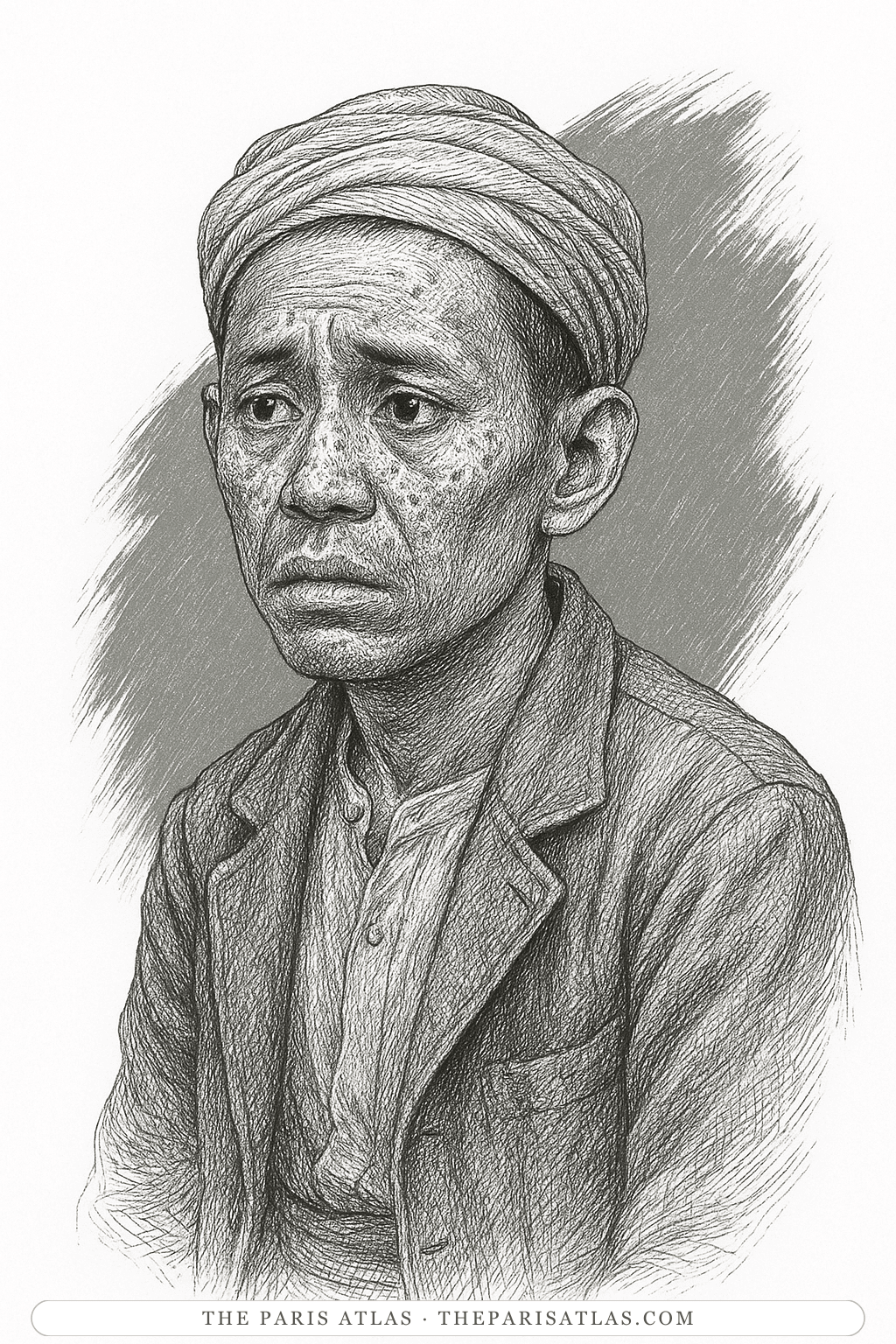
Ba Taik
U Po Kyin's servant: undersized and pock-marked, with a timid and rather hungry expression. He is paid no wages, being a convicted thief whom a word would send to prison, and announces the morning's visitors on his fingers.
The book

At a glance
- Servant to U Po Kyin, the Sub-divisional Magistrate of Kyauktada
- None
- He is a convicted thief, and his employer is the magistrate
- Announcing visitors, dressing his master, lifting him from his chair, carrying his papers
- Chapter 1, and briefly in chapter 8
Who they are in the book
Spoiler-freeBa Taik is the house servant of U Po Kyin, the Burmese magistrate of Kyauktada who is the villain of Burmese Days. He is the first person in the novel to speak. U Po Kyin, sitting on his veranda after breakfast, calls his name twice, and Ba Taik comes through the beaded curtain to take his orders.
The book explains his position in a single sentence, and it is the most important fact about him. U Po Kyin pays him no wages at all, because Ba Taik is a convicted thief and one word from the magistrate would send him to prison. He works for nothing because the alternative is a cell.
Everything he does in the book is a small service. He recites the morning's callers, counting them off on his fingers. He hauls his master upright when U Po Kyin cannot get out of his chair unaided. He helps him into his office clothes. He follows him down the road to the courthouse carrying a file of papers while U Po Kyin walks ahead under a yellow silk umbrella.
He appears once outside the house. In chapter 8, at a Burmese street play in Kyauktada, he pushes through the audience to invite John Flory, the English timber merchant at the centre of the novel, and Elizabeth Lackersteen, the young Englishwoman he is courting, to come and sit in the chairs U Po Kyin has ready for them.
How Ba Taik Is Portrayed
- How the book draws himUndersized and pock-marked, with a timid and rather hungry expression. He is dressed and fed by the household and paid nothing.
- Why he works for no wagesHe is a convicted thief. U Po Kyin, who is a magistrate, could have him imprisoned with a word, and so does not need to pay him.
- The bowWhen he comes forward to his master he bows so low, and while still advancing, that he gives the impression of stepping backwards. He addresses U Po Kyin as "most holy god" and "most holy one".
- The morning's visitors, counted on his fingersA village headman who has brought presents, two villagers with an assault case who have also brought presents, the head clerk of the Deputy Commissioner's office, a police constable and a robber who have fallen out over some stolen gold bangles, and a young village girl with a baby. Asked what she wants, Ba Taik says the baby is his master's.
- Lifting his master out of the chairU Po Kyin is enormously fat and cannot stand up on his own. When Ba Taik hears the puffing noise that means his master is trying to rise, he comes through the curtain without being called, and he and the head clerk take an armpit each and hoist him to his feet.
- Walking behind him to courtHe follows U Po Kyin down the road to the day's cases, carrying a file of papers, while his master goes slowly ahead under a yellow silk umbrella.
- At the street playIn chapter 8 he comes hurrying through the crowd at a night performance in the road, bows low to Flory with his usual nervous manner, and passes on U Po Kyin's invitation to join him in the chairs at the front.
If you like Burmese Days


If you like George Orwell
Explore authors with a similar voice, perspective, and influence.

Henry Miller
The Brooklyn dropout who arrived in Paris broke at thirty-eight and wrote the exuberant, banned books that ended American censorship.
View author
Louis-Ferdinand Céline
The doctor of the Paris slums who wrote the century's blackest, funniest novel — and changed the sound of French prose.
View author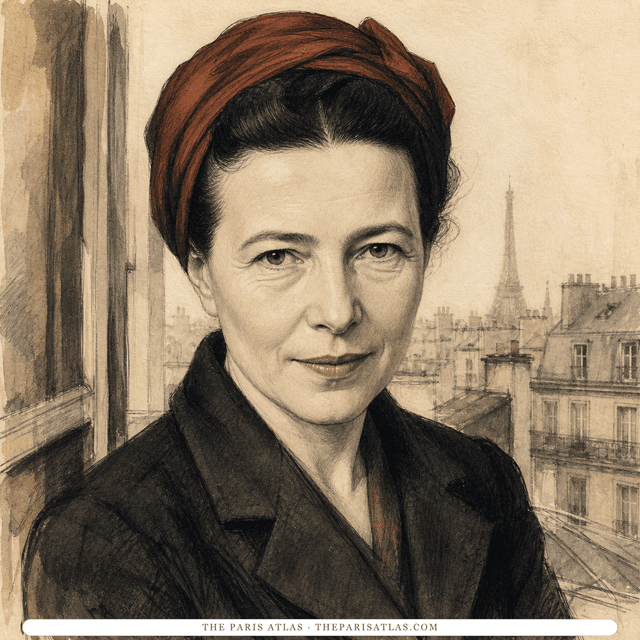
Simone de Beauvoir
French writer and philosopher whose novels, memoirs, and social analysis examined freedom, gender, responsibility, aging, and the material conditions that shape a life.
View author