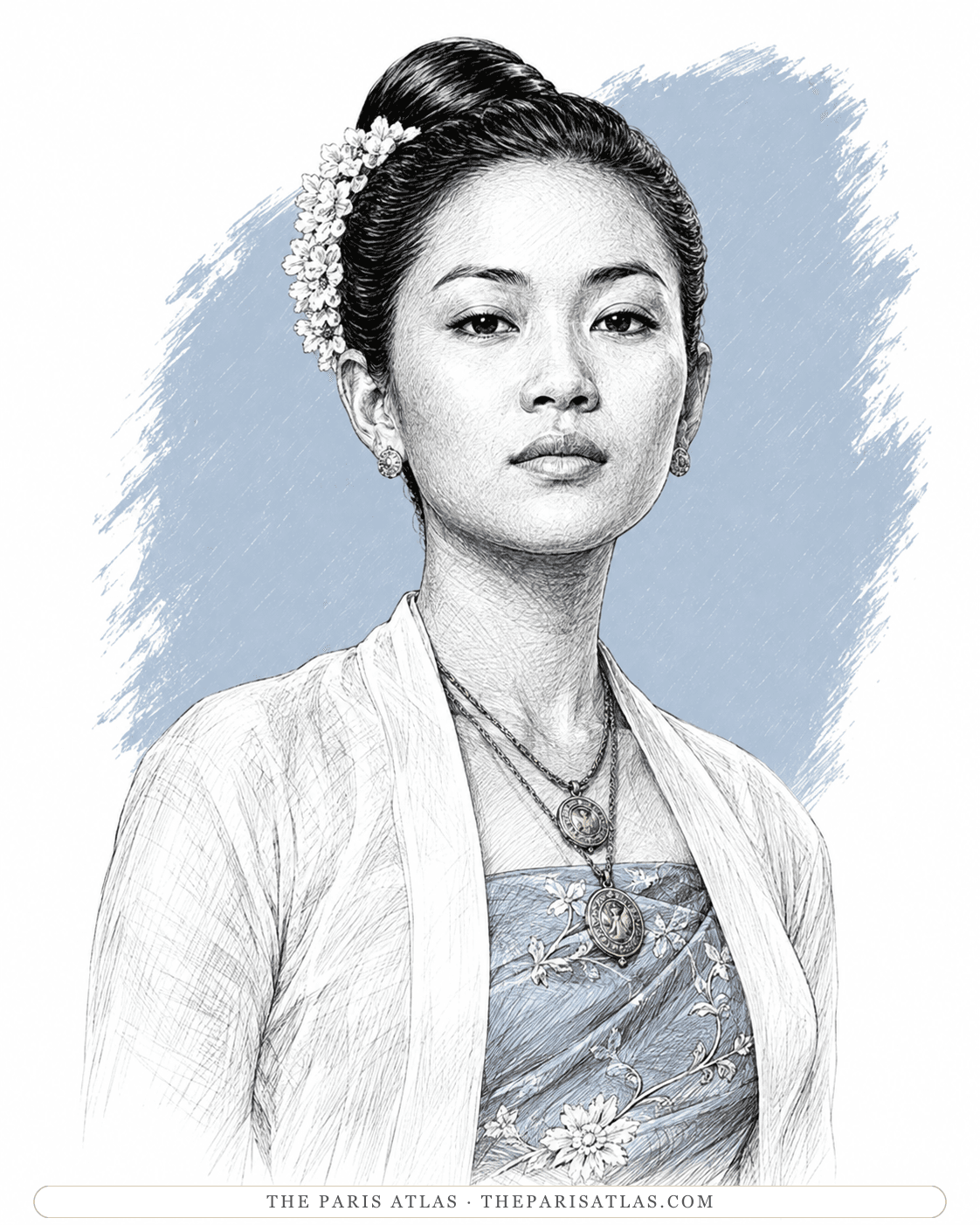
Ma Hla May
Flory's mistress, bought from her parents two years earlier for three hundred rupees. She calls herself a bo-kadaw, a white man's wife, and has persuaded everyone including herself that the description is legal.
Her position back. Not Flory — the life. She grieves for the bangles and the silk longyis and the standing in her village, and says outright that no man will marry her now that she has spent two years in his house.
The book

At a glance
- Flory's mistress in Kyauktada
- Twenty-two or twenty-three
- Perhaps five feet
- Bought from her parents two years earlier for three hundred rupees
- A bo-kadaw — a white man's wife — and has persuaded her village of it
- A hundred rupees, then fifty, then twenty-five and a gold cigarette case
- Staying at a cousin's house in Kyauktada; will not go back to her village
- Chapters 4 and 5, chapters 9 and 13, and the church service in chapter 24
Who they are in the book
Spoiler-freeMa Hla May is twenty-two or twenty-three and about five feet tall, and Orwell describes her almost entirely as an object: a longyi of pale blue embroidered Chinese satin, gold lockets on a starched muslin ingyi, hair coiled in a tight black cylinder like ebony and dressed with jasmine, a face the colour of new copper. She is like a doll, he writes, an outlandish doll and yet a grotesquely beautiful one. She comes into a room with the scent of sandalwood and coconut oil, which is the detail the book uses to announce her every time.
Flory bought her from her parents two years earlier for three hundred rupees. He is allowed to send for her and to send her away; she may come to tea as a special privilege and not to other meals, and may not wear her sandals in his presence. The scenes between them are among the coldest in the novel and Orwell does not arrange them to Flory's advantage. Flory tells her to go away, and she asks why he is always angry with her after he has made love to her; he pushes her out of the room by the shoulders and kicks her sandals after her, and the text notes that their encounters often ended in this way.
What she wants from the arrangement is stated plainly and is not love. Flory's embraces mean nothing to her — Ba Pe, her servant's younger brother, is secretly her lover — and yet she is bitterly hurt when they stop, because what she loves is the idle concubine's life and the visits home in her finery, where she can boast of being a bo-kadaw. She believes lechery is a form of witchcraft that gives a woman power over a man, and that each embrace weakens him further; she has put love-philtres in his food. Thirty gold bangles have gone to the pawnshop by the time the book opens.
When Elizabeth arrives, Flory finds a pretext — a stolen cigarette case — and turns her out with a cheque for a hundred rupees. She comes back a week later, powdered white to the roots of her hair, in a two-rupee Manchester longyi, and asks him how she is supposed to go home. Two years as a white man's wife and no jewels left; the village will point and say her white man treated her as they always do. She prostrates herself full-length on his floor and kisses his feet. The novel's hardest sentence about her is Flory's own reflection while she does it: that there is not a spark of love in any of it, and no sorrows are so bitter as those that are without a trace of nobility.
How Ma Hla May Is Portrayed
- How she is introducedNot by name. Ko S'la calls her THE WOMAN, and Flory tells Elizabeth she is one of the servants' wives who came about the laundry. Elizabeth, seeing her for the first time, asks whether that was a man or a woman.
- How the book draws herTwenty-two or twenty-three, and perhaps five feet tall. An oval, still face with high cheekbones, short shapely lips and brows as thin as pencil lines. Her hair is coiled into a tight black cylinder with a hard gleam on it and dressed with jasmine. She is slight and holds herself straight as a soldier, with no curve in the body but the curve of the hips.
- What she wearsA longyi of pale blue embroidered Chinese satin, a starched white muslin ingyi with no collar, and several gold lockets hanging on it. She kicks off red-lacquered sandals in the doorway, having been told she may not wear them in Flory's presence. Later in the book the longyi is salmon-pink silk.
- The scentSandalwood, coconut oil, garlic and the jasmine in her hair. It comes into the room with her, and the book uses it to announce her every time she appears.
- The banglesThirty gold bangles last month, all pawned by this one. She holds out a bare arm to make the point: two years ago he would have redeemed them, and she cannot go to the bazaar wearing the same longyi over and over without shame before the other women.
- The witchcraftShe holds that lechery gives a woman magical power over a man and that each embrace saps his will a little further, until she could weaken him into a half-idiotic slave. On that theory she torments him to begin again when he tells her to get out.
- Ba PeHer actual lover is Ko S'la's younger brother, and Flory guesses it and is told she would die if a Burman touched her. She lies about it comfortably. What she is faithful to is the position, not the man.
- The shikoTurned out and come back, she goes to her knees, then to her forehead, then full-length on the dusty floor and crawls to his feet and kisses them, asking to be taken back as a slave, lower than a slave. He cannot look at it and offers her fifty rupees.
- Pike-san pay-like'Give me the money.' She waits for him under the gold mohur tree by the club gate, powdered white as a skull in the moonlight, and screams the phrase over and over until he throws twenty-five rupees on the grass and finally his gold cigarette case — the same one she had stolen ten days earlier.
- The change in herFlory notices it and cannot explain it: a tenacity he would never have thought her capable of, almost as though someone else were egging her on. He is right, and does not follow the thought.
- What Flory sees when she leavesShe walks down the path very upright, with bitter offence in the carriage of her back and head. He watches from the veranda pillar with his knees trembling, and admits to himself that it was true what she said: he had robbed her of her youth.
If you like Burmese Days


If you like George Orwell
Explore authors with a similar voice, perspective, and influence.

Henry Miller
The Brooklyn dropout who arrived in Paris broke at thirty-eight and wrote the exuberant, banned books that ended American censorship.
View author
Louis-Ferdinand Céline
The doctor of the Paris slums who wrote the century's blackest, funniest novel — and changed the sound of French prose.
View author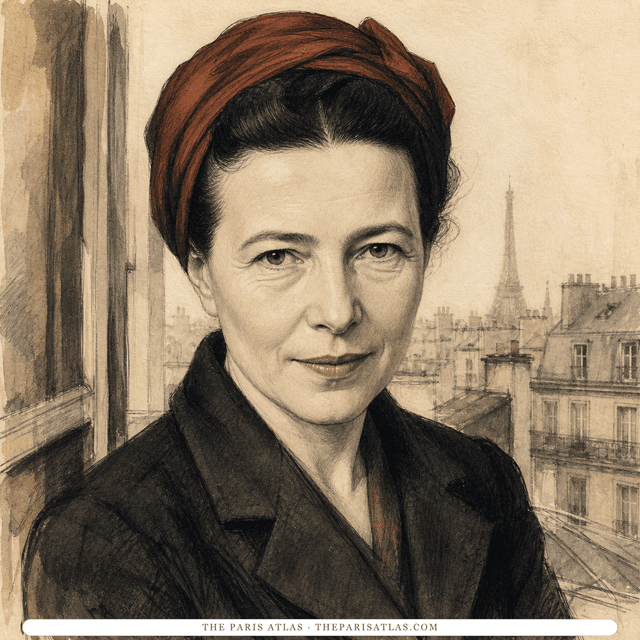
Simone de Beauvoir
French writer and philosopher whose novels, memoirs, and social analysis examined freedom, gender, responsibility, aging, and the material conditions that shape a life.
View author