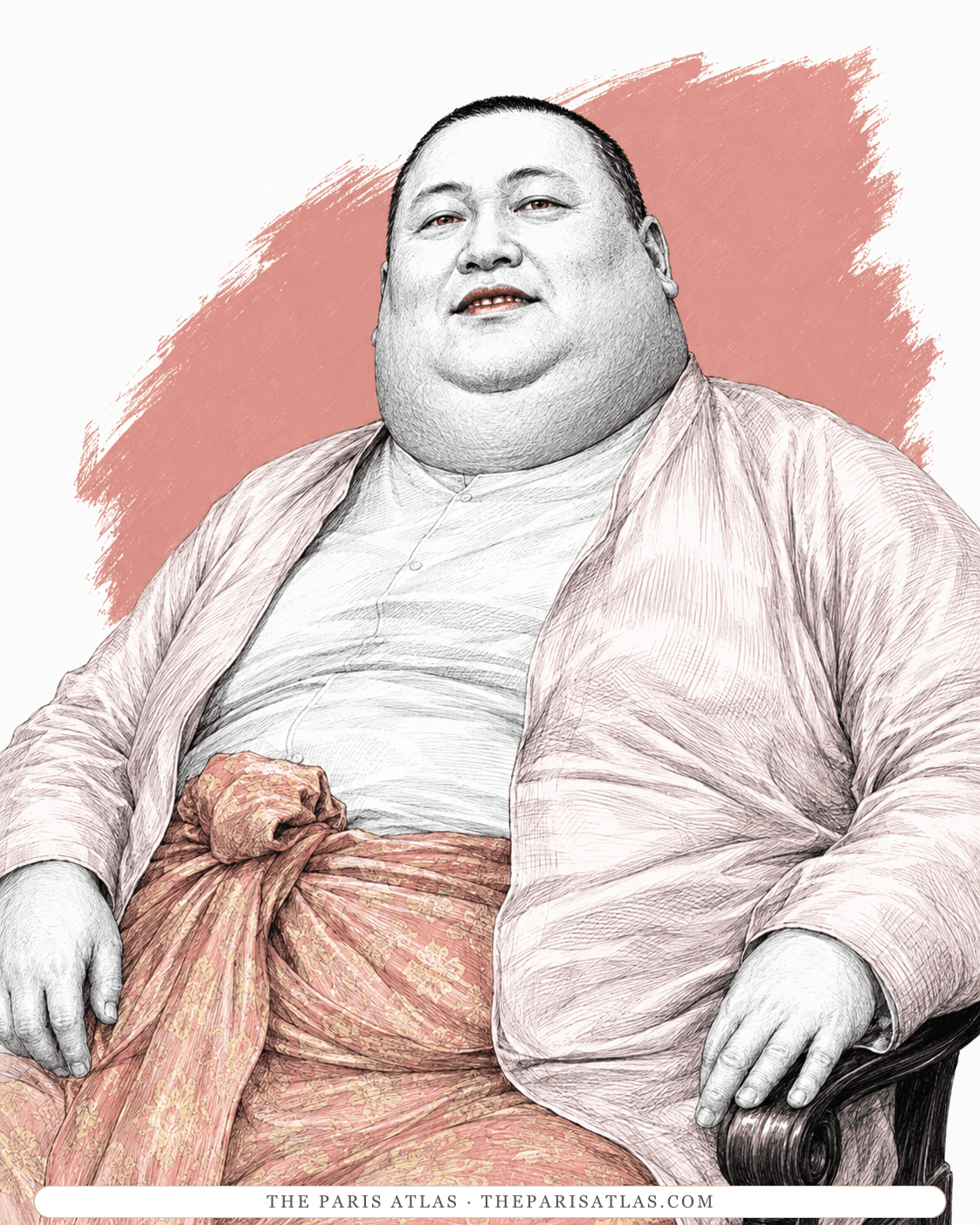
U Po Kyin
Sub-divisional Magistrate of Kyauktada. He takes bribes from both sides of a case and then decides it on strictly legal grounds, which has won him a useful reputation for impartiality. He wants one thing the money cannot buy: membership of the European Club.
To be elected to the European Club. He is worth two lakhs of rupees and calls the club a holy of holies far harder of entry than Nirvana; when he finally says it aloud to his wife his voice drops and there are almost tears in his eyes.
The book

At a glance
- Sub-divisional Magistrate of Kyauktada, and the novel's antagonist
- Given as fifty on one page and fifty-six three paragraphs later
- A bazaar clerk in Mandalay; bought a Government clerkship at twenty with blackmail money
- Takes bribes from both sides, then decides the case on legal grounds
- About two lakhs of rupees
- Ma Kin, his wife of more than twenty years; Ba Taik, an unpaid servant who is a convicted thief
- Ba Sein, head clerk of the Deputy Commissioner's office; Hla Pe, an apprentice clerk of eighteen
- Pagodas, enough of them to outweigh the rest
Who they are in the book
Spoiler-freeU Po Kyin's earliest memory, back in the eighties, is of standing in Mandalay as a naked pot-bellied child watching the British troops march in, and running away from them. His ruling ambition from that day was to fight on their side and become a parasite upon them. He failed to get a Government appointment at seventeen, clerked and stole in the bazaars for three years, then at twenty came into four hundred rupees by a stroke of blackmail and bought his way into a Government clerkship. When the Government began promoting clerks he denounced his own confederates before they could take alarm, and was made an Assistant Township Officer as the reward of his honesty.
His method as a magistrate is the one that cannot be caught. He never sells a decision, because a magistrate who gives wrong judgments is found out sooner or later; he takes from both parties and then rules correctly. Around that he runs a private taxation scheme over every village in his jurisdiction, backed by dacoits who attack any village that falls behind, and takes a share of the larger robberies. Everyone knows except his British superiors, on the principle Orwell gives in one clause: no British officer will ever believe anything against his own men.
He is a devout Buddhist and keeps a running account with the next world. Evil lives come back as rats or frogs, so he intends to spend his closing years building pagodas — four, five, six, seven, the priests will say how many — with gilt umbrellas and little bells, every tinkle a prayer. Merit is a bank deposit in his eyes, and he never misses a chance to add to it when it can be done without inconvenience. His wife Ma Kin, who has been the confidante of his intrigues for twenty years, tells him to his face that he has done very much evil in his life. He waves a hand: the pagodas will atone for everything, and there is plenty of time.
The campaign against Dr Veraswami is conducted entirely by anonymous letters, and the reasoning behind them is the most quoted thing in the book: a native official cannot be ruined by proof, only by suspicion, and Europeans supply the suspicion themselves. Eighteen letters in, the doctor stands accused of sedition, extortion, rape, murder by poison, murder by sympathetic magic, eating beef and making homosexual attempts on the Military Police drummer boy. What U Po Kyin will not tell anyone, until he tells Ma Kin, is why. If Veraswami falls, the club seat goes to him.
How U Po Kyin Is Portrayed
- The bodySo fat that for years he has not risen from a chair without help — two men put a hand under each armpit and hoist. He is proud of it. The accumulated flesh is the symbol of his greatness: he who was once obscure and hungry is now fat, rich and feared, swollen with the bodies of his enemies, a thought from which he extracts something very near poetry.
- His faceVast and quite unwrinkled, with tawny eyes and a head cropped close and left bare at home. He chews betel from a lacquered box, so his teeth — small, perfect and very numerous — are stained blood-red, and gleam red in lamplight; he spits a scarlet mouthful over the veranda rail between sentences. He is long-sighted, and holds a newspaper out at arm's length to read it.
- What he wearsFor the office, a gaungbaung of pale pink silk, an ingyi of starched muslin and a paso of salmon-pink Mandalay silk brocaded with yellow, inspected at length in the long mirror in the living room and announced to his wife as cheap at twenty-two rupees. In the sun the paso glitters. At home it is a checked green and magenta Arakanese longyi, bare feet and a bare head; outdoors he holds a yellow silk umbrella over himself.
- How he movesSeated, he is unblinking and quite still. On his feet he balances the weight of his belly on his legs the way a fish porter adjusts a load, then quarters the veranda in short steps with his hands behind his back, the friction of his thighs making him waddle. His hands are smallish and triangular, his feet squat and high-arched with the toes all the same length.
- The laughA bubbling sound deep in the belly, like the preparation for a cough. Orwell calls it disgusting and then, in the same sentence, merry and even childlike.
- The breakfastA huge bowl of rice and a dozen plates of curries, dried prawns and sliced green mangoes, eaten with swift greasy fingers at speed while his wife stands behind him and serves. Orwell calls his meals not meals so much as orgies, debauches of curry and rice.
- The theory of the anonymous letter'No European cares anything about proofs. When a man has a black face, suspicion is proof.' The plan is to accuse the doctor of disloyalty rather than bribery, because Europeans expect a native official to take bribes and cannot forgive a doubtful loyalty.
- His own rebellionHe raises the rising he intends to crush. A circus conjurer brought from Rangoon plays the magician; the bullet-proof jackets were bought at Whiteaway & Laidlaw's at one rupee eight annas each. He explains the word to Ma Kin — agent provocateur, which he believes is Latin — and points out that it is the villagers who risk their skins, not him.
- After the shootingWhen a Forest Officer is killed by the dead rebel's relatives, he calls it a positive gift from heaven and says the one thing his rebellion needed was a little bloodshed. Told he has murder on his soul, he answers that the fisherman is damned for catching the fish, but nobody is damned for eating it.
- Arriving lateHe lies low through the riot and comes out once it is over, in singlet and Shan trousers to suggest he has rushed from the house, carrying a huge stick with a revolver in his belt, congratulating Flory on a smart piece of work and saying 'we'.
- The reportHis official account of crushing the rebellion opens 'By my loyal promptitude and reckless daring'. The doctor's information is that it had been written out days before the event, and that U Po Kyin now tells people there were two hundred rebels rather than seven.
- The crocodileDr Veraswami's name for him, used so often it becomes the book's shorthand: he recalls a crocodile in human shape, and like the crocodile he strikes always at the weakest spot. The novel takes the image at its word when the strike finally lands.
U Po Kyin quotes
No European cares anything about proofs. When a man has a black face, suspicion is proof.
There is no armour against fate.
If you like Burmese Days


If you like George Orwell
Explore authors with a similar voice, perspective, and influence.
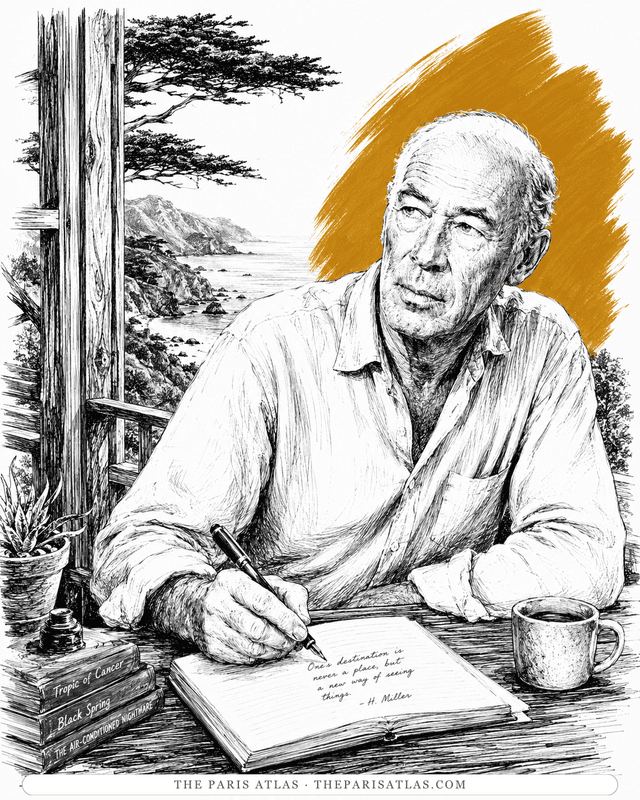
Henry Miller
The Brooklyn dropout who arrived in Paris broke at thirty-eight and wrote the exuberant, banned books that ended American censorship.
View author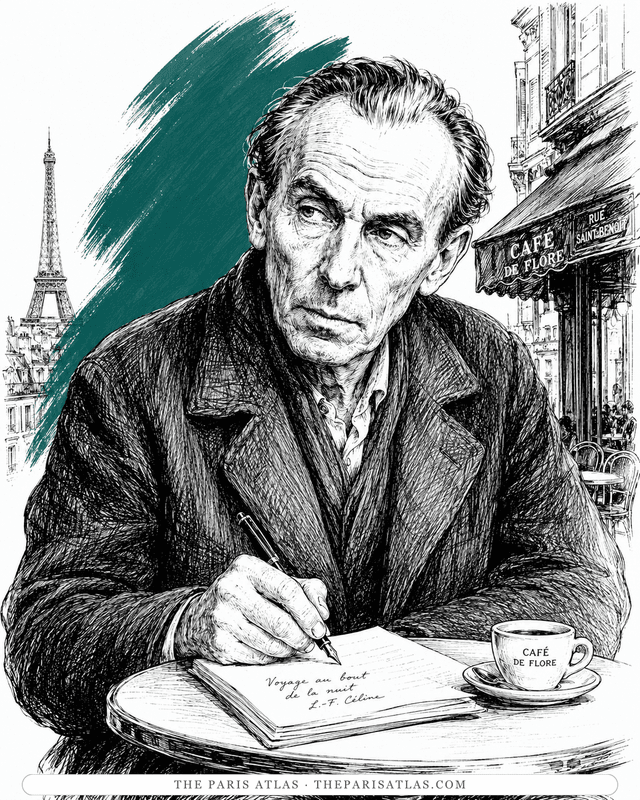
Louis-Ferdinand Céline
The doctor of the Paris slums who wrote the century's blackest, funniest novel — and changed the sound of French prose.
View author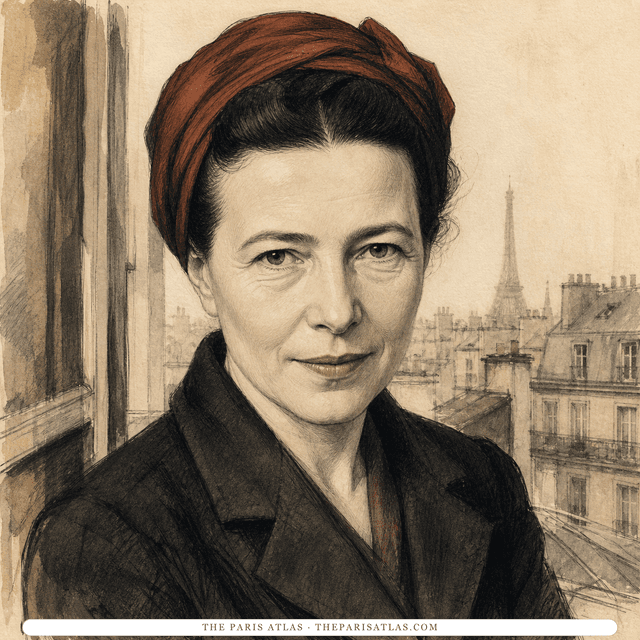
Simone de Beauvoir
French writer and philosopher whose novels, memoirs, and social analysis examined freedom, gender, responsibility, aging, and the material conditions that shape a life.
View author