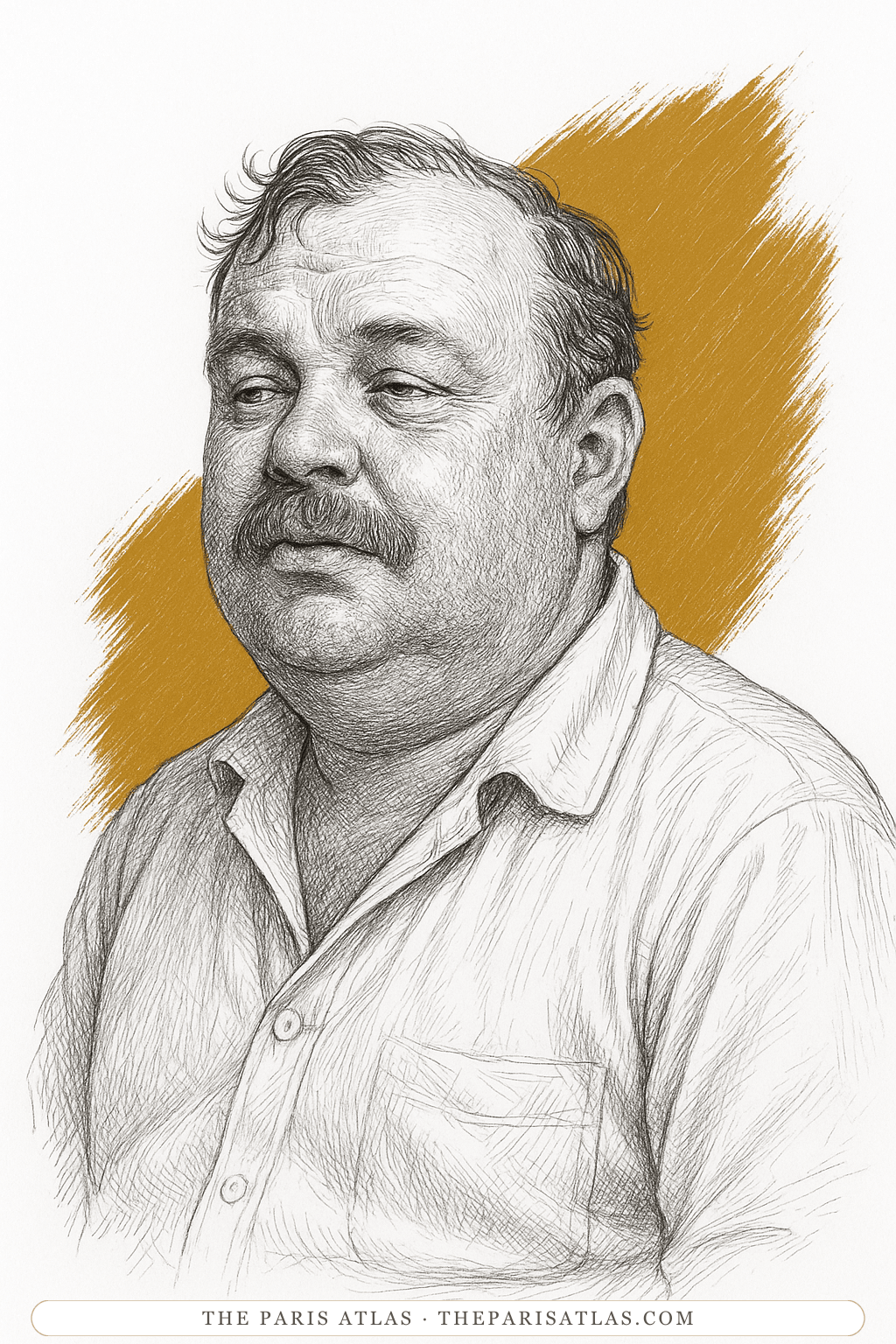
Mr Lackersteen
Tom Lackersteen, local manager of a timber firm and Elizabeth's uncle: a simple-minded, florid, permanently hungover man with no ambitions beyond what he calls a good time, and no scruples about where he looks for one.
A good time, and no supervision. He tells the club he wishes he were back in Paris, and complains that his wife means to cut his drinking to four pegs a day once the niece arrives.
The book

At a glance
- Local manager of a timber firm; Elizabeth's uncle and only relative in Burma
- Forty
- His wife, and from chapter 6 his niece
- Four pegs a day once the niece arrives, by his wife's decree
- From chapter 2 to the last chapter
Who they are in the book
Spoiler-freeMr Lackersteen is a florid, fine-looking, slightly bloated man of forty with a beefy ingenuous face and a toothbrush moustache, and the first time the reader meets him he is sprawled across the club table with his head in his hands, groaning for brandy. He is really a very simple-minded man, Orwell says, with no ambitions beyond having what he calls a good time. His wife governs him by the only possible method available to her, which is never letting him out of her sight for more than an hour or two.
That policy dates from a fortnight early in the marriage when she went away and came back a day before her time, to find him drunk, supported on either side by a naked Burmese girl while a third up-ended a whisky bottle into his mouth. Since then she has watched him, as he complains, like a cat over a bloody mousehole. He still manages a number of good times, though they are usually rather hurried ones, and when she finally sends him back to camp alone the rumours that drift into Kyauktada are of eleven bottles of whisky in a fortnight and tarts by the score.
At the club he is reliable for two things: a loud 'Hear, hear!' whenever anyone proposes the bamboo for disrespectful servants or boiling oil for Nationalists, and a nervous 'No' when he catches his wife's eye at the drinks table. Orwell is explicit that the loyalty is a performance. In his heart he does not care and never has cared a damn for the British Raj, and is as happy drinking with an Oriental as with a white man; sound sentiments are simply his form of respectability.
What he does to his niece is on the page and is not softened. Within a fortnight of her arrival he comes into her bedroom while she is dressing on the pretext of hearing about the shooting, and pinches her leg in a way that cannot be misunderstood. He carries it off as a joke and is too clumsy and too nearly drunk to succeed. It goes on. It is the reason Elizabeth decides she must marry the first man who asks her, and it is still going on months later, almost under the eyes of the servants, with her only defence a threat to tell her aunt that he is too stupid to see she will never dare make good.
How Mr Lackersteen Is Portrayed
- The morningsHead in hands under the punkah, groaning a word that sounds like 'brandy'. Westfield offers him to the room as an example to the young: there but for the grace of God, and an idea of what you'll be like at forty.
- How the book draws himFlorid, fine-looking and slightly bloated at forty, with a beefy, ingenuous face and a toothbrush moustache. Westfield's summary, offered to the room while Lackersteen groans under the punkah: look at it oozing out of his pores.
- La Vie ParisienneThe illustrated paper he reads at the club, passing it round for admiration of a pair of legs and asking Flory to translate the caption. It reminds him of his first leave, in Paris, before he married.
- The performance of loyalty'Hear, hear!' and 'Count on me to blackball the lot of 'em' delivered on cue at the club, chiefly because his wife will guess he has been drinking and a display of sound sentiment might excuse it.
- The dinner jacketOn the evening a lieutenant the Honourable is expected he is completely sober and in a white dinner jacket, and the boiled shirt and piqué waistcoat seem to hold him upright and stiffen his moral fibre like a breastplate. Verrall does not come.
- The bedroomHe walks in on Elizabeth while she is dressing, on a pretext, and pinches her leg. Some months later he manoeuvres his wife out of the house and makes what the book calls a spirited attempt to rape her. She cannot tell anyone.
- In camp aloneSent back to the jungle so that the field is clear for Verrall, he consoles himself with what the rumours call quite a miscellany of Burmese women, and returns more florid than ever with a trembling of the hands that will barely light a cigarette. Sunburn, he explains.
- Under siegeWhen two thousand people surround the club he disappears twice, is last seen holding an empty bottle in the middle of the room, and is found afterwards very drunk under the billiard table, where he had retired with a full one.
If you like Burmese Days


If you like George Orwell
Explore authors with a similar voice, perspective, and influence.

Henry Miller
The Brooklyn dropout who arrived in Paris broke at thirty-eight and wrote the exuberant, banned books that ended American censorship.
View author
Louis-Ferdinand Céline
The doctor of the Paris slums who wrote the century's blackest, funniest novel — and changed the sound of French prose.
View author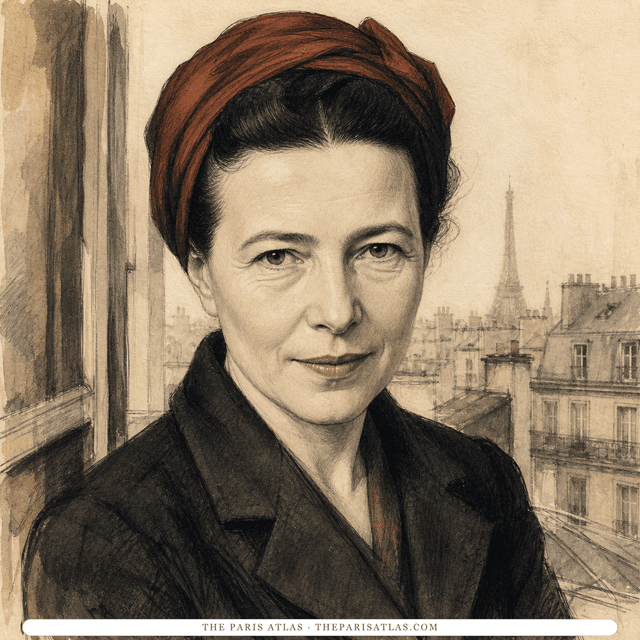
Simone de Beauvoir
French writer and philosopher whose novels, memoirs, and social analysis examined freedom, gender, responsibility, aging, and the material conditions that shape a life.
View author