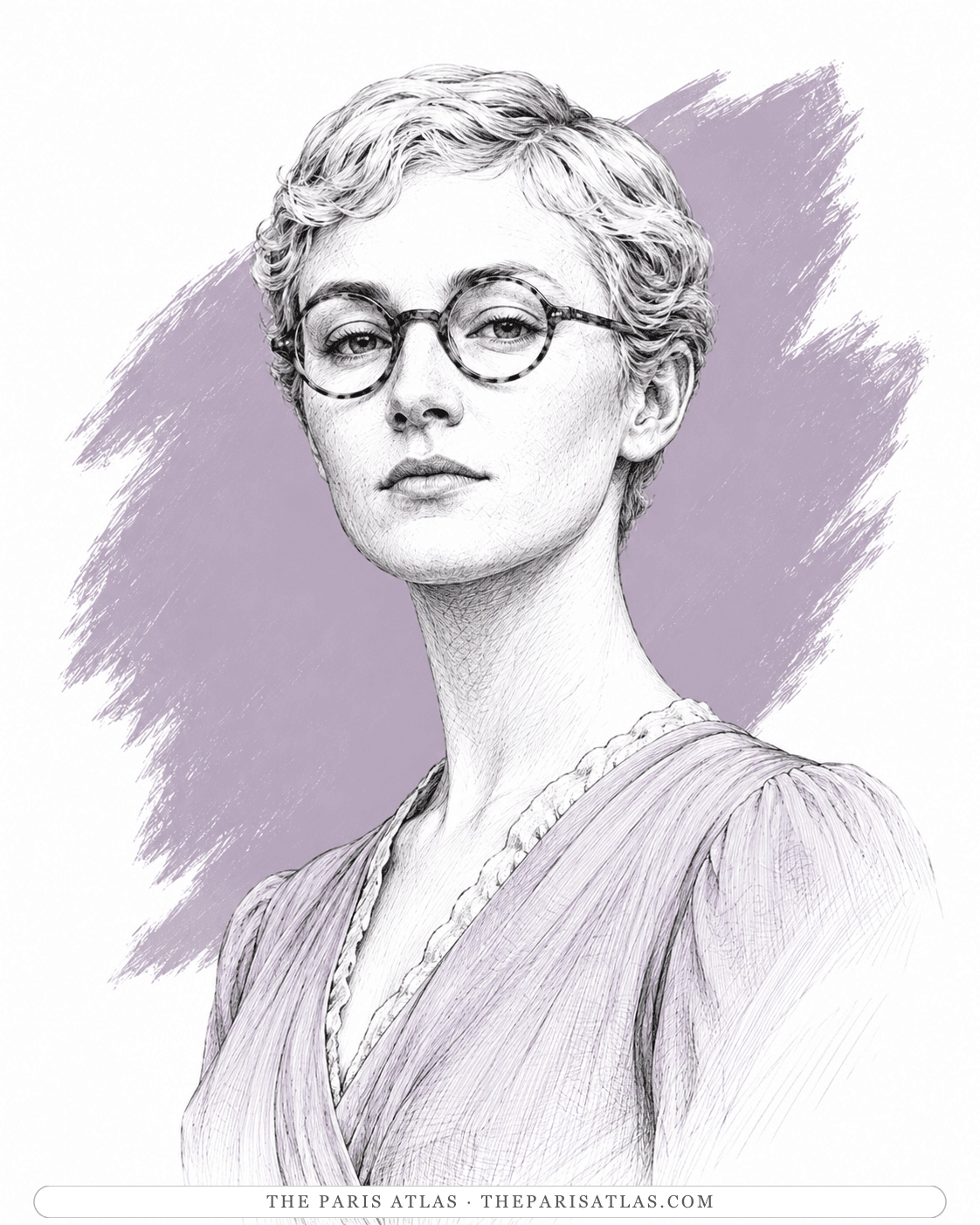
Elizabeth Lackersteen
Twenty-two, orphaned and penniless, sent out from Paris to stay with the uncle and aunt who are her last address. Everything in the world is either lovely or beastly to her, and Burma is mostly beastly.
Back into the world of the illustrated papers — ponies, husbands in the cavalry, Ascot, Cowes. Marriage is the only door to it she can see, and she is aware within a fortnight of arriving that it has to be soon.
The book

At a glance
- Mr Lackersteen's niece, newly arrived in Kyauktada
- Just turned twenty-two
- Rather less than a hundred pounds when her mother died
- Two years in Paris, teaching English to a bank manager's children
- Two terms at an expensive one; the rest at cheap ones
- Michael Arlen for choice, William J. Locke when she wants something serious
- Shooting, and riding rather better than she admits she can't
- Chapter 6, out of the jungle behind Flory's house, cornered by a water buffalo
Who they are in the book
Spoiler-freeElizabeth Lackersteen's character, the novel says flatly, was fixed in two terms. Her father made money at the end of the war and sent her to a very expensive boarding school where four of the girls were 'the Honourable' and nearly all of them had ponies; the crash came late in 1919 and she went on to a succession of cheap ones. What survived was a single belief — that the good, which she calls 'lovely', is the expensive, the elegant and the aristocratic, and the bad, which she calls 'beastly', is the cheap, the low, the shabby and the laborious. Her father died of influenza when she was twenty. Her mother took her to Paris to dedicate herself to Art and died two years later of ptomaine poisoning, leaving her with rather less than a hundred pounds.
Paris, when Flory hears the word, means cafés and Villon and Baudelaire. Paris for Elizabeth meant a pension where the patronne crept upstairs hoping to catch the boarders washing stockings in the hand-basins, a job teaching English to a bank manager's children, and a silent nightly struggle under the table to keep the bank manager's hand off her leg. What she loved was the American library in the rue de l'Élysée, and the illustrated papers with their hounds meeting on the lawns of Warwickshire seats. Her mother's studio — the unmade bed, the saucepans, the plate of poached egg under a cushion — she found not merely depressing but evil. She came out of it with a healthy loathing of Art and a word for anyone who has too much intellect: highbrow, which is the worst thing she can call a person.
In Burma she is, in her aunt's phrase, quite a queen in the local society, and she knows exactly what she is there for. She also finds she has a real gift. She shoots a flying jungle cock on her first day out with a gun, and holds the warm bird in her hand with something close to rapture; she takes to a horse the same way, and lies to Verrall about having hunted quite a lot until she nearly believes it. What she cannot take to is Burma. The pwe dancer is monstrous to her, the bazaar unendurable, the Chinese grocer's shop a humiliation, and the sight of a Burmese woman makes her feel her kinship with something she would rather not be kin to.
None of this is happening to a woman with choices. She has no home except her uncle's house, no money, and an uncle who follows her into her bedroom. Her aunt's technique — the long sighing story of the poor, poor dear girl who failed to marry and is now a kitchen maid among the black beetles — is applied to her steadily and works. Orwell lets both things stand at once: that her hardness is real, and that her position is not one she chose.
How Elizabeth Lackersteen Is Portrayed
- Lovely and beastlyHer whole code in two words. Everything from a pair of stockings to a human soul is sorted into one bin or the other, and unfortunately for her it is the beastly that has predominated in her life so far.
- How she looksTallish for a girl and slender, with an oval face and delicate, regular features: not beautiful, the book says, though they passed for it in a station where Englishwomen went sallow and thin. Her hair is yellow and cropped as short as a boy's, which Flory has never seen on a woman except in the illustrated papers, and she is perfectly aware that it suits her. The round tortoise-shell spectacles are modish and give her a self-possessed look; she takes them off whenever Verrall is in view. No eye colour is given anywhere in the novel.
- What she wearsA lilac cotton frock at the first meeting. For shooting, a rough skirt, brogues, a silk shirt cut like a man's and a Terai hat, which she knows look well on her. For the club dance, a yellow frock cut very short as the fashion then was, champagne-coloured stockings and slippers to match, and a big ostrich-feather fan — so modish and so adult that Flory feared her more than he ever had.
- HighbrowHer deadliest word. When Flory talks about a dancer's arms and centuries of culture she hears a man quoting poetry; when he is finally explained to her by the club's gossip she files him with Lenin and the dirty little poets in the Montparnasse cafés, and decides she could have forgiven the mistress more easily.
- The gunShe takes to shooting instantly and completely. She kills a flying jungle cock on her first day and can hardly hand the body over; the feel of it so ravishes her that she wants to hug it. Orwell notes that it was the killing of the pigeon that made her want to put her arms round Flory's neck.
- The leopardTold the leopard hunt on foot is dangerous, she says she is not frightened and prays silently in the undergrowth for the animal to come. When it charges wounded and invisible she fires twice at the sound with her hands steady and her knees knocking like castanets.
- The bazaarPomelos on strings, dried fish, beetle larvae, turmeric being pounded in a wooden mortar; the heat and the smell drive her out within minutes. She asks Flory whether it is all right to go in among the crowd, and afterwards she will not go inside a Burmese house again if she can help it.
- What she is told about Burmese peopleNothing. She arrives with a set of opinions about race already assembled — a sloping forehead is a criminal type, she read it in a magazine — and Flory's habit of speaking in favour of the Burmese is what unsettles her about him long before he does anything.
- The uncleMr Lackersteen starts pinching her leg within a fortnight of her arrival and works up to walking into her bedroom. She cannot tell her aunt and he is too stupid to see that she will never dare. It is what makes her sure she will say yes to Flory, and it is still going on when she has stopped wanting to.
After that she is prepared to take Flory, and forgives him everything,
If you like Burmese Days


If you like George Orwell
Explore authors with a similar voice, perspective, and influence.

Henry Miller
The Brooklyn dropout who arrived in Paris broke at thirty-eight and wrote the exuberant, banned books that ended American censorship.
View author
Louis-Ferdinand Céline
The doctor of the Paris slums who wrote the century's blackest, funniest novel — and changed the sound of French prose.
View author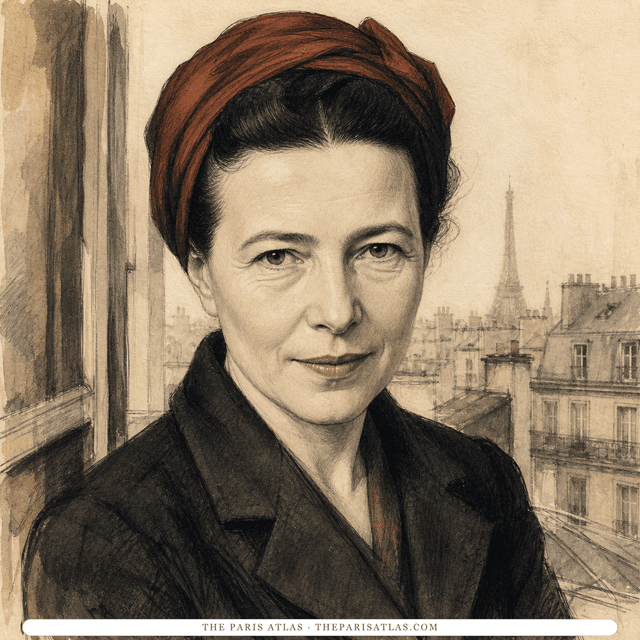
Simone de Beauvoir
French writer and philosopher whose novels, memoirs, and social analysis examined freedom, gender, responsibility, aging, and the material conditions that shape a life.
View author