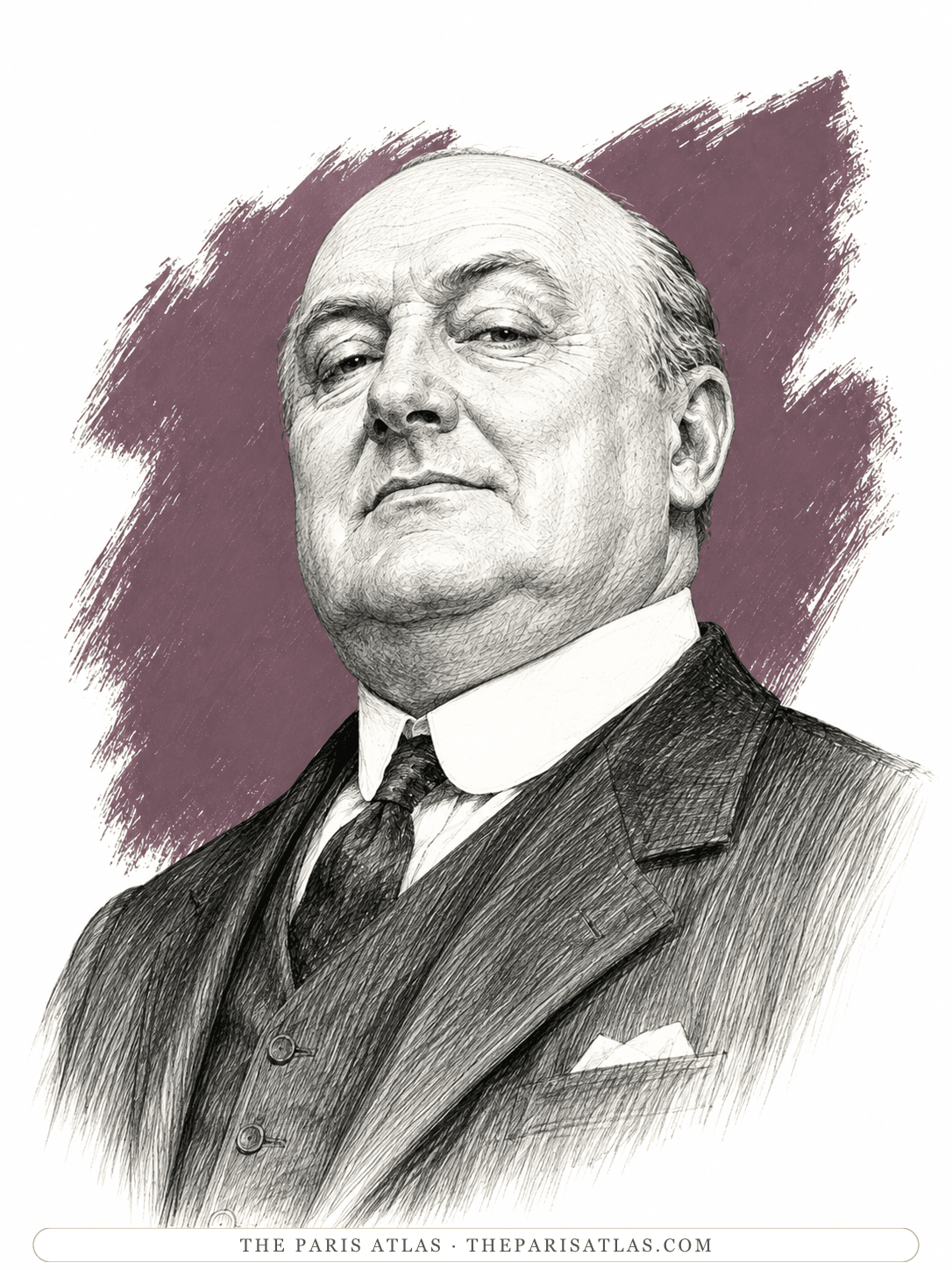
The Paris bank manager
Elizabeth Lackersteen's employer during the Paris year, when she taught English to his family: a man of fifty with a fat worn face and a bald dark-yellow crown that George Orwell compares to an ostrich's egg. His campaign advanced by stages — behind the knee on the fourth day, above it on the fifth — and her evenings went in keeping his hand away from her.
The book

At a glance
- Elizabeth Lackersteen's employer during her two years in Paris
- A bank manager in the twelfth arrondissement
- "Notre mees Anglaise"
- Never given
- Chapter 7, in the account of Elizabeth's past
Who they are in the book
Spoiler-freeBefore Elizabeth Lackersteen comes out to Burma she spends two years in Paris, and for most of them she is broke. Her father dies when she is twenty, leaving her mother £150 a year to live on, and the two of them move to Paris because it is cheaper. Her mother takes a studio in Montparnasse and does nothing. For several months Elizabeth does not have enough to eat.
Then she finds work as a visiting English teacher to the family of a French bank manager, who lives in the twelfth arrondissement, a long way across the city from her mother. His children call her notre mees Anglaise. He is a man of fifty with a fat, worn face and a bald crown that George Orwell compares to an ostrich's egg, dark yellow.
On the second day after she starts, he comes into the room where the children are having their lesson, sits down beside her and pinches her elbow. On the third day he pinches her calf. On the fourth, behind the knee. On the fifth, above it. After that, Orwell writes, every evening was a silent battle under the table, her hand pushing his away and pushing it away again.
He is on the page for about six sentences, and they explain a great deal about Elizabeth. She cannot afford to lose the work, so she never complains and never leaves, and the struggle goes on every evening in a room with two children in it. By the time she reaches Burma she wants a husband urgently and will not say why.
How The Paris bank manager Is Portrayed
- How the book draws himAbout fifty, with a fat, worn face and a bald dark-yellow crown that Orwell says resembles an ostrich's egg.
- What he is to herHer employer. She is a visiting teacher of English to his family, and it is the only income she has.
- Day by daySecond day, her elbow. Third day, her calf. Fourth day, behind the knee. Fifth day, above it. Orwell sets it out as a schedule.
- Under the tableAfter the first week it becomes a fixed nightly routine: her hand under the table, keeping his hand off her, while the lesson goes on.
- Why she puts up with itShe has already gone months in Paris without enough to eat, and her mother's income cannot support them. Losing the job is not an option she considers.
If you like Burmese Days


If you like George Orwell
Explore authors with a similar voice, perspective, and influence.

Henry Miller
The Brooklyn dropout who arrived in Paris broke at thirty-eight and wrote the exuberant, banned books that ended American censorship.
View author
Louis-Ferdinand Céline
The doctor of the Paris slums who wrote the century's blackest, funniest novel — and changed the sound of French prose.
View author
Simone de Beauvoir
French writer and philosopher whose novels, memoirs, and social analysis examined freedom, gender, responsibility, aging, and the material conditions that shape a life.
View author