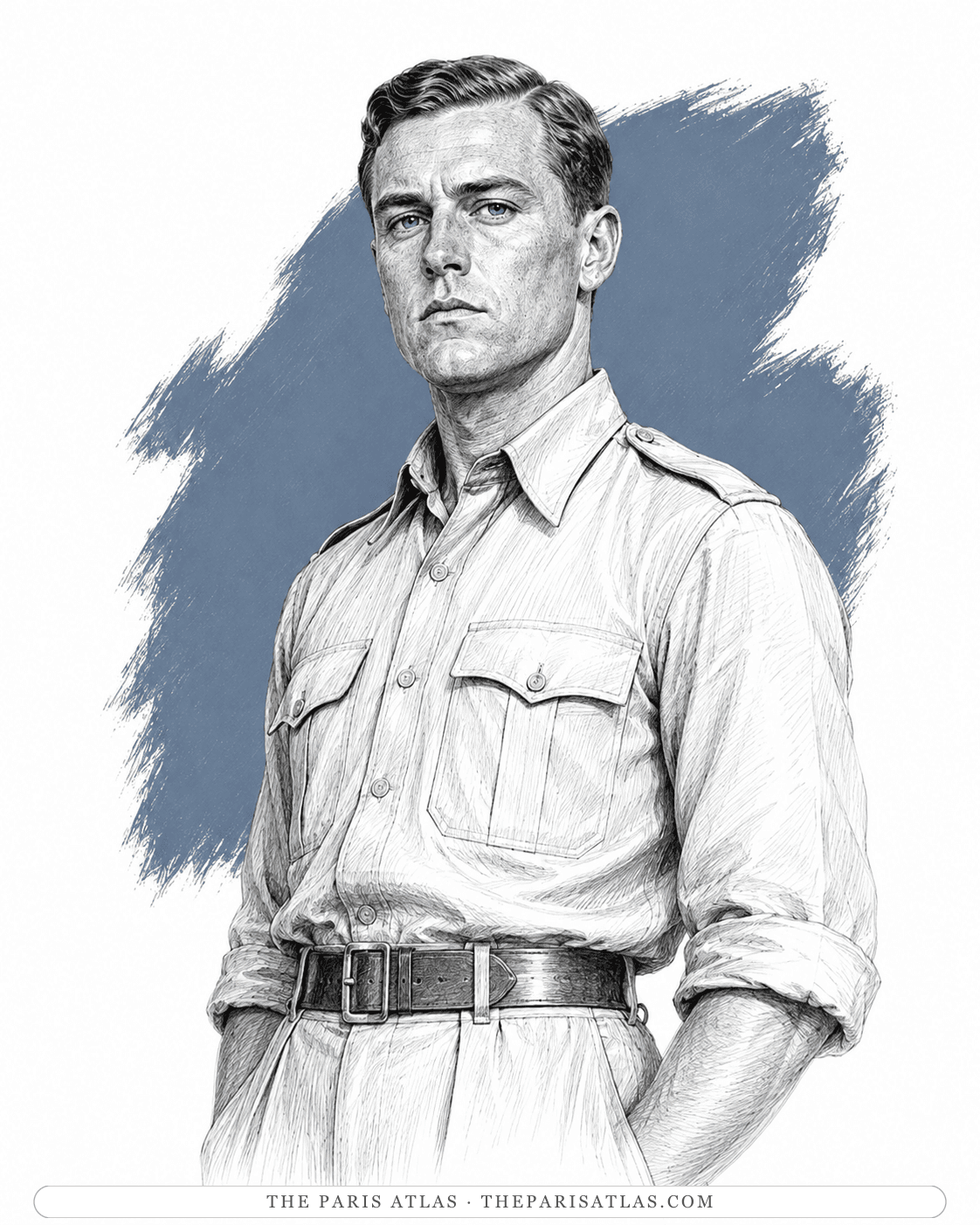
Verrall
Lieutenant the Honourable Verrall of the Military Police, sent up to Kyauktada for a month with a hundred men. He despises nearly everyone he meets and is never once made to pay for it.
A better ground and a decent string of ponies. He has applied to return to his cavalry regiment and is counting the weeks; everything else in Kyauktada, Elizabeth included, is something to do until the rains break.
The book

At a glance
- Lieutenant the Honourable Verrall, Burma Military Police, on a month's posting
- About twenty-five
- Youngest son of a peer, and not at all rich
- British cavalry, then the Indian Army because it was cheaper, then the Military Police to save money
- Belinda, a white Arab mare; a bay and a chestnut
- The dak bungalow, past the day he is supposed to leave it
- Chapters 16 to 23
Who they are in the book
Spoiler-freeVerrall arrives on a white Arab mare with a long spear in his hand and a company of sepoys behind him, and gives Flory his name without asking for one in return. He is about twenty-five, lank and very straight, with a rabbit-like face and pale blue eyes — a rabbit, the book says, but a tough and martial rabbit. Within a paragraph of arriving he has thrown an Excise Officer out of the dak bungalow, called Kyauktada a filthy hole, and complained that the maidan is too rough for polo.
He is the youngest son of a peer and not at all rich, and he keeps himself in the only two things he cares about — clothes and horses — by never paying a bill until a writ is issued. Debts moved him from a British cavalry regiment to the Indian Army because it was cheaper, and from there into the Burma Military Police because it was notoriously possible to save money there. He detests Burma, which is no country for a horseman, and has already applied to go back to his regiment.
The catalogue of his contempts would take a long time to list in detail. He despises the entire non-military population of India, the entire Army except the cavalry, all Indian regiments including his own, and the Europeans of small Burma stations, whom he calls a nasty, poodle-faking, horseless riffraff. His Urdu consists mainly of swear-words with all the verbs in the third person singular. He once said what he thought of an Indian regiment out loud at a review, within earshot of its colonel, and was reprimanded and left alone. Nothing serious ever happens to Verrall.
He is not a snob about money and not soft. He spends fabulous sums he does not have and lives like a monk otherwise — rationing his drink and cigarettes, exercising ceaselessly and brutally, sleeping on a camp bed in silk pyjamas, bathing in cold water in the bitterest winter. Horsemanship and physical fitness are the only gods he knows. Women he abhors on principle, as sirens who lure men away from polo into tea-fights, and succumbs to about half a dozen times a year, escaping easily because he is callous enough not to find it difficult.
How Verrall Is Portrayed
- The eyePale blue, a little protuberant, exceedingly clear. It looks you over, weighs you in the balance and finds you wanting in a single cold scrutiny of about five seconds. Duns, burra memsahibs and even colonels quail before it.
- The rest of the descriptionThere is hardly any. A tanned face, usually sulky; a hard, straight body, strong enough to lift Elizabeth out of the saddle one-handed and pull her against him; and what the book calls his surly boy's voice, which answers greetings surlily and conversation in monosyllables. Orwell describes nothing else of his face, and no hair colour, height or build.
- Tent-peggingHis introduction to the reader: three runs at a boxwood peg in the ground, each one hit, done with matchless grace and extraordinary solemnity while the sepoys watch as though it were a religious ritual and Flory stands beside the road being ignored.
- BelindaThe white Arab mare, worth several thousand rupees, that nobody has ridden for two years but Verrall — not even his groom. Offering Elizabeth a turn on her is the greatest favour he can imagine, and she understands it as one.
- The butlerSent for a whisky and soda, brought it warm, refused to use the last of the ice — so Verrall kicked him. Challenged about it by Ellis, he says the beggar needed kicking and offers to do the same to him, without raising his voice.
- Neglected dutiesHe does not call at the Deputy Commissioner's office, does not answer the club's invitation, ignores the rule about vacating a dak bungalow, and rarely bothers with uniform for morning parade, not thinking it necessary with mere Military Policemen.
- The dancingHe and Elizabeth circle the tennis court to 'Show Me the Way to Go Home' on the gramophone, oblivious to the four older men watching with their hands in their pockets and, Orwell writes, their bowels twisted with bitter envy.
- BooksHe has not read one since he was eighteen and loathes them — 'except, of course, Jorrocks and all that'. It is one of the things that binds Elizabeth to him: he detests anything highbrow even more than she does.
- The exitOrdered back to his regiment, he goes without a word to anyone and has the stationmaster start the train ten minutes early because he does not wish to be kept waiting. Two grass-wallahs are left on the platform with grubby notebooks, waving bills for hay and corn.
If you like Burmese Days


If you like George Orwell
Explore authors with a similar voice, perspective, and influence.

Henry Miller
The Brooklyn dropout who arrived in Paris broke at thirty-eight and wrote the exuberant, banned books that ended American censorship.
View author
Louis-Ferdinand Céline
The doctor of the Paris slums who wrote the century's blackest, funniest novel — and changed the sound of French prose.
View author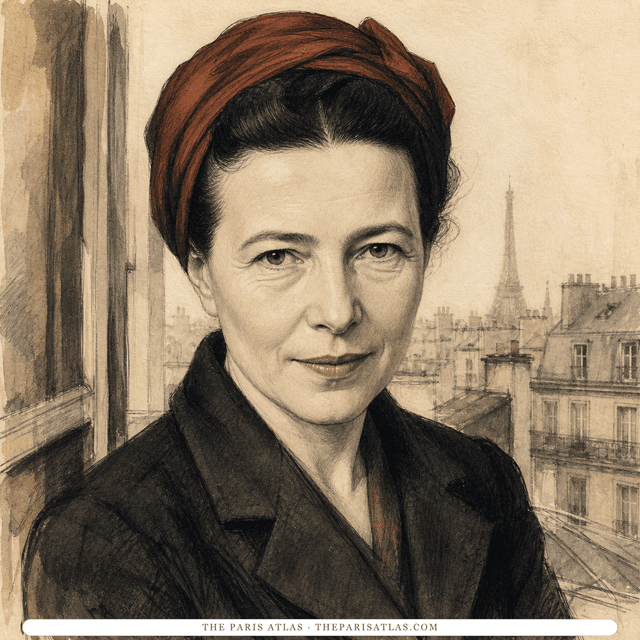
Simone de Beauvoir
French writer and philosopher whose novels, memoirs, and social analysis examined freedom, gender, responsibility, aging, and the material conditions that shape a life.
View author