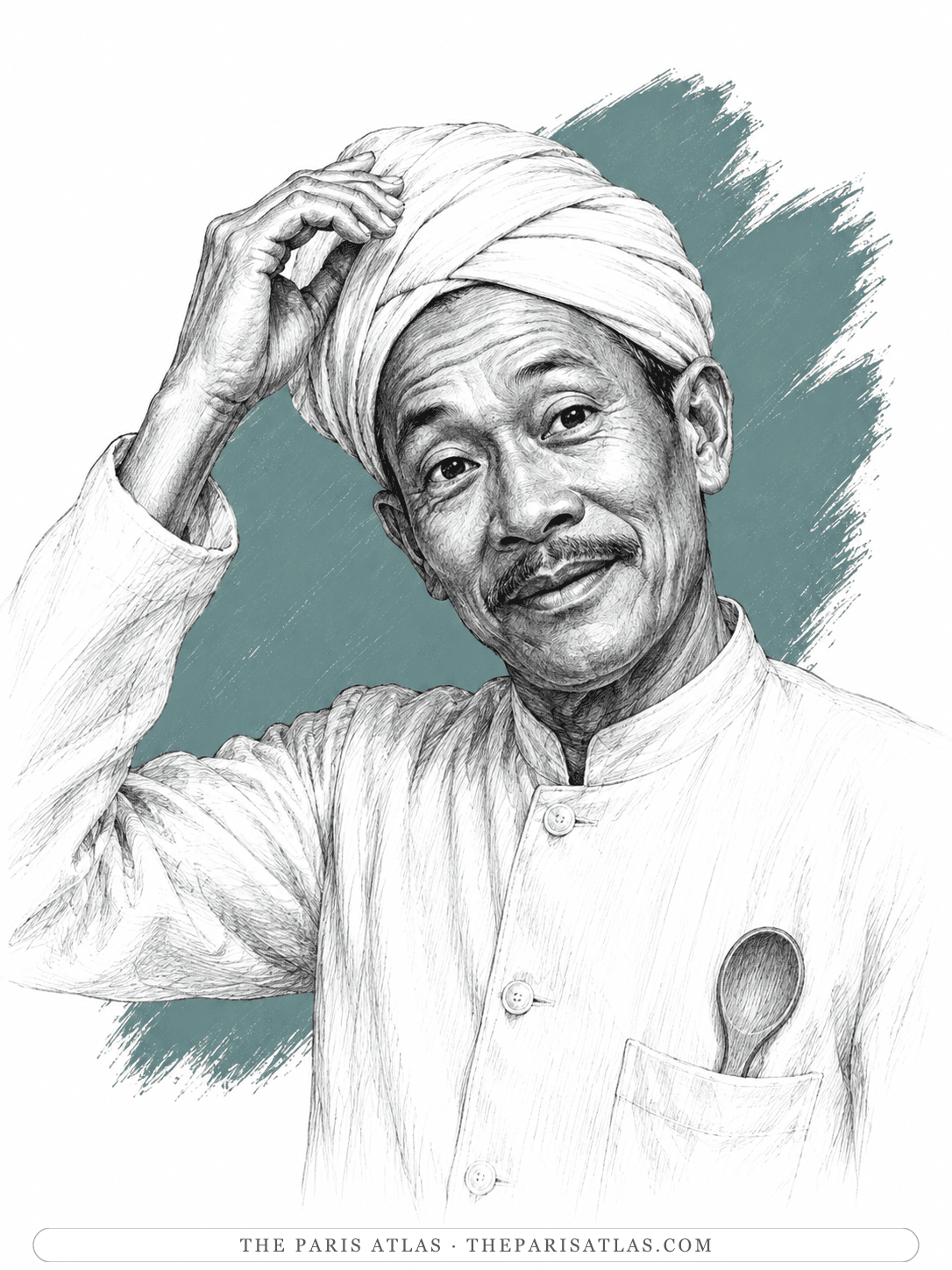
Sammy
John Flory's cook, caught peeping round a corner at Elizabeth Lackersteen with enormous curiosity and pretending to rearrange his pagri when spotted. He has had many masters, tells the story of one who used to have him held down and beaten, and explains that memsahibs are the real danger because they keep a little red book for the bazaar money. He collapses in a semi-genuine fit to avoid the night march and has to be revived with gin.
No Englishwoman in the house. He says outright that he will leave on the day his master marries, and gives his reason: a wife would keep accounts.
The book

At a glance
- Cook in John Flory's household at Kyauktada
- Many, the worst of them a Colonel Wimpole
- He leaves on the day his master marries
- Chapters 6, 9 and 19
Who they are in the book
Spoiler-freeSammy is the cook in the household of John Flory, the English timber merchant at the centre of Burmese Days. He is an old man, and he has worked for a long line of Englishmen before this one. George Orwell keeps him in the background for most of the book and then gives him one speech that is worth more than the rest of the servants' scenes put together.
It comes when the servants realise their employer is likely to marry. Ko S'la, Flory's personal servant, has spotted the signs: fewer cigarettes, no more gin before breakfast, a shave every evening, six new silk shirts ordered. The men sit and work out what a wife in the house would mean for them.
Sammy's contribution is a comparison. The worst master he ever had, he says, was a Colonel Wimpole, who used to have his orderly hold Sammy down over a table while the Colonel ran up from behind and kicked him with very thick boots, the offence being that banana fritters were served too often. When he was drunk the same man fired his revolver through the roof of the servants' quarters, just above where they slept. And Sammy says he would rather serve ten years under Colonel Wimpole than one week under an Englishwoman. If his master marries, he is leaving the same day.
His reason is money. English wives, he says, keep a little red book and write the bazaar money down in it, two annas for this and four annas for that, so that a servant cannot make a pice on the side, and they argue harder about the price of an onion than a man would about five rupees.
How Sammy Is Portrayed
- How the book draws himOld, very dark-skinned and moustachioed, in a pagri. Elizabeth Lackersteen first sees his face peering round the end of Flory's veranda between the rails.
- Caught staringHe has come to look at the Englishwoman, and half the household is behind him doing the same. When he sees that he has been spotted he looks very guilty and busies himself rearranging his pagri.
- Colonel WimpoleThe worst of his many employers. Sammy was held down over a table by the orderly while the Colonel ran up and kicked him with thick boots, for serving banana fritters too often. Drunk, the same man used to fire his revolver up through the roof of the servants' quarters.
- The little red bookHis account of English wives: they write down every item of the bazaar money, two annas here, four annas there, so that a cook can make nothing on the shopping, and they make more fuss over the price of an onion than a sahib makes over five rupees.
- His noticeHe would sooner serve ten years under Colonel Wimpole than a week under a memsahib, and he tells the others that if their master marries he will leave the same day.
- The night marchFlory decides to walk twenty miles back to Kyauktada in the dark. The servants nearly mutiny at the idea, and at the last moment Sammy collapses in a fit that Orwell calls semi-genuine. He has to be given gin before he can be got moving.
If you like Burmese Days


If you like George Orwell
Explore authors with a similar voice, perspective, and influence.

Henry Miller
The Brooklyn dropout who arrived in Paris broke at thirty-eight and wrote the exuberant, banned books that ended American censorship.
View author
Louis-Ferdinand Céline
The doctor of the Paris slums who wrote the century's blackest, funniest novel — and changed the sound of French prose.
View author
Simone de Beauvoir
French writer and philosopher whose novels, memoirs, and social analysis examined freedom, gender, responsibility, aging, and the material conditions that shape a life.
View author