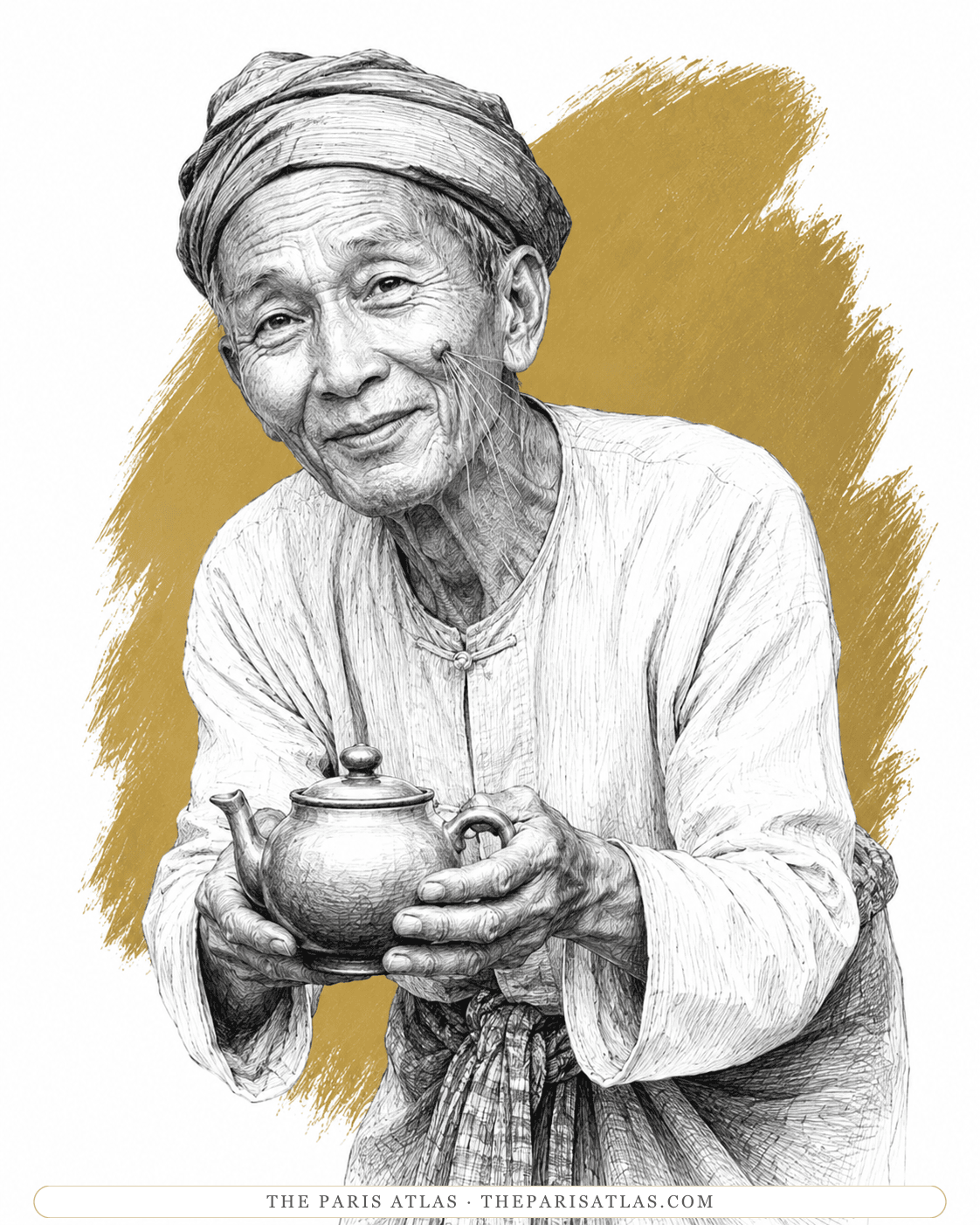
The headman of the fishing village
A skinny old gentleman in a magenta paso with a mole on his cheek from which four yard-long grey hairs sprout, who receives John Flory and Elizabeth Lackersteen at the fishing village up the creek where the shooting party lands. He walks ahead of them crouched like an upside-down letter L, cuffs children out of the way, and produces a teapot, a bunch of very long green bananas and six coal-black cheroots. His corrugated iron roof is the pride of his life; he abandoned building a pagoda to pay for it.
The book

At a glance
- Headman of the fishing village Flory and Elizabeth shoot from
- A minor Government official under British administration
- Two miles up a creek from the Irrawaddy; floods in the rains
- Never given
- Chapters 14 and 15
Who they are in the book
Spoiler-freeIn chapter 14 John Flory, the English timber merchant at the centre of the novel, takes Elizabeth Lackersteen, the young Englishwoman he hopes to marry, out shooting for an afternoon. They are paddled two miles up a creek from the Irrawaddy to a Burmese fishing village, and the man who meets them at the landing is the village headman. He is not named.
A village headman under British rule in Burma was a minor Government official, responsible for his village to the district administration, and the novel shows what that meant in practice. He comes forward bowing, clearing children out of the visitors' way with a cuff as he goes, and he walks ahead of them bent almost double. Orwell explains the shape: it is rheumatism plus a lifetime of the bowing the job requires.
He puts on the best reception he can. A youth asleep on his veranda is kicked awake in the ribs. Two chairs are dragged out and decorated with red hibiscus flowers and begonias planted in kerosene tins, and it is clear from the fuss inside the house that a sort of double throne had been prepared indoors before Elizabeth said she would rather sit outside. He brings out tea, a bunch of very long bright green bananas and six coal-black cheroots.
Elizabeth will not drink the tea. The headman looks embarrassed, rubs his nose, and asks Flory whether the young Englishwoman would like milk in it, because he has heard that Europeans take milk. If she does, the village will catch a cow and milk it. She still refuses and asks for a bottle of soda water from their own bag instead, and he withdraws, feeling that he has not laid on enough.
How The headman of the fishing village Is Portrayed
- How the book draws himA skinny old man in a magenta cloth, with a mole on his cheek out of which four grey hairs a yard long are growing.
- How he walksBent over into the shape of an upside-down letter L. Orwell attributes it to rheumatism combined with the constant bowing expected of a minor Government official.
- The corrugated iron roofHis house is slightly bigger than the others and it has a metal roof, which is the pride of his life even though the noise it makes in the rains is unbearable. He gave up building a pagoda to pay for it, and knowingly reduced his own chances of reaching Nirvana in doing so.
- The receptionHe cuffs the children out of the way at the jetty, kicks a sleeping youth awake on his veranda, and produces two chairs hung with red hibiscus flowers and begonias growing in kerosene tins.
- What he offersA teapot, a bunch of very long bright green bananas and six coal-black cheroots. Flory leans on the rail pretending to smoke one of the cheroots.
- The cowElizabeth will not touch the tea. He rubs his nose, and asks Flory whether she would prefer milk in it: the village can catch a cow and milk it if that is wanted.
- What he is paidAt the end of the afternoon Flory gives him a bottle of beer and two of the pigeons. The six beaters get eight annas each.
If you like Burmese Days


If you like George Orwell
Explore authors with a similar voice, perspective, and influence.
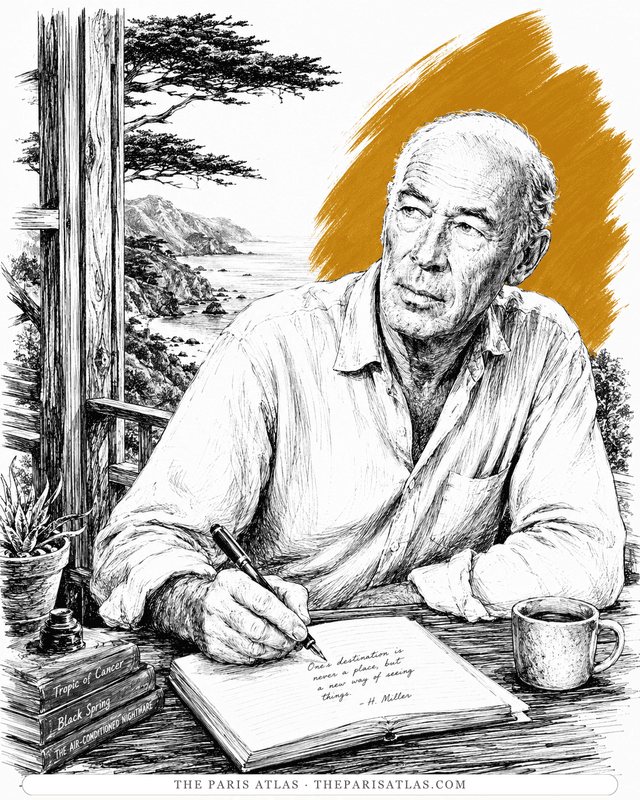
Henry Miller
The Brooklyn dropout who arrived in Paris broke at thirty-eight and wrote the exuberant, banned books that ended American censorship.
View author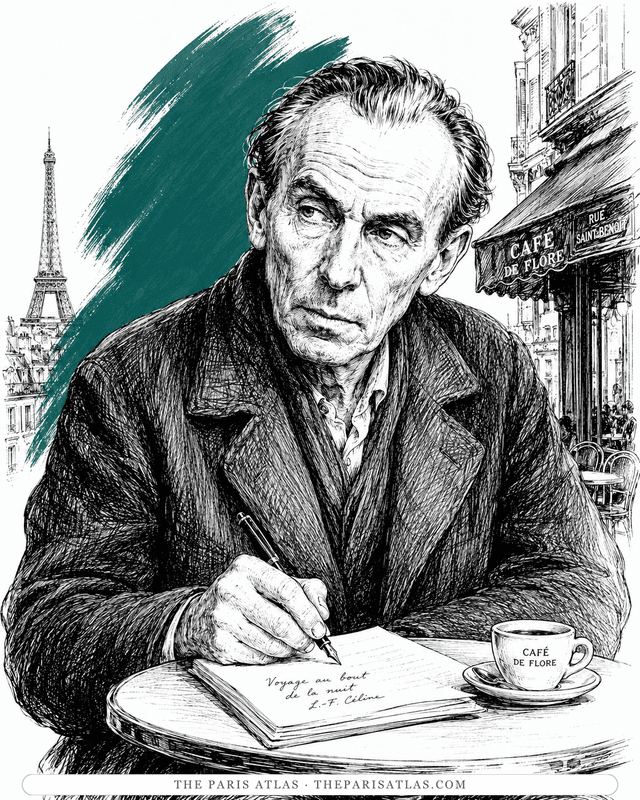
Louis-Ferdinand Céline
The doctor of the Paris slums who wrote the century's blackest, funniest novel — and changed the sound of French prose.
View author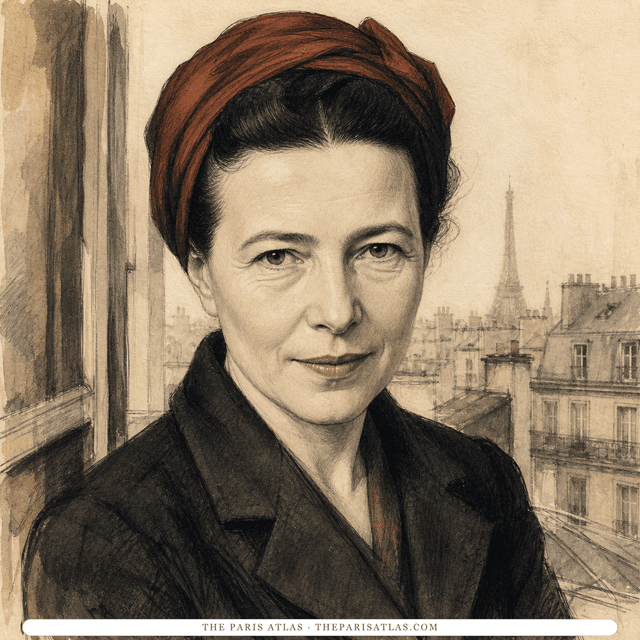
Simone de Beauvoir
French writer and philosopher whose novels, memoirs, and social analysis examined freedom, gender, responsibility, aging, and the material conditions that shape a life.
View author