
Ellis
Local manager of a timber company and the loudest voice in the club. Almost every line he speaks is an insult, and the novel says his hatred of Orientals is the one thing about him that is completely sincere.
To be allowed to rule. His formulation, hammered on the table with a thumb: we are the masters, and you beggars keep your place. He believes the Empire has been ruined by giving way over small things.
The book

At a glance
- Local manager of a timber company; one of the seven Europeans in Kyauktada
- Tiny, wiry-haired, pale and sharp-featured, restless
- Cockney, exaggerated on purpose for the sardonic effect
- Says something disagreeable about anyone who has just left the room
- Admires the Amritsar massacre by name and thinks the law is what ruined the Empire
- From chapter 2 to the last club scene
Who they are in the book
Spoiler-freeEllis is tiny and wiry-haired, with a pale sharp-featured face and restless movements, and he deliberately exaggerates his Cockney accent for the sardonic edge it gives his sentences. He is described, without qualification, as an intelligent man and an able servant of his firm, and as one of those Englishmen — common, unfortunately — who should never be allowed to set foot in the East. Living in perpetual contact with Burmese people has not accustomed him to the sight of a Burmese face; any hint of friendly feeling towards an Oriental seems to him a horrible perversity. The narration calls the hatred restless and bitter, as of something evil or unclean, and notes that his rages are curiously impressive because they are so completely sincere.
His speech is a near-continuous stream of racial abuse and the book prints it in full, in the room where the other Europeans agree with it. He is the one who tears Mr Macgregor's notice off the board and pencils 'B. F.' against the Deputy Commissioner's signature; the one who drafts a counter-notice designed to reach Dr Veraswami as a public insult; the one who nicknames Flory for the friendship and then invents scandals about him, which grow by repeated embroidery into what the book calls a species of saga. Quarrels are a regular part of the routine of club life and he never apologizes for one.
His other subject is women. When Flory walks Elizabeth home from the pwe, Ellis takes him aside to explain the Indian marriage market with a pantomime of examining meat — best pasture-fed English, warranted prime condition, juicy joints straight from the ice — and the joke lasts him weeks, because nothing gives him quite so keen a pleasure as dragging a woman's name through mud.
Everything he wants is a rebellion he can put down. He tells Westfield to bamboo the ringleaders on the quiet, admires the Amritsar massacre by name, and at Maxwell's graveside offers two hundred rupees for bribing witnesses and asks the police to torture them. When the club is finally besieged he stamps up and down demanding rifles and wondering aloud how many they could shoot in heaps. The novel makes the causal chain explicit: he is the sole cause of the riot, and nobody in the room thinks to blame him for it.
How Ellis Is Portrayed
- The skin round his noseHis one physical tell, and the book points it out rather than leaving it to be noticed: when he is angry the skin round his nose goes so pale that it is almost grey. It happens over the club notice, and again when Verrall offers to kick him as he kicked the butler, after which his voice almost deserts him.
- His handsSmall, like the rest of him — the book's word for Ellis is tiny. He nurses a cool bottle between them at the club with his forehead sweating, and presses one small thumb down on the table as though flattening a grub.
- Prickly heatHe cannot wear a thick suit for even an hour without bringing it on. After Maxwell's funeral he bathes and changes back into shirt and shorts and still spends the evening wriggling his shoulders against it.
- The pencil markHe unpins Mr Macgregor's notice about electing an Asian member, writes a tiny neat 'B. F.' against the signature, and re-pins it — the curious air of spite that some men can put into their tiniest action.
- The counter-noticeWritten in his small clear hand after a libellous article appears, and phrased so that the news of it will reach Dr Veraswami by morning. Westfield objects to one word and it is crossed out with a single thin line. Ellis then cannot keep his eyes off the board all evening.
- The butler's EnglishTold the ice is difficult to keep cool, he orders the man to stop speaking properly — 'Have you swallowed a dictionary?' — and says they will have to sack him if he learns to speak English too well.
- The meat marketHis running joke about Elizabeth and every other woman shipped out to India: carcasses of frozen mutton, cold storage, warranted prime condition, complete with goatish sniffs. His jokes are genuinely witty and filthy beyond measure, and this one lasts him for weeks.
- The ballotAt the general meeting he drops in two black balls — one for himself, one on Maxwell's behalf — then takes the drawer of white ones and pitches them across the floor. One of the men carrying Maxwell's body in a few minutes later treads on one and nearly falls.
- The caneFive schoolboys grin at him in the street and he asks what they are laughing at. One answers 'Not your business.' In about a second he lays the cane across the boy's eyes. A Burmese doctor's treatment finishes the job that evening, and the boy is blinded.
- AfterwardsHe writes to Mr Macgregor claiming he was wantonly assaulted, and two clerks and a chaprassi corroborate it in perfect unison. Orwell adds that Ellis, to do him justice, probably believed this to be a truthful version.
- Under siegeWith two thousand people outside asking for him by name, he stands beside Mr Macgregor with his hands in his pockets, tells Flory to remember the spokesman's face for the prosecution, and spends the rest of the night raging that the police will not open fire into the crowd.
- The one thing that stops himVerrall's eye. Ellis confronts him for kicking the club butler, is asked whether he would like the same, and finds his voice deserting him. He seeps back to the card-room to work off his feelings on the butler instead.
If you like Burmese Days


If you like George Orwell
Explore authors with a similar voice, perspective, and influence.
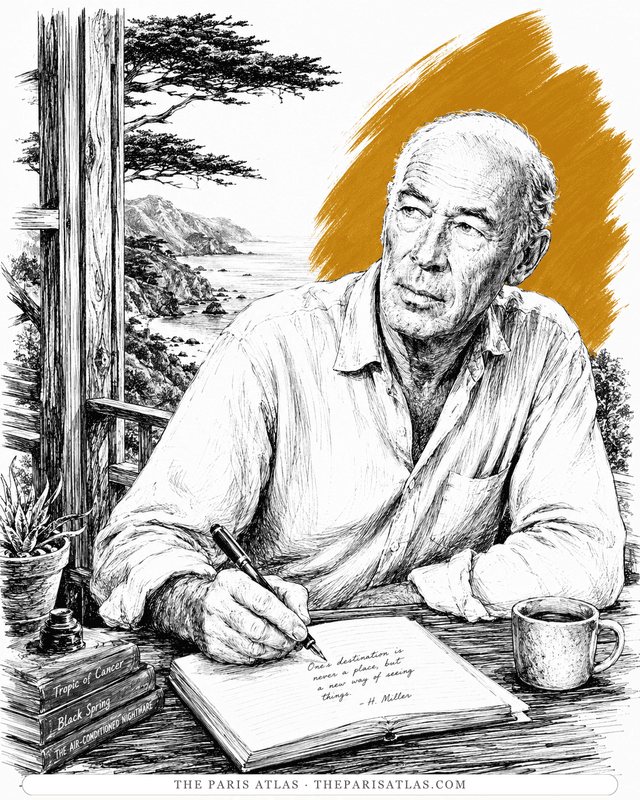
Henry Miller
The Brooklyn dropout who arrived in Paris broke at thirty-eight and wrote the exuberant, banned books that ended American censorship.
View author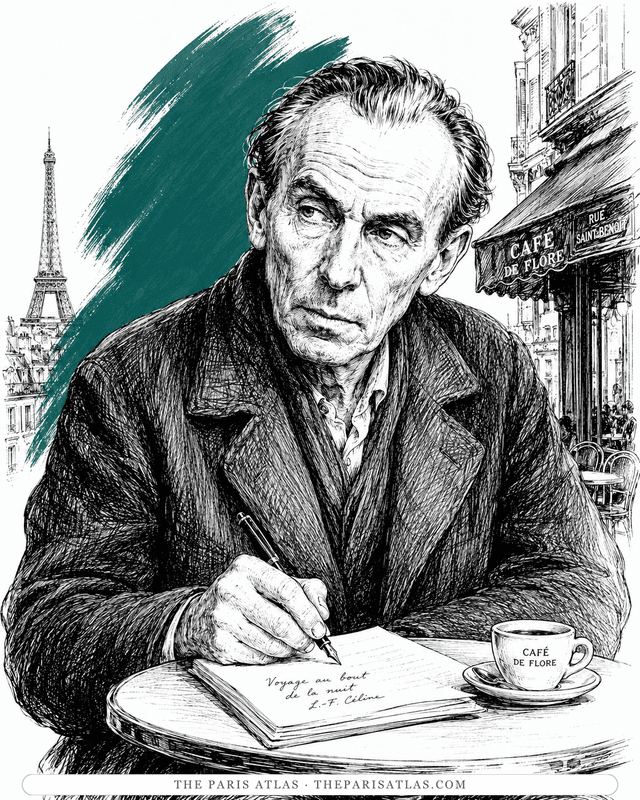
Louis-Ferdinand Céline
The doctor of the Paris slums who wrote the century's blackest, funniest novel — and changed the sound of French prose.
View author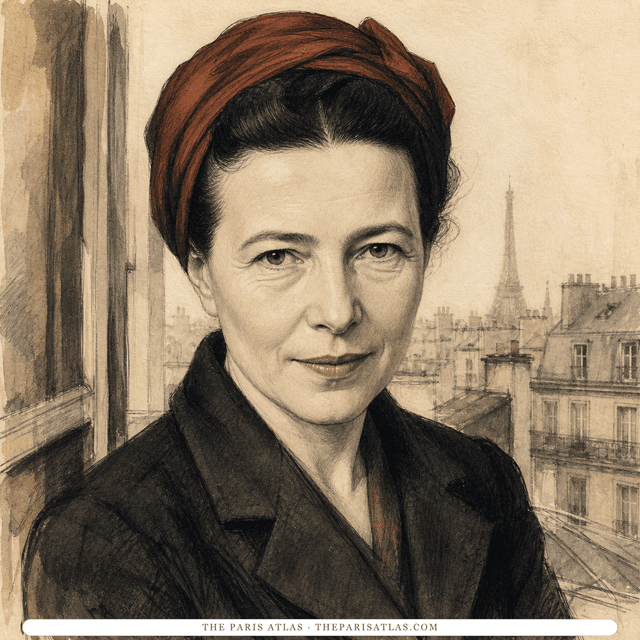
Simone de Beauvoir
French writer and philosopher whose novels, memoirs, and social analysis examined freedom, gender, responsibility, aging, and the material conditions that shape a life.
View author