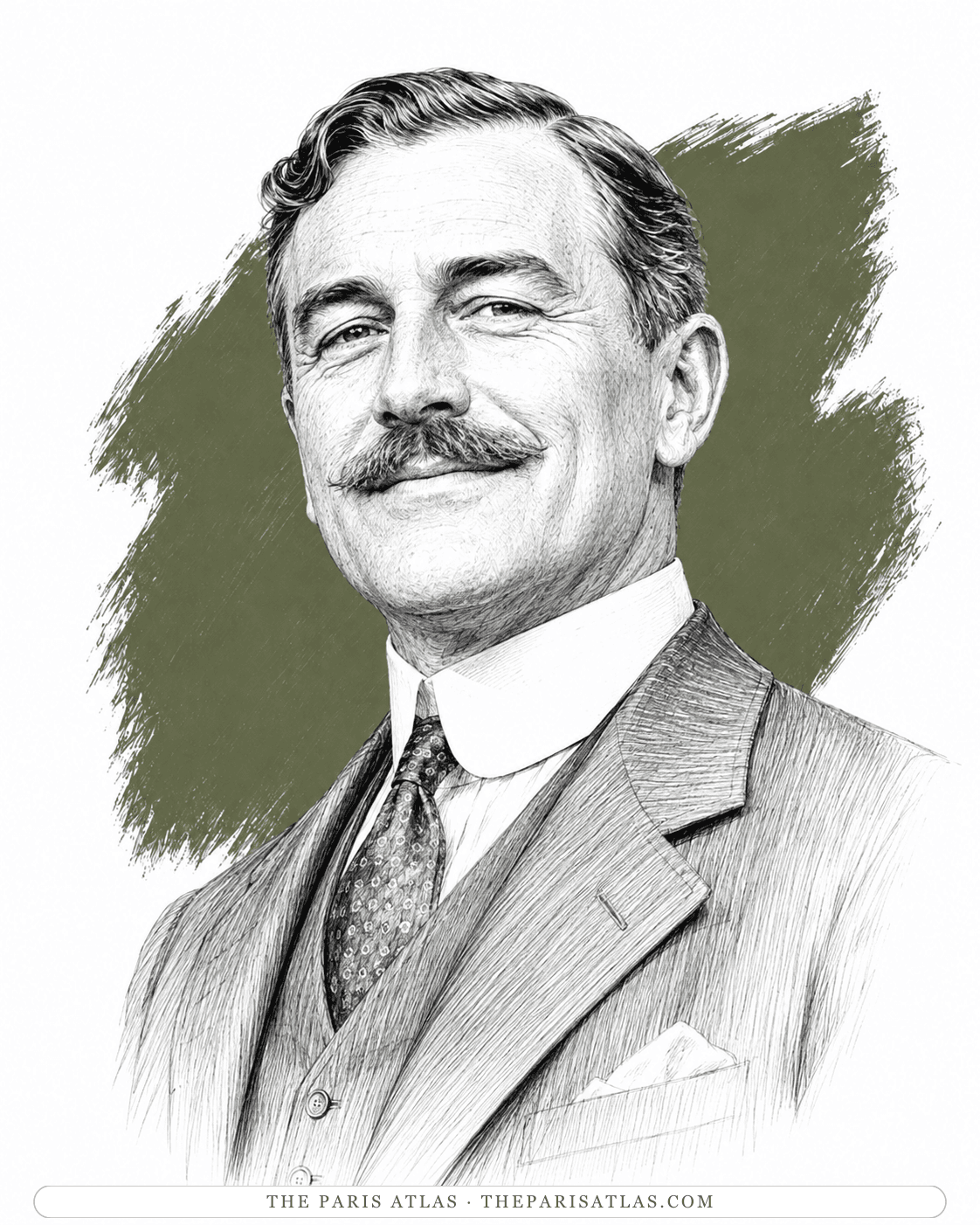
Elizabeth's father
A tea-broker, and less of a drunkard than his brother Tom Lackersteen, whose fortunes rose and fell and who was too optimistic to put anything aside in the good years. In the last year of the war he made money and engaged a horde of servants, including a butler. He died of influenza when Elizabeth was twenty.
The book

At a glance
- Elizabeth Lackersteen's father, dead before the novel opens
- Tea-broker
- 1918, made money while avoiding service
- Of influenza, when Elizabeth was twenty
- Chapter 7, in the account of Elizabeth's past
Who they are in the book
Spoiler-freeElizabeth Lackersteen arrives in Burma as an orphan of twenty-two with no money, and chapter 7 explains how she got that way. Her father was a tea-broker in England, and George Orwell sums him up by comparison with his brother Tom Lackersteen, the drunken uncle Elizabeth is now living with in Kyauktada: less of a drunkard, but a man of the same stamp. He is never given a first name.
His income went up and down sharply, and he was too optimistic ever to save anything during the good stretches. In the last year of the First World War, having managed to avoid serving in it, he made a great deal of money. Just after the Armistice the family moved into a huge new house in Highgate with greenhouses, shrubberies, stables and tennis courts, and he hired a crowd of servants, including, Orwell notes, a butler.
The same optimism paid for two terms at a very expensive girls' boarding school, and those two terms decided who Elizabeth was going to be. Four of the girls there were the daughters of peers and nearly all of them had their own ponies. Orwell says her entire code of living was fixed in that half-year: good means expensive, elegant and aristocratic, and bad means cheap, shabby and hard work.
The crash came late in 1919. Elizabeth was taken out of the school and put through a series of cheap ones instead, with terms missed altogether when her father could not find the fees. He died of influenza when she was twenty. What he left his widow was £150 a year that would die with her, which is the whole reason Elizabeth ends up in Burma looking for a husband.
How Elizabeth's father Is Portrayed
- His tradeA tea-broker, with fortunes that swung violently and no savings at any point, because he always expected the next good year.
- What sort of man he wasOrwell places him by his brother: less of a drunkard than Tom Lackersteen, but a man of similar stamp. Tom is the uncle Elizabeth now lives with, and whose habit of pinching her legs is one of the reasons she counts staying in his house as impossible.
- The warHe avoided service and made a great deal of money in the last year of it.
- The Highgate houseBought just after the Armistice: huge, new and rather bleak, with greenhouses, shrubberies, stables and tennis courts, and staffed with a crowd of servants and a butler.
- Two termsHe sent Elizabeth to a very expensive boarding school and could afford it for six months. Orwell treats those two terms as the thing that formed her permanently.
- The crash and the deathThe money went late in 1919 and Elizabeth was moved to cheap schools, missing terms when the fees could not be found. He died of influenza when she was twenty, leaving his widow £150 a year that would end with her.
If you like Burmese Days


If you like George Orwell
Explore authors with a similar voice, perspective, and influence.

Henry Miller
The Brooklyn dropout who arrived in Paris broke at thirty-eight and wrote the exuberant, banned books that ended American censorship.
View author
Louis-Ferdinand Céline
The doctor of the Paris slums who wrote the century's blackest, funniest novel — and changed the sound of French prose.
View author
Simone de Beauvoir
French writer and philosopher whose novels, memoirs, and social analysis examined freedom, gender, responsibility, aging, and the material conditions that shape a life.
View author