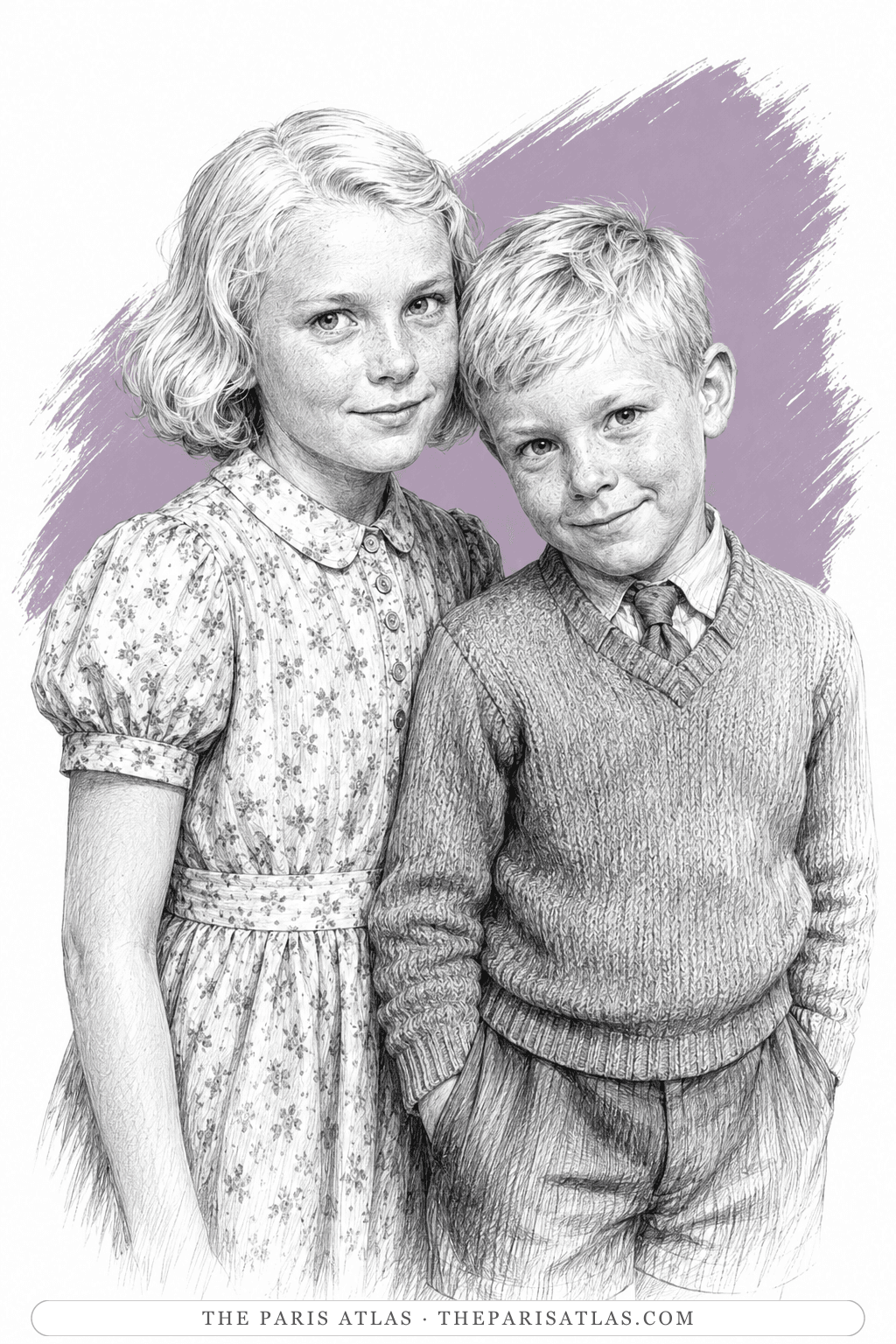
Billy and Lorna Bowling
George Bowling's own children, Lorna aged eleven and Billy aged seven, with round faces and tow-coloured hair. Billy shoots past his father on the stairs dodging a smack and demands to go somewhere; Lorna sidles up and asks in a pert voice whether Daddy is a baby, because Billy has started the chant. They meet him at the end with the only question that interests them, which is where their presents are.
Whatever they are asking for at that moment: to get into the bathroom, to have a new sandbucket, to be given their presents tonight instead of in the morning.
The book

At a glance
- The two children of George and Hilda Bowling
- Lorna, eleven; Billy, seven, in January 1938
- Ellesmere Road, West Bletchley, a London suburb
- Fee-paying, with five pounds still owed on the previous term
- Part One, Chapter 1; Part Two, Chapter 5; Part Four, Chapter 6
Who they are in the book
Spoiler-freeLorna and Billy Bowling are the two children of George Bowling, the insurance salesman who narrates Coming Up for Air, and his wife Hilda. When the novel opens on a January morning in 1938, Lorna is eleven and Billy is seven. The family lives at Ellesmere Road in West Bletchley, a London suburb of new semi-detached houses bought on mortgage. Both children have round faces and tow-coloured hair, several shades lighter than their father's. That is the whole physical description the book gives of them.
The book introduces them outside a bathroom door. Bowling has got in first, at about a quarter to eight, and shut them out. There is a noise like a herd of buffaloes on the two steps down to the bathroom, then frantic stamping outside, then a yell of agony, then Billy saying he wants to go somewhere. The lavatory is in the bathroom, so their father has to give in. He pulls the plug out of the bath, dries himself as best he can, and Billy shoots past him through the door, dodging the smack aimed at his head. Ten minutes later Bowling discovers that his neck is still covered in soap.
On any morning when there is no chance of keeping anyone else out of the bathroom, the two of them wash and dress at lightning speed. At breakfast they are working through an argument that runs "Yes, you did!" "No, I didn't!" and looks like going on for the rest of the morning, until their father tells them to cheese it. There is five pounds still owing on last term's school fees. Afterwards they go off to play in the public gardens.
Bowling is honest about them in both directions and makes no attempt to reconcile the two halves. A great deal of the time he can hardly stand the sight of them, and he finds their conversation unbearable, because they are at the age when a child's mind revolves round rulers, pencil-boxes and who got top marks in French. Then he describes standing over their cots on summer evenings while it was still light, watching them sleep, and feeling what the Bible calls your bowels yearning. Elsewhere he calls the two of them a link, a tie, and a ball and fetter.
The one scene they really get is at Bournemouth, a few years before the book opens, on the family's fortnight of summer holiday. Everyone is walking the pier, where men are sea-fishing with stumpy rods and little bells. The children get bored and want to go back to the beach. Their father stays to watch a man land a flounder, and it moves something in him. As they walk off he says casually that he has half a mind to do a bit of fishing himself. Hilda works out that a rod and reel would cost about a pound, loses her temper about the ten shillings for the rod, and tells him not to be such a baby at his age. Then the children join in. Lorna sidles up and asks, in what her father calls that silly pert way she has, "Are you a baby, Daddy?" Billy, who could not yet speak quite plain, announces to the world in general, "Farver's a baby." The two of them dance round him rattling their sandbuckets and chanting it. Bowling's comment on the page is "Unnatural little bastards!"
Elsewhere in the book they turn up mostly in connection with money. Boots wearing out and school fees are two of the items in Hilda's daily list of money worries. The back garden at Ellesmere Road is ten yards by five, with a privet hedge and a bare patch worn in the middle of the grass. Bowling points out that the houses without children are the ones with no bare patch. The open fields the road gave on to, Platt's Meadows, were good for the children to play in until the builders arrived and covered them with more houses.
How Billy and Lorna Bowling Is Portrayed
- Their agesLorna is eleven and Billy seven in January 1938. Billy was born shortly after the family started buying the house in Ellesmere Road, in 1930.
- What they look likeRound faces, and tow-coloured hair several shades lighter than their father's.
- Billy at the bathroom doorStamping outside and yelling that he wants to go somewhere, then shooting past his father through the door and dodging the smack aimed at his head.
- How they talk to each other"Yes, you did!" "No, I didn't!" across the breakfast table, apparently good for the rest of the morning if nobody stops them.
- What interests themRulers, pencil-boxes, and who got top marks in French. Bowling calls it the dreary bread-and-butter age.
- Farver's a babyOn the pier at Bournemouth, after their mother has called their father a baby for wanting a fishing rod, Lorna asks him whether he is a baby and Billy announces that he is. Then the two of them dance round him rattling their sandbuckets and chanting it.
- How their father talks about themMost of the time he can hardly stand the sight of them. Watching them asleep in their cots on light summer evenings, he says he felt what the Bible calls your bowels yearning, and that his own importance was to have brought them into the world and to feed them while they grow.
- What they costBoots and school fees are standing items in Hilda Bowling's daily list of money troubles, and five pounds of last term's fees is still unpaid when the book opens.
Their last appearance settles something the end of the book has been holding open.
If you like Coming Up for Air


If you like George Orwell
Explore authors with a similar voice, perspective, and influence.

Henry Miller
The Brooklyn dropout who arrived in Paris broke at thirty-eight and wrote the exuberant, banned books that ended American censorship.
View author
Louis-Ferdinand Céline
The doctor of the Paris slums who wrote the century's blackest, funniest novel — and changed the sound of French prose.
View author
Simone de Beauvoir
French writer and philosopher whose novels, memoirs, and social analysis examined freedom, gender, responsibility, aging, and the material conditions that shape a life.
View author