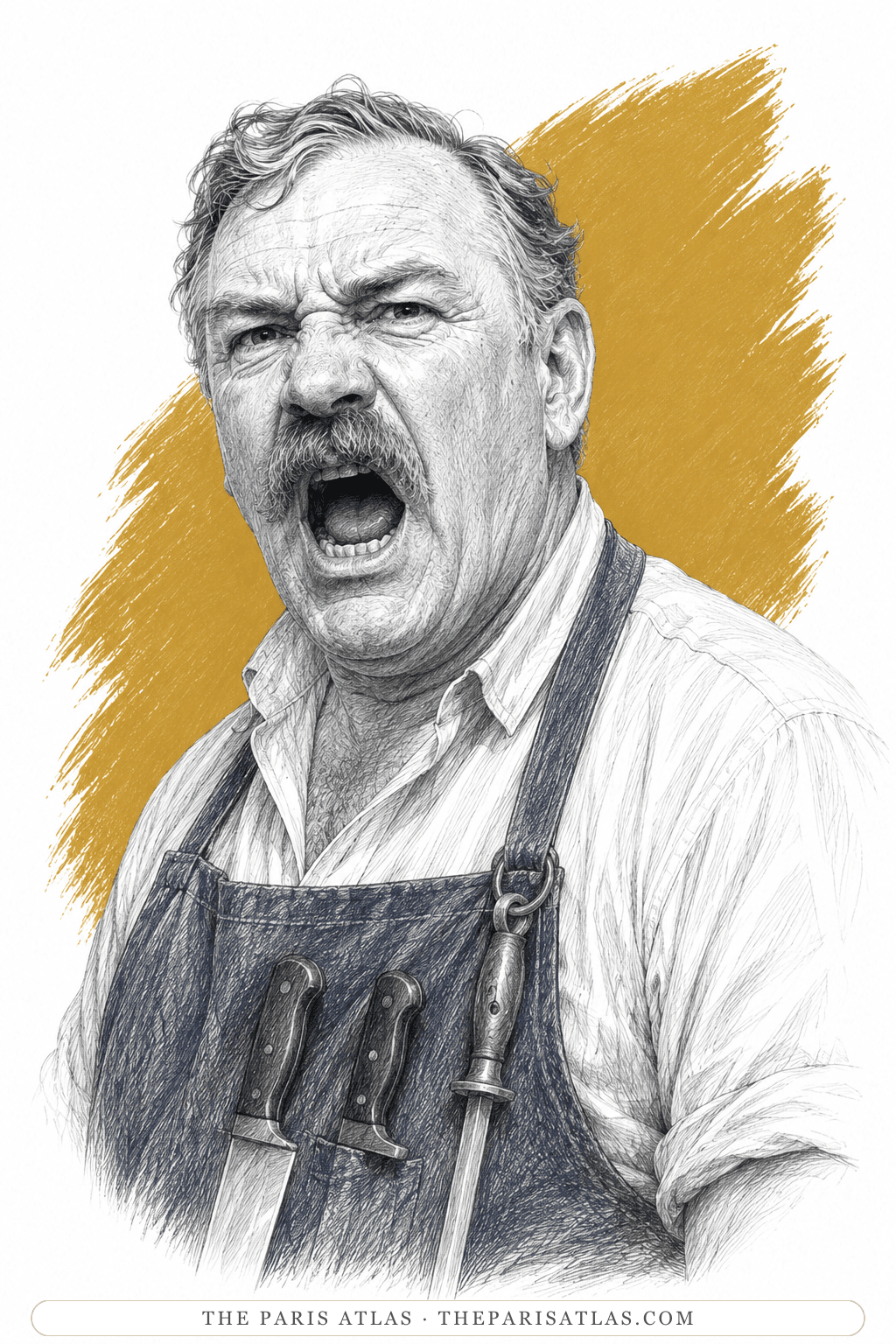
Old Gravitt
The butcher of Lower Binfield: a big rough-faced old man with a voice like a mastiff, who barked at boys so that the knives and steels on his blue apron jingled. The boys came to him for gentles for fishing bait and were roared at — what, gentles, gentles in my shop — and then sent round to the backyard to get them, which George Bowling says smelt like a battlefield.
To be asked properly. He denies having any gentles every single time, keeps the denial up until the boy is on his way out, and only then tells him to go and look in the backyard.
The book

At a glance
- Butcher of Lower Binfield
- Gentles, the blow-fly maggots used as fishing bait
- An empty treacle-tin, an empty shop, and a very humble question
- Dead and buried in the churchyard; his shop sells radio parts
- Part Two, Chapter 4; remembered in Part Four, Chapters 2 and 3
Who they are in the book
Spoiler-freeOld Gravitt is the butcher of Lower Binfield, the Oxfordshire market town where George Orwell's Coming Up for Air is partly set, and for the boys of the town he is the only source of the best fishing bait there is. The narrator, George Bowling, is remembering him from the years before the First World War, when he was a boy and fishing was the thing he cared about most.
The bait in question is gentles: the maggots of the blow-fly. Bowling's father kept the corn and seed merchant's shop in the High Street, so there were always plenty of mealworms at home, and mealworms were good but not very good. Gentles were better, and gentles had to be begged off Gravitt. This was unpleasant enough that the gang drew lots, or counted out with enamena-mina-mo, to decide who would go and ask.
Gravitt was a big, rough-faced old man with a voice like a mastiff, and he generally barked when he was speaking to boys. When he barked, all the knives and steels hanging on his blue apron gave a jingle.
The transaction had a fixed shape. You went in with an empty treacle-tin, hung about until the customers had gone, and then said, very humbly, "Please, Mr Gravitt, y'got any gentles today?" As a rule he roared back: "What! Gentles! Gentles in my shop! Ain't seen such a thing in years. Think I got blow-flies in my shop?" He had, of course. They were everywhere, and he dealt with them using a strip of leather on the end of a stick, with which he could reach out an enormous distance and smack a fly into paste. Sometimes you went away with nothing. More often he shouted after you just as you were leaving to go round the backyard and have a look, and that you might find one or two if you looked carefully. They were in little clusters everywhere out there. Butchers had no refrigerators in those days, and Bowling's summary of the yard is that it smelt like a battlefield.
When Bowling comes back to Lower Binfield in June 1938 he finds Gravitt in the churchyard, among a whole row of names he grew up with. The shop is still standing in the middle of the old town, where the buildings have changed less than the rest. It sells radio parts now.
How Old Gravitt Is Portrayed
- His tradeButcher of Lower Binfield, working in a blue apron hung with knives and steels.
- The voiceLike a mastiff, and he generally barked when he spoke to boys. When he did, all the knives and steels on his apron jingled.
- What the boys wanted from himGentles, the maggots of the blow-fly, which were the best bait a boy in the town could get. Mealworms were free in Bowling's father's corn shop and not nearly as good.
- Drawing lots to ask himAsking was unpleasant enough that the gang drew lots, or counted out with enamena-mina-mo, to settle who went in with the empty treacle-tin.
- The denial"What! Gentles! Gentles in my shop! Ain't seen such a thing in years. Think I got blow-flies in my shop?" He had. They were everywhere.
- The strip of leatherHe kept a strip of leather on the end of a stick, and could reach out an enormous distance with it and smack a fly into paste.
- How he relentedAs a rule he shouted after the boy just as he was going out of the door to go round the backyard and have a look, and that he might find one or two if he looked carefully. The maggots were in little clusters everywhere out there, and Bowling says the yard smelt like a battlefield.
- What is left of him in 1938A grave in the churchyard, and his old shop in the middle of the town, which now sells radio parts.
If you like Coming Up for Air


If you like George Orwell
Explore authors with a similar voice, perspective, and influence.

Henry Miller
The Brooklyn dropout who arrived in Paris broke at thirty-eight and wrote the exuberant, banned books that ended American censorship.
View author
Louis-Ferdinand Céline
The doctor of the Paris slums who wrote the century's blackest, funniest novel — and changed the sound of French prose.
View author
Simone de Beauvoir
French writer and philosopher whose novels, memoirs, and social analysis examined freedom, gender, responsibility, aging, and the material conditions that shape a life.
View author