George Cookson
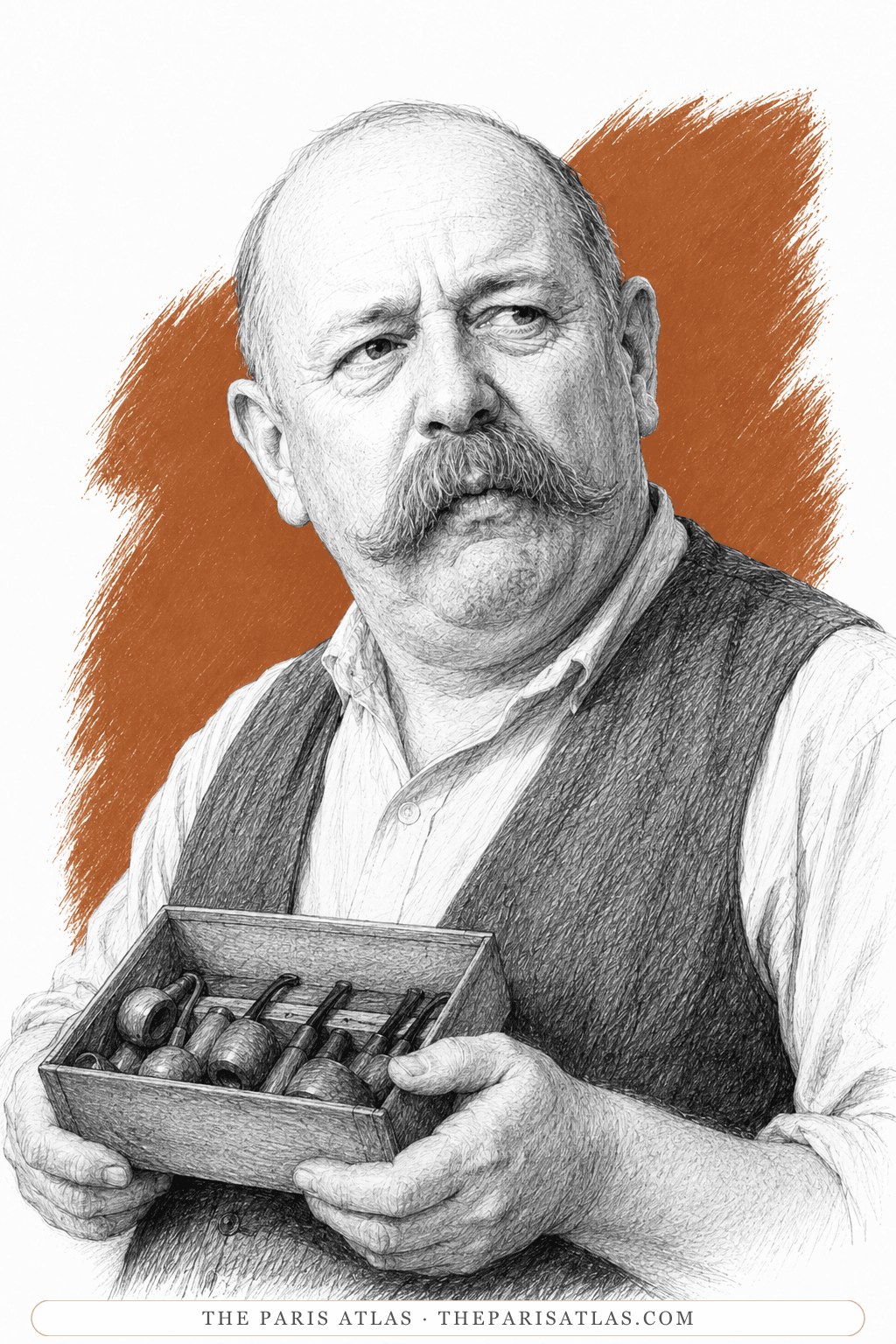
Elsie Waters's husband in 1938, and the proprietor of G. Cookson, Confectioner and Tobacconist. A small stoutish bald man in shirtsleeves with a big gingery moustache, interrupted in the middle of his tea to look for a box of pipes. Bowling notes, without saying more about it, that the other bloke's name was George too.
To get back to his tea. He is called out of the back room, spends five minutes hunting for a box of pipes, chews all the way through it, and is visibly annoyed when the customer buys a packet of cigarettes instead.
The book

At a glance
- Shopkeeper in Lower Binfield, and Elsie Waters's husband
- G. Cookson, Confectioner and Tobacconist
- Bowling assumes a string of children, but sees none
- One scene, lasting about five minutes, in June 1938
- Part Four, Chapter 4
Who they are in the book
Spoiler-freeGeorge Cookson keeps a confectioner's and tobacconist's shop in Lower Binfield, the Oxfordshire market town where George Orwell's Coming Up for Air is partly set. He is married to Elsie Waters, the girl the narrator was in love with before the First World War. He is in the book for about five minutes, in one scene, and nothing else about him is given.
The narrator, George Bowling, is back in the town in June 1938 after twenty years away. Walking through streets he does not recognise, he follows a shapeless middle-aged woman for some distance before he is certain she is Elsie, and watches her turn in at a shop doorway in a way that shows the shop is hers. The name over the window is G. Cookson, Confectioner and Tobacconist. It is a mangy little place in a mean street away from the old centre, more flyblown than the shop next door, and it sells not much beyond tobacco and the cheapest sweets. Bowling needs a reason to go in, sees a rack of cheap pipes in the window, and buys himself a few minutes by asking for a briar.
Elsie does not recognise him. She fetches a cardboard box of pipes from under the counter, and when he says he would like one with an amber mouthpiece she turns towards the back of the shop and calls, "Ge-orge!" Bowling notes in one sentence that the other man's name was George too, and does not go on about it. A noise that sounds something like "Ur!" comes back from the room behind.
Then Cookson comes in: a small stoutish man in shirtsleeves, bald, with a big gingery-coloured moustache, and his jaw working. He has been interrupted in the middle of his tea. The two of them poke about among the litter of the shop for about five minutes before the second box of pipes turns up behind some bottles of sweets, and there is no amber mouthpiece in it. Bowling puts the pipe down, says he will leave it, and asks for a small packet of Player's instead. Cookson roots the cigarettes out, still chewing, and is plainly sulky at having been dragged away from his tea for nothing.
That is the whole of him. He is never given a line of dialogue, and Bowling learns nothing about him except his trade, his tea and his moustache. Bowling calls him the second George, guesses there is a string of children as well, and walks out.
How George Cookson Is Portrayed
- What he looks likeA small stoutish man with a bald head and a big gingery-coloured moustache, in shirtsleeves.
- The interrupted teaHe comes into the shop with his jaw working in a ruminative way, having been called away from his tea, and he is still chewing when he hands over the cigarettes.
- The only sound he makesCalled from the back of the shop, he answers with a noise Bowling writes down as "Ur!". He is never given a word of dialogue in the scene.
- His shopG. Cookson, Confectioner and Tobacconist: a mangy, flyblown little place in a mean street away from the old centre of the town, selling little except tobacco and the cheapest kinds of sweets. Bowling reckons the whole stock is worth about fifty pounds.
- The hunt for the pipesHe and his wife rummage through the litter for about five minutes before the second box turns up behind some bottles of sweets, and when they open it there is not an amber mouthpiece in it.
- The nameHis first name is George, and so is the narrator's. Bowling notices the coincidence in a single sentence, calls him the second George, and leaves it there.
If you like Coming Up for Air


If you like George Orwell
Explore authors with a similar voice, perspective, and influence.

Henry Miller
The Brooklyn dropout who arrived in Paris broke at thirty-eight and wrote the exuberant, banned books that ended American censorship.
View author
Louis-Ferdinand Céline
The doctor of the Paris slums who wrote the century's blackest, funniest novel — and changed the sound of French prose.
View author
Simone de Beauvoir
French writer and philosopher whose novels, memoirs, and social analysis examined freedom, gender, responsibility, aging, and the material conditions that shape a life.
View author