Old Brewer
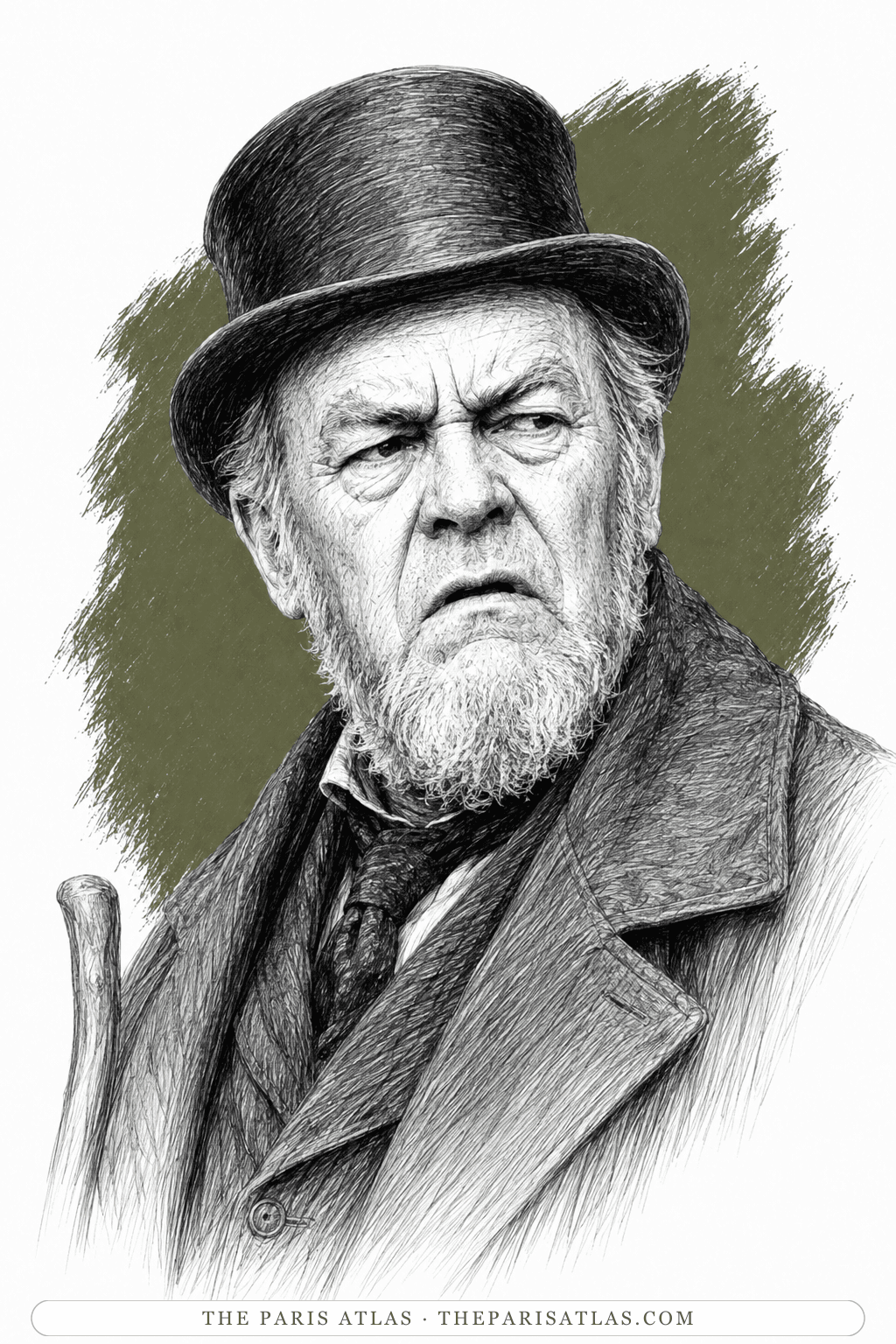
The farmer at the Mill Farm, who owned the pool where Bowling caught his first fish and used it only for watering cattle. A stingy old man in a tall billycock hat and cowhide gaiters who hated boys, chased the gang half across a meadow with a hazel stick, and shaved off his grey beard late in the Boer War because children kept shouting "Krooger!" after him.
To keep other people's boys off his land. He used the pool only for watering cattle, chased the gang half across a meadow for fishing in it, and then went round to their fathers.
The book

At a glance
- Farmer at the Mill Farm, outside Lower Binfield
- His cow-pond, where George Bowling caught his first fish; he used it for watering cattle
- Grey chin-beard, shaved off during the Boer War
- Dead, and buried in the Lower Binfield churchyard
- Part Two, Chapters 2 and 3; Part Four, Chapters 2 and 3
Who they are in the book
Spoiler-freeOld Brewer farmed the Mill Farm just outside Lower Binfield, the invented Oxfordshire market town, five miles from the Thames, where the narrator of the novel grew up. George Bowling is forty-five in 1938 and sells insurance in a London suburb, and the middle third of the book is his account of the town before 1914. Brewer belongs to that part of it. He owned the cow-pond where Bowling caught his first fish, and he had no interest in the fish: he used the pond for watering cattle, and he was very down on fishing because he hated boys.
Bowling's father kept a corn and seed merchant's shop in the High Street, and Brewer was one of the farmers who came in during the morning to run samples through their fingers. He would stand there for half an hour, fingering samples of chicken corn and letting them drop into his pocket in an absent-minded manner, and then leave without buying anything. That is the first portrait, and it comes with a grey chin-beard.
The beard did not last. During the Boer War the children of the town took to shouting "Krooger!" after him, and towards the end of the war he got fed up enough to shave it off. Paul Kruger, the Boer president, wore a chin-beard of the same kind; the novel leaves the connection to the reader.
That scene is the second portrait, and it is the one the book spends time on. Bowling was eight, cut school, and followed his elder brother's gang to the pool. They landed a carp seven inches long and were kneeling round it when Brewer arrived and stood over them in a tall billycock hat, cowhide gaiters and a thick hazel stick. Shaved, his mouth was toothless and his chin looked like a nutcracker. He roared that he would teach them to come fishing in his pool, went at them with the stick, and chased the gang half across the meadow. His legs were stiff and he could not move fast, but he got in some good swipes, and Bowling was at the back. He had also yelled after them that he knew all their names and would tell their fathers, and he sent round the same day.
By 1938 he is a name on a stone. Bowling walks the churchyard on his return and reads Brewer of the Mill Farm off it, remembering the wicked old face like something carved out of a nut. The next day he walks the streets where the farm used to be. Nearly all of Brewer's land is under a council housing estate, the Mill Farm has gone, and the pond has been drained, filled and built over, so that Bowling cannot say exactly where it stood.
How Old Brewer Is Portrayed
- The beard, before the Boer WarIn the earliest memory of him he has a grey chin-beard, and Bowling's word for him in the same sentence is stingy.
- The chicken cornHe would stand in the corn merchant's shop for half an hour, fingering samples of chicken corn and letting them drop into his pocket in an absent-minded manner, and then leave without buying anything.
- Why the beard wentThe town's children took to shouting "Krooger!" after him during the Boer War, and towards the end of it he shaved. Paul Kruger, the Boer president, wore a chin-beard of the same kind, and the novel does not join up the two facts.
- The face underneathA wicked old mouth with no teeth in it, and, with the beard gone, a chin that looked like a nutcracker.
- The hat and the gaitersA tall billycock hat, which Bowling stops to explain as one of those hats that were a cross between a top hat and a bowler, worn with cowhide gaiters.
- The hazel stickHe carried a thick hazel stick and used it. Finding four boys and a caught carp at his pool, he shouted that he would learn them to come fishing there and went in whacking out in all directions.
- The stiff legsHe could not move fast, which did not stop him chasing the gang half across the meadow. Bowling was at the back, took most of the wallops, and had red weals on his calves by the time they were through the hedge.
- What he did afterwardsHe had yelled after the boys that he knew all their names and would tell their fathers, and he sent round that day. Bowling got three hidings before bedtime: one from his brother, one from Brewer and one from his mother.
- What is left of him in 1938Bowling finds him in the churchyard among the other names he grew up with, remembered by the wicked old face like something carved out of a nut. Nearly all his land is under a council estate, and the pond is drained and built over.
If you like Coming Up for Air


If you like George Orwell
Explore authors with a similar voice, perspective, and influence.

Henry Miller
The Brooklyn dropout who arrived in Paris broke at thirty-eight and wrote the exuberant, banned books that ended American censorship.
View author
Louis-Ferdinand Céline
The doctor of the Paris slums who wrote the century's blackest, funniest novel — and changed the sound of French prose.
View author
Simone de Beauvoir
French writer and philosopher whose novels, memoirs, and social analysis examined freedom, gender, responsibility, aging, and the material conditions that shape a life.
View author