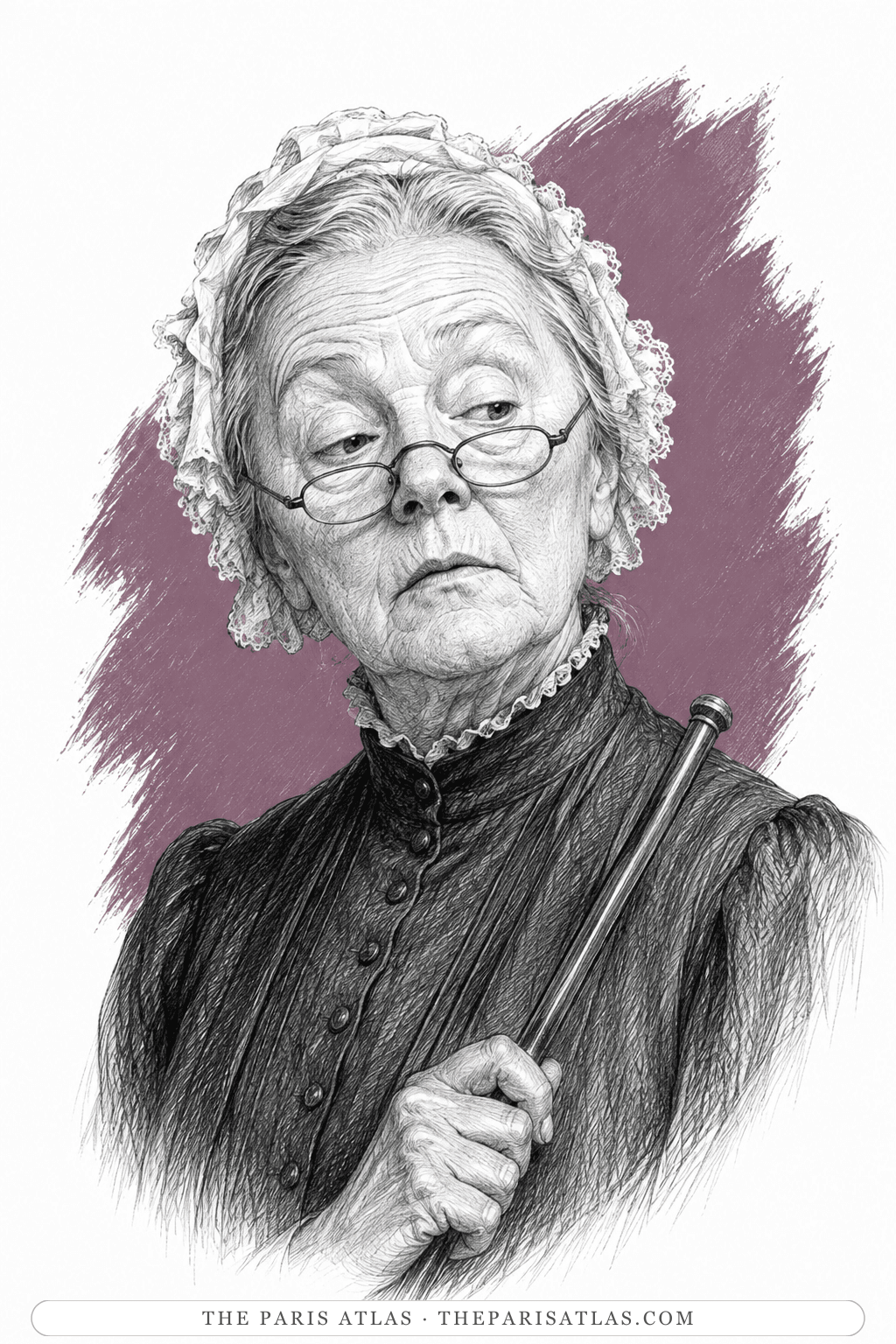
Mother Howlett
The old woman who kept the dame-school George Bowling first went to, and whom everyone knew was an imposter. She was over seventy, very deaf, could hardly see through her spectacles, and owned a cane, a blackboard and a few books. Her threat when a child did something bad was that she would tell his father, and she was too old and clumsy for the cane to matter much.
To keep order in a schoolroom she can barely see or hear. Her one threat is that she will tell a boy's father, and when a real scandal broke in the school she got it hushed up.
The book

At a glance
- The old woman who kept the dame-school in Lower Binfield
- Over seventy
- Mostly the children of Lower Binfield shopkeepers, including George and Joe Bowling until they were nine
- Mrs Howlett, and Mother Howlett
- Part Two, Chapters 3 and 4
Who they are in the book
Spoiler-freeMother Howlett kept the dame-school in Lower Binfield, the invented Oxfordshire market town where George Bowling grew up. A dame-school was a small private school run by one elderly woman in her own house. Bowling is the narrator of Coming Up for Air: he is forty-five in 1938, sells insurance in a London suburb, and the middle third of the book is his account of the town as it was before 1914. He and his elder brother Joe were sent to Mrs Howlett until they were nine, because the grammar school was four miles away at Walton and their mother would not let them ride that far among the traffic.
Most of the shopkeepers' children in the town went to her, and the reason was social. It saved them from what Bowling calls the shame and come-down of going to the board school, which was the free school run by the local authority. Nobody expected her to teach them anything. Everyone in Lower Binfield knew that Mother Howlett was an old imposter and worse than useless as a teacher, and they sent their children anyway.
She was over seventy. She was very deaf, and she could hardly see through her spectacles. Everything she owned for the running of a school was a cane, a blackboard, a few dog-eared grammar books, and a couple of dozen smelly slates.
She could just manage the girls. The boys laughed at her and played truant as often as they felt like it, Joe Bowling at least once a week. When a child did something particularly bad her formula was that she would tell his father, and on very rare occasions she did tell him. The children were sharp enough to see that she did not dare do it too often. She had the cane and she used it, but she was so old and clumsy that a boy could get out of the way.
One incident gets a couple of sentences. A boy put his hand up a girl's dress, there was a frightful scandal, and Mother Howlett succeeded in hushing it up. Bowling was small at the time and says he did not understand what it was about.
He left her at nine for the grammar school at Walton, with a leather satchel and a black cap with yellow stripes. The book does not mention her again.
How Mother Howlett Is Portrayed
- Her age and her sensesShe was over seventy, she was very deaf, and she could hardly see through her spectacles.
- Everything the school ownedA cane, a blackboard, a few dog-eared grammar books, and a couple of dozen smelly slates. That is the whole inventory the book gives.
- What the town thought of herEveryone knew she was an old imposter and worse than useless as a teacher. The shopkeepers went on sending their children, because the alternative was the free board school and they thought that a come-down.
- Who she could controlShe could just manage the girls. The boys laughed at her and cut school whenever they liked.
- Her one threatFor anything particularly bad she said she would tell the boy's father, and once in a long while she did. The children had worked out that she did not dare do it often.
- The caneShe owned one and she used it, but she was old and clumsy enough that it was easy to dodge.
- The scandalA boy put his hand up a girl's dress. Mother Howlett managed to keep the whole thing quiet, and Bowling, who was still small, did not understand it at the time.
If you like Coming Up for Air


If you like George Orwell
Explore authors with a similar voice, perspective, and influence.

Henry Miller
The Brooklyn dropout who arrived in Paris broke at thirty-eight and wrote the exuberant, banned books that ended American censorship.
View author
Louis-Ferdinand Céline
The doctor of the Paris slums who wrote the century's blackest, funniest novel — and changed the sound of French prose.
View author
Simone de Beauvoir
French writer and philosopher whose novels, memoirs, and social analysis examined freedom, gender, responsibility, aging, and the material conditions that shape a life.
View author