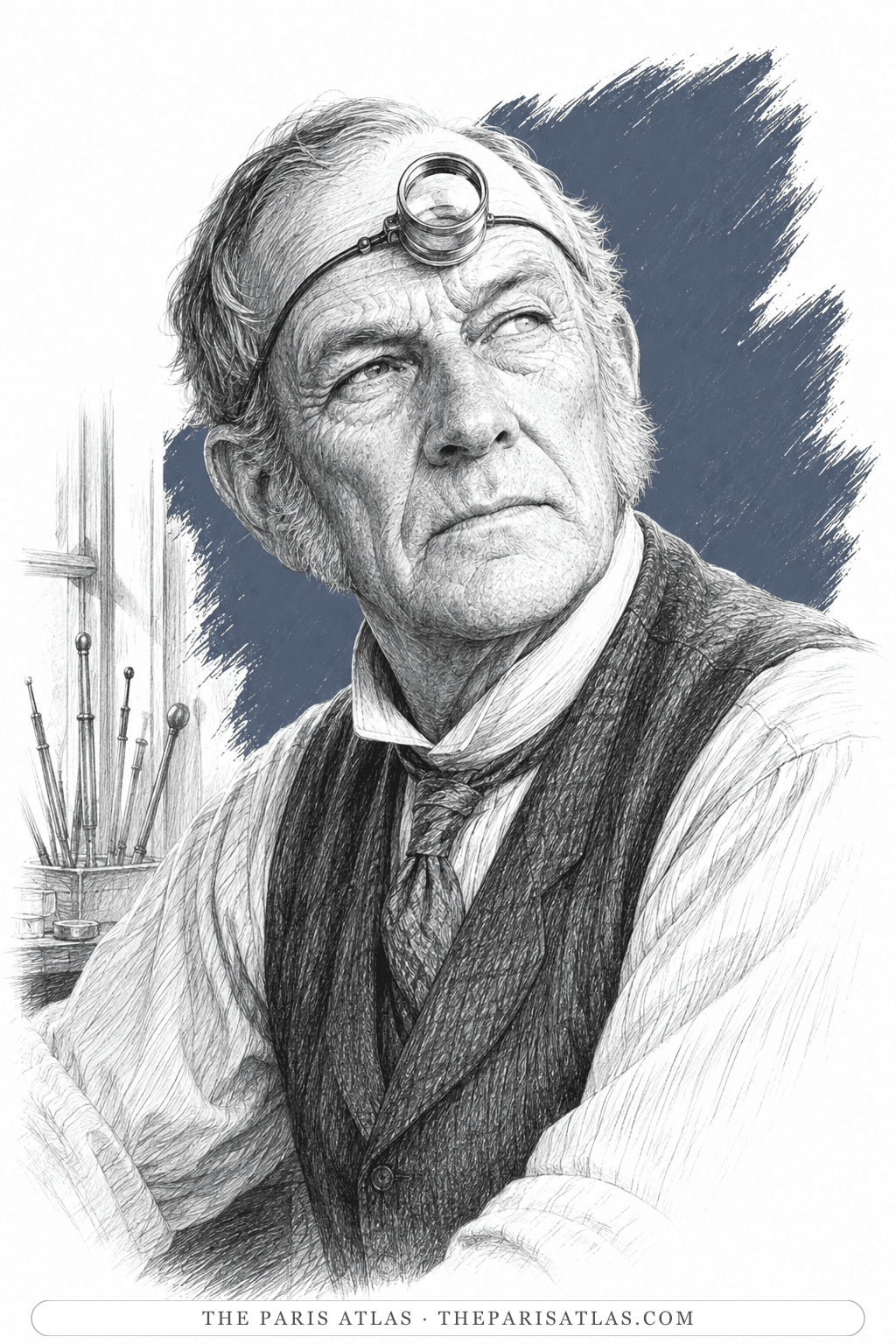
Old Crimp
The watchmaker's assistant in Lower Binfield, a skilled workman who had been at the job man and boy for fifty years, who got cataract and had to go into the workhouse. His grandchildren were howling in the street when they took him away.
The book

At a glance
- Watchmaker's assistant in Lower Binfield, fifty years at the trade
- Cataract
- The workhouse
- A wife, who went out charing, and grandchildren in the town
- Part Two, Chapter 7, in three sentences
Who they are in the book
Spoiler-freeOld Crimp was the watchmaker's assistant in Lower Binfield, the small Oxfordshire market town where George Bowling grew up. Bowling narrates Coming Up for Air as a fat insurance salesman of forty-five in 1938, remembering the town as it was before the First World War. Crimp gets three sentences and never speaks.
Here is what they say. He was a skilled workman who had been at the job, man and boy, for fifty years. He got cataract and had to go into the workhouse. His grandchildren were howling in the street when they took him away. His wife went out charing, which meant cleaning other people's houses by the day, and by desperate efforts managed to send him a shilling a week for pocket-money.
He is there to make a point, and Bowling has just set it up. People before 1914, he says, worked harder, lived less comfortably and died more painfully than people did in 1938. Farm hands worked frightful hours for fourteen shillings a week and ended as worn-out cripples on a five-shilling pension. What was called respectable poverty, Bowling adds, was even worse, and he gives two cases. One is little Watson, a small draper at the other end of the High Street whose business failed after years of struggle, leaving personal assets of two pounds nine shillings and sixpence. He died almost at once of what was called gastric trouble, although the doctor let out that it was starvation, and he had clung to his frock coat to the last. The other case is Old Crimp.
What Bowling is arguing through the two men is that people of that time still had a feeling of continuity. They knew they were going to die, and some of them knew they were going to go bankrupt, but it never occurred to them that the whole order of things could change.
How Old Crimp Is Portrayed
- Fifty years at the benchHe was the assistant to the town's watchmaker, and Bowling is specific that he was a skilled workman who had been at the job, man and boy, for fifty years.
- Cataract, and the workhouseHe got cataract, a clouding of the lens of the eye. Bowling puts the two facts in one clause: he got cataract and had to go into the workhouse, the institution that took in people with no other means of support.
- The day they took him awayBowling remembers his grandchildren howling in the street while it happened. That is the only image of the man the book supplies.
- The shilling a weekHis wife went out cleaning houses by the day, and by what Bowling calls desperate efforts managed to send him a shilling a week in the workhouse for pocket-money.
- Why Bowling names himHe is one of two examples of what Bowling calls respectable poverty, which he says was worse than the open poverty of the farm hands. The other is little Watson, a small draper whose business failed and who died of what the doctor privately called starvation.
- How much the book gives himThree sentences in a paragraph about what life before 1914 actually cost. No first name, no age, no face, and not a word of dialogue.
If you like Coming Up for Air


If you like George Orwell
Explore authors with a similar voice, perspective, and influence.

Henry Miller
The Brooklyn dropout who arrived in Paris broke at thirty-eight and wrote the exuberant, banned books that ended American censorship.
View author
Louis-Ferdinand Céline
The doctor of the Paris slums who wrote the century's blackest, funniest novel — and changed the sound of French prose.
View author
Simone de Beauvoir
French writer and philosopher whose novels, memoirs, and social analysis examined freedom, gender, responsibility, aging, and the material conditions that shape a life.
View author