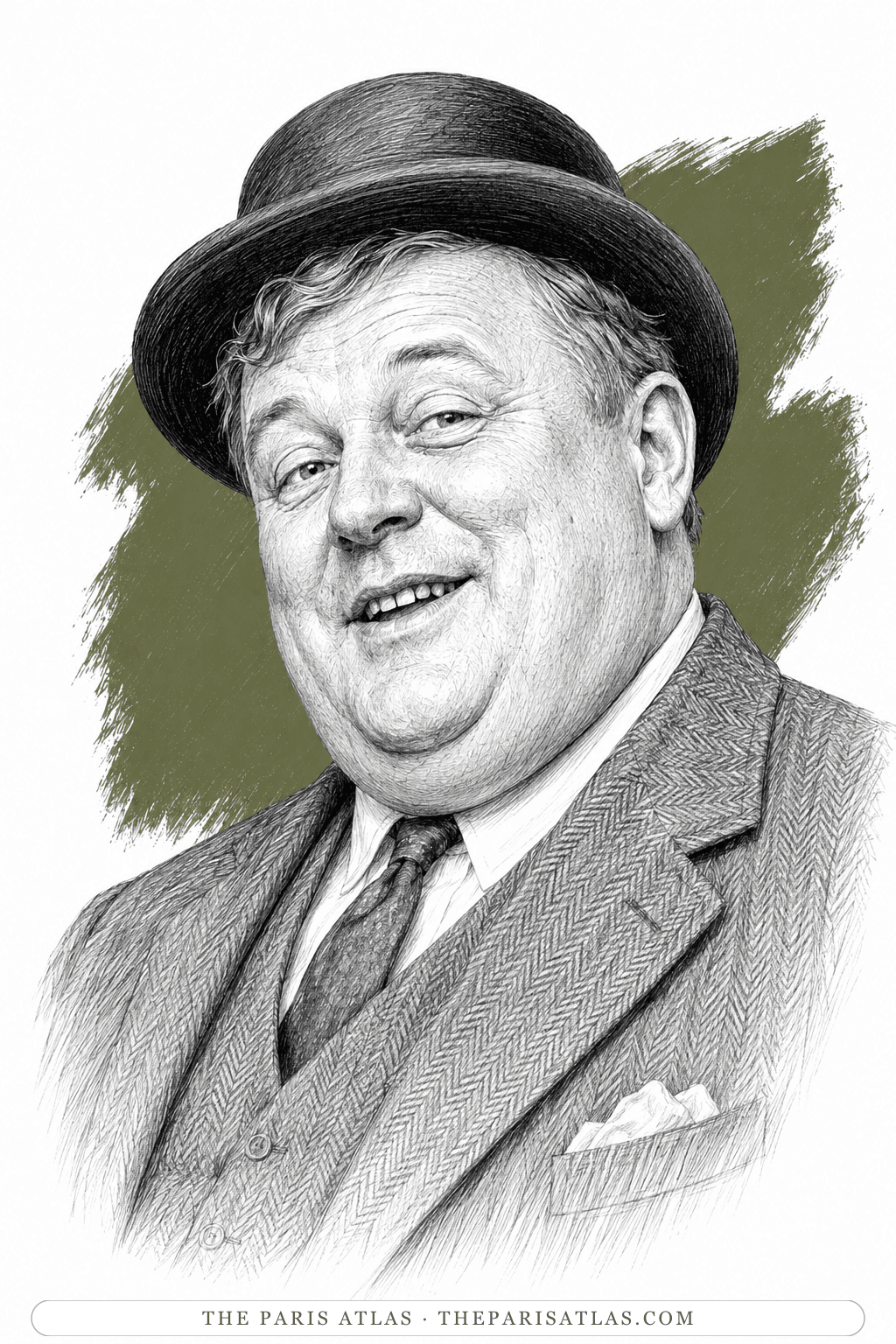
The Left Book Club lecturer
The speaker who comes down from London to address sixteen people on "The Menace of Fascism" in a hired hall. Bowling stops following the argument and studies the man instead, and decides what the man really wants is to smash faces in with a spanner.
To make the room hate the right people. Bowling's reading is that the man is frightened, and that the remedy he is offering, under the slogans, is to grab a spanner and get in first.
The book

At a glance
- Visiting speaker at the West Bletchley Left Book Club
- Never given; "Mr So-and-so, the well-known anti-Fascist"
- About forty
- Wooden, tin-roofed, hired for ten shillings; sixteen people present
- Part III, chapter 1
Who they are in the book
Spoiler-freeA visiting speaker comes down from London to address the West Bletchley branch of the Left Book Club on "The Menace of Fascism", in a little wooden hall with a tin roof that can be hired for ten shillings. Fifteen or sixteen people turn up. The chairman introduces him round the room as Mr So-and-so, the well-known anti-Fascist, in the tone you would use for a pianist, and Bowling, who has come partly because the bomber over the train that morning has put him in a thoughtful mood, sits in the back row and stops listening to the words.
He is described as a mean-looking little chap of about forty in a dark suit, with a white face, a mobile mouth, a bald head unsuccessfully covered with wisps of hair, and the grating voice people get from constant speaking. He is a good speaker. What reaches the back row is a burr, with phrases surfacing out of it: bestial atrocities, rubber truncheons, concentration camps, back to the Dark Ages, act before it is too late, democracy, Fascism, democracy.
Bowling's interest is not in the argument but in the man, and what he decides about him is the centre of the chapter. The lecturer is not faking: he means every word, and the hatred he is trying to work up in the audience is nothing beside the hatred he feels himself. Then Bowling shuts his eyes and, for a second, gets inside him — and what he sees there is not policy but a picture of himself smashing faces in with a spanner, which is all right because the faces belong to Fascists. His explanation is fear: this is simply a man with enough foresight to be more frightened than the others.
How The Left Book Club lecturer Is Portrayed
- How he looksA mean-looking little chap of about forty in a dark suit, with a white face, a very mobile mouth, and a bald head he has tried without much success to cover with wisps of hair.
- The billingA yellow placard on the front of the platform announcing "The Menace of Fascism", and a chairman leading him round to be introduced as the well-known anti-Fascist. Behind him on the platform stands a piano under dust-cloths that looks like an enormous coffin under a pall.
- The equipmentA wad of notes, mostly newspaper cuttings, pinned down under his glass of water. Partway through he takes out a sheet and reads statistics about the German suicide rate to an audience of which about half a dozen have grasped what he is talking about.
- The voiceIt sounds as though it could go on for a fortnight without stopping. Bowling calls it a human barrel-organ, and says the effect is of something inside your skull hammering down on your brain: hate, hate, hate, over and over.
- The spannerWith his eyes shut Bowling gets inside him for a second and sees what the man is actually seeing: a face caving in like an eggshell under a spanner and turning into a blob of strawberry jam, and then another. You could hear all that, he says, in the tone of the voice.
- A queer tradeBowling wonders what the man did before Hitler came along and what he will do if Hitler ever disappears, notes the same question applies to doctors and rat-catchers, and then wonders whether he has any private life at all, or only goes from platform to platform. Perhaps even his dreams are slogans.
If you like Coming Up for Air


If you like George Orwell
Explore authors with a similar voice, perspective, and influence.

Henry Miller
The Brooklyn dropout who arrived in Paris broke at thirty-eight and wrote the exuberant, banned books that ended American censorship.
View author
Louis-Ferdinand Céline
The doctor of the Paris slums who wrote the century's blackest, funniest novel — and changed the sound of French prose.
View author
Simone de Beauvoir
French writer and philosopher whose novels, memoirs, and social analysis examined freedom, gender, responsibility, aging, and the material conditions that shape a life.
View author