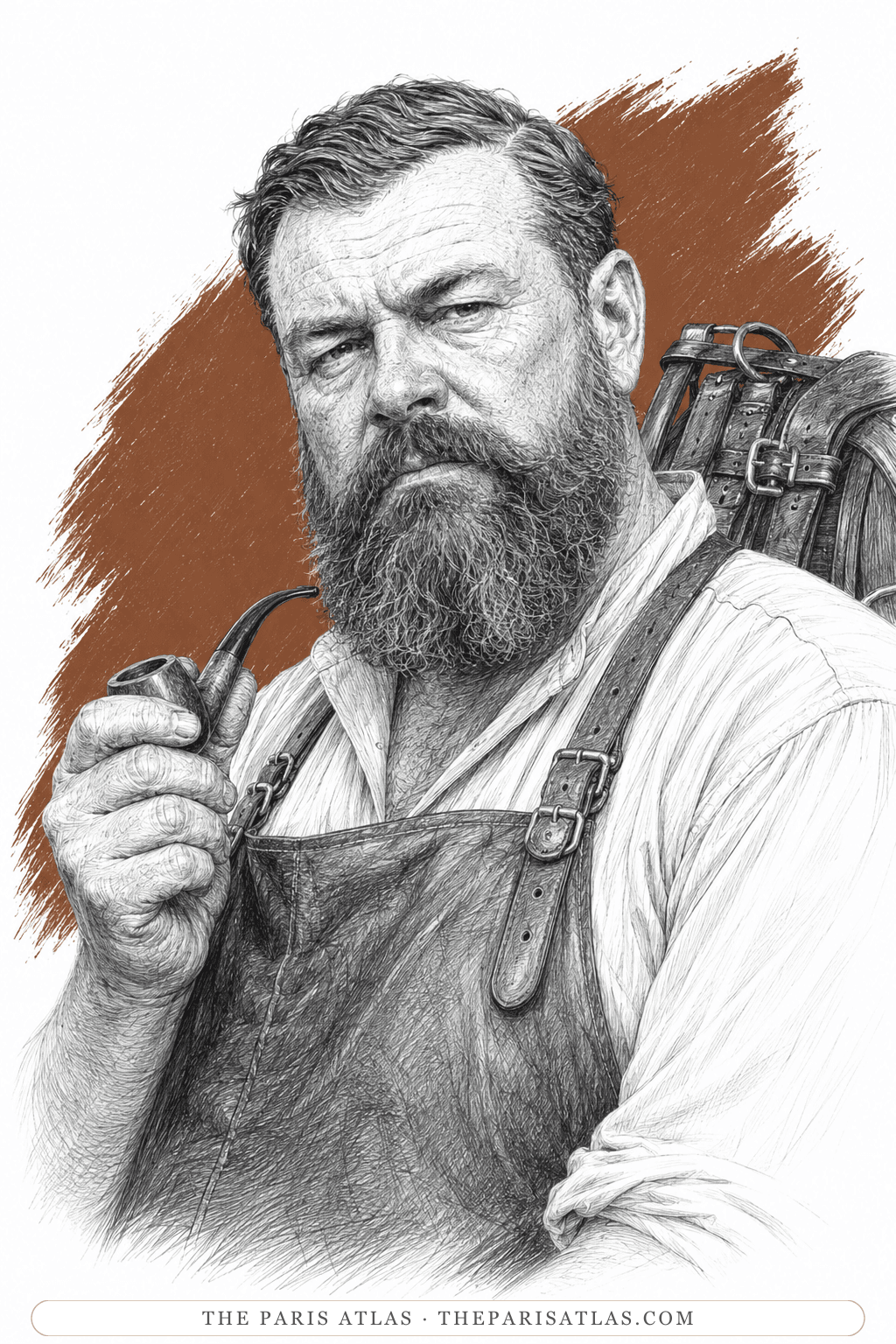
Old Lovegrove
The saddler of Lower Binfield and Sid Lovegrove's father, a heavy smoker with a big brown beard, who once caught his two sons at something and walloped them so that it could be heard all over the town. By the time George Bowling returns he has shut the shop and moved to a cottage near Walton.
The book

At a glance
- Saddler of Lower Binfield
- Father of Sid Lovegrove, leader of the boys' gang the Black Hand
- A cottage near Walton, on a tiny annuity
- Dead, and buried in the Lower Binfield churchyard
- Part Two, Chapters 2 and 7; Part Four, Chapter 2
Who they are in the book
Spoiler-freeOld Lovegrove was the saddler of Lower Binfield, the invented Oxfordshire market town where George Bowling grew up. A saddler made and sold saddles, harness and the rest of the leather gear that working horses needed, and his shop was in the High Street. Bowling narrates Coming Up for Air as a man of forty-five in 1938, and the saddler belongs to his account of the town before 1914. Lovegrove is the father of Sid Lovegrove, who at about thirteen was leader of the boys' gang, the Black Hand, that Bowling's elder brother Joe belonged to.
The one scene he gets is a beating. Bowling is describing how children were brought up in the town at that time. It was still thought proper for a parent to say don't all day long, and men boasted that they would thrash the life out of a son caught smoking, stealing apples or robbing a bird's nest. In most families it stopped at the boast. Old Lovegrove caught his two sons, great lumps aged sixteen and fifteen, smoking in the garden shed, and walloped them so that you could hear it all over the town. Bowling adds one more fact in the next sentence: Lovegrove was a very heavy smoker.
Later in the same part of the book he serves as an example of a tradesman who could not see what was coming. Small shopkeepers of that generation believed that with thrift, hard work and fair dealing a man could not go wrong, and Bowling says plenty of them carried the belief as far as a bankrupt deathbed or the workhouse. Even Lovegrove the saddler, he writes, with cars and motor-vans staring him in the face, did not realise that he was as out of date as the rhinoceros.
The trade did go. When Bowling came back to Lower Binfield during the First World War for his mother's funeral, which was the only time he went home after joining the Army in 1914, Sid Lovegrove had been killed on the Somme and old Lovegrove had shut up the shop and was living in a cottage near Walton on a tiny annuity, meaning a small fixed sum paid to him each year for the rest of his life. Bowling notes on the same visit that there were practically no horses left in the town, because every horse worth taking had been commandeered for the war.
On his last visit, in June 1938, Bowling walks round the churchyard reading the names he grew up with. Lovegrove is one of them, and what he remembers of the man is the big brown beard.
How Old Lovegrove Is Portrayed
- His tradeSaddler, with a shop in the Lower Binfield High Street.
- The beardBig and brown. When Bowling reads the name in the Lower Binfield churchyard in 1938, the beard is what he remembers of the man.
- The garden shedHe caught two of his sons, aged sixteen and fifteen, smoking in it, and walloped them loudly enough to be heard all over the town.
- He smoked himselfHe beat his sons for smoking. The next sentence in the book records that Lovegrove was a very heavy smoker himself, and Bowling leaves it at that.
- As out of date as the rhinocerosBowling's phrase for him, in a passage about shopkeepers who could not see their trade ending. Motor cars and vans were replacing the horses a saddler lived by, and Bowling says the old man did not realise it.
- How it finishedHe shut the shop and went to live in a cottage near Walton on a tiny annuity. His son Sid was killed on the Somme.
- In 1938Dead, and buried in the Lower Binfield churchyard among the other names Bowling knew as a boy.
If you like Coming Up for Air


If you like George Orwell
Explore authors with a similar voice, perspective, and influence.
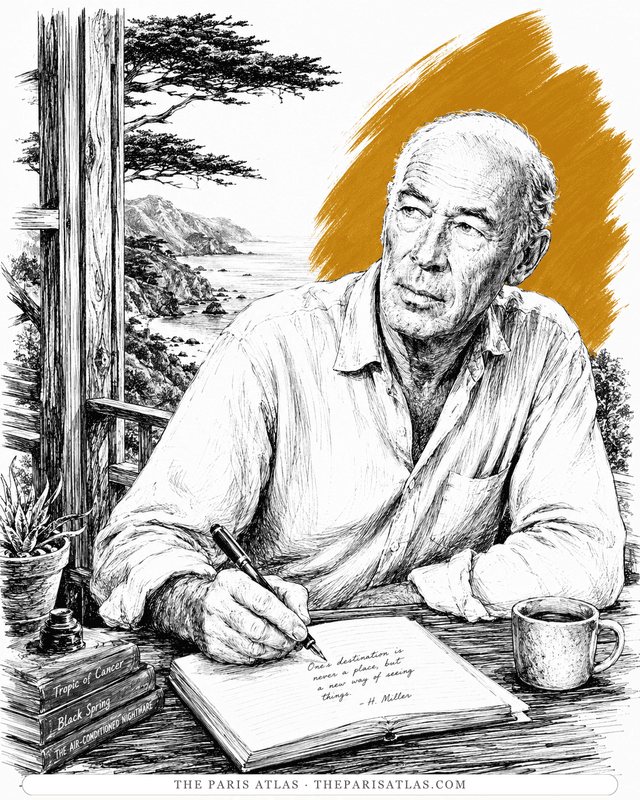
Henry Miller
The Brooklyn dropout who arrived in Paris broke at thirty-eight and wrote the exuberant, banned books that ended American censorship.
View author
Louis-Ferdinand Céline
The doctor of the Paris slums who wrote the century's blackest, funniest novel — and changed the sound of French prose.
View author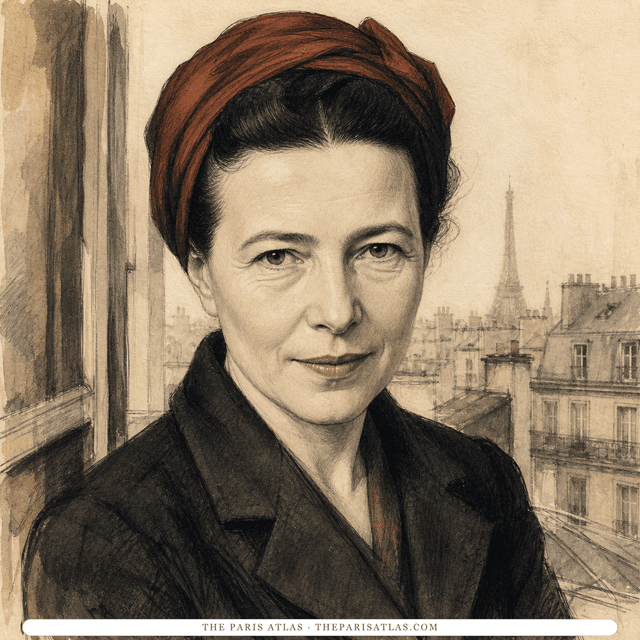
Simone de Beauvoir
French writer and philosopher whose novels, memoirs, and social analysis examined freedom, gender, responsibility, aging, and the material conditions that shape a life.
View author