Warner
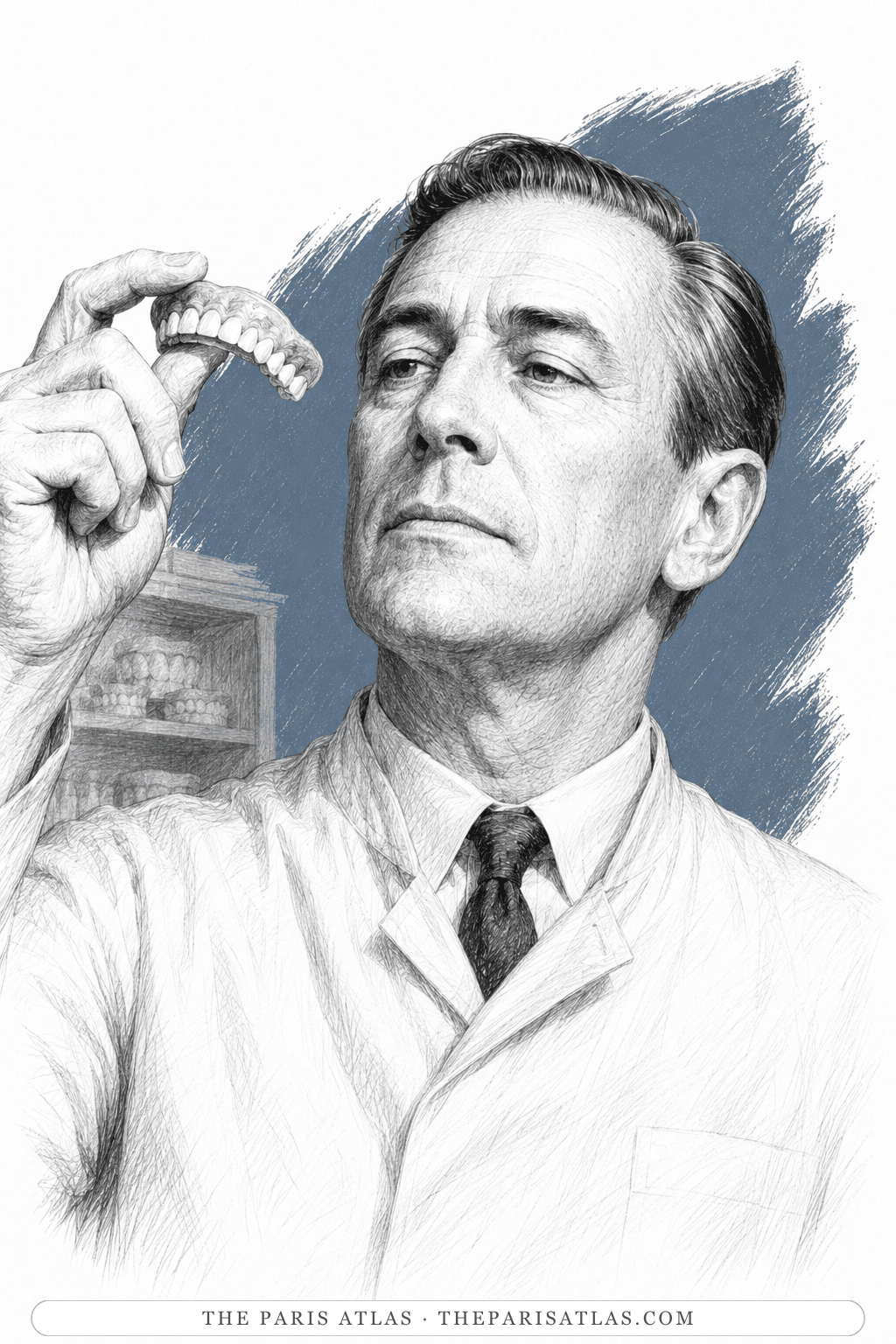
Bowling's dentist: a cheap American dentist with a consulting-room he calls a parlour, halfway up an office block between a photographer and a rubber-goods wholesaler. He keeps cabinets of false teeth graded by size and colour and picks them out like a jeweller choosing stones. The new set is what starts the book.
To make false teeth that nobody notices. He keeps cabinets of them graded by size and colour, picks a set out the way a jeweller picks stones, and deliberately avoids the toothpaste-advertisement look.
The book

At a glance
- George Bowling's dentist, in London
- Halfway up an office block, between a photographer and a rubber-goods wholesaler
- A full set of false teeth, collected on a January morning
- Collecting the teeth is what sets Bowling thinking about the past, and about how to spend the seventeen pounds his wife knows nothing about
- Part One, Chapters 1 and 4
Who they are in the book
Spoiler-freeWarner is the dentist George Bowling goes to in London, and he is the reason Coming Up for Air starts where it does. George Orwell's novel opens by saying that the idea came to Bowling the day he got his new false teeth. Bowling is forty-five, he sells insurance in a London suburb, and the teeth are Warner's work.
Bowling calls him one of these cheap American dentists. His consulting-room, or parlour as he prefers to call it, is halfway up a big block of offices, between a photographer and a wholesaler of rubber goods. Bowling has an appointment there on a January morning and arrives early, which is how he ends up in a milk-bar nearby, eating a frankfurter that turns out to be filled with fish.
Until that morning he had been wearing a temporary set that Warner gave him while the new ones were made. The temporary set is what he sees on the bathroom shelf at the start of the book, sitting in a tumbler of water and magnified by it. It is also a poor fit, which is why he has to saw at the rubbery skin of the frankfurter before he can bite through it.
The new teeth are a different matter. Bowling's verdict is that Warner, though cheap, is a bit of an artist, and does not aim at making a customer look like a toothpaste advertisement. Warner showed him the stock once: huge cabinets of false teeth, all graded by size and colour, out of which he picks a set the way a jeweller picks stones for a necklace. Nine people out of ten, Bowling reckons, would have taken the result for natural. He tries a smile at himself in a shop window on the way back down the street and decides he is not such a bad figure of a man.
Warner never appears in person. He is given no face, no age and no line of dialogue, and the appointment itself passes in half a sentence. What he made lasts the whole book. Bowling drops the teeth into a glass of water at the end of a bad evening in his own bathroom, and on the drive home in the last chapter he compares his state of mind to the January day he collected them.
How Warner Is Portrayed
- His practiceA cheap American dentist with a consulting-room halfway up a big block of offices in London, between a photographer and a wholesaler of rubber goods. He calls the room his parlour.
- The cabinets of teethHe keeps huge cabinets of false teeth, all graded by size and colour. He showed them to Bowling once, and he picks a set out of them like a jeweller choosing stones for a necklace.
- The standard of the workCheap, but in Bowling's phrase a bit of an artist. He does not try to make a customer look like a toothpaste advertisement, and Bowling thinks nine people out of ten would take the new teeth for real ones.
- The temporary setHe gave Bowling a temporary set to wear while the new ones were being made. They were not much of a fit, and in a milk-bar Bowling has to make a sawing movement with them before he can get through the skin of a frankfurter.
- What the book withholdsWarner is drawn entirely through his room, his cabinets and his workmanship. He is never described, never given an age, and never given a word to say.
If you like Coming Up for Air


If you like George Orwell
Explore authors with a similar voice, perspective, and influence.
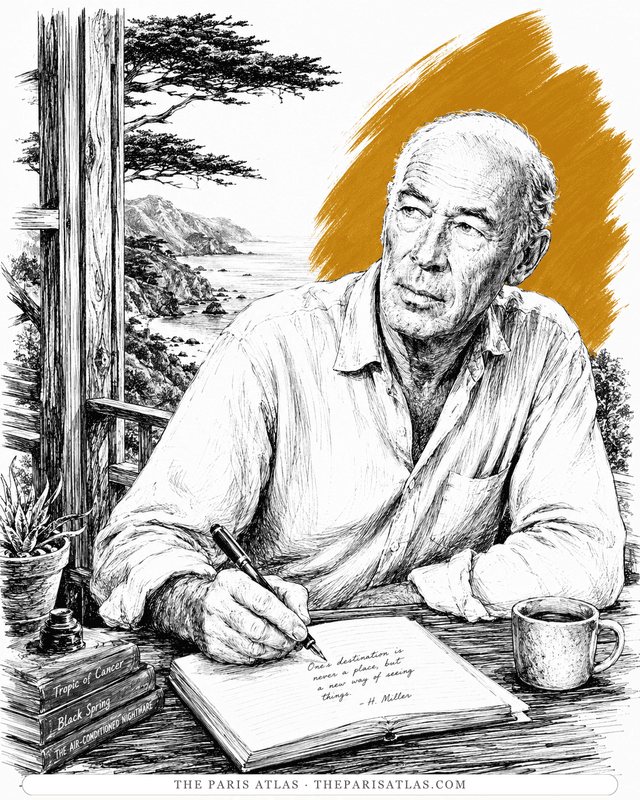
Henry Miller
The Brooklyn dropout who arrived in Paris broke at thirty-eight and wrote the exuberant, banned books that ended American censorship.
View author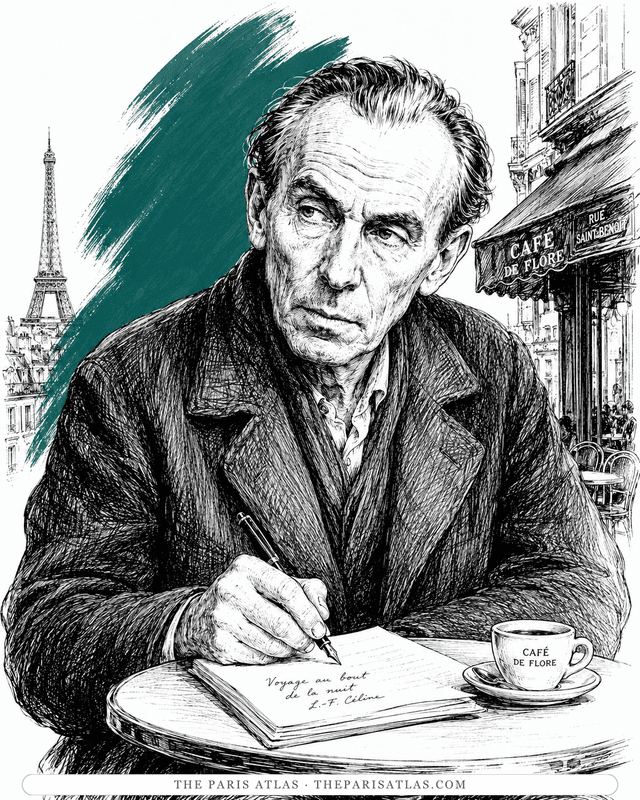
Louis-Ferdinand Céline
The doctor of the Paris slums who wrote the century's blackest, funniest novel — and changed the sound of French prose.
View author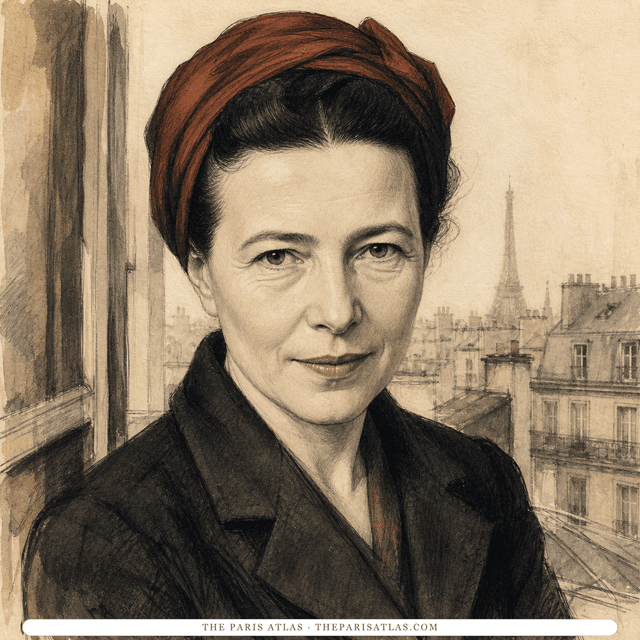
Simone de Beauvoir
French writer and philosopher whose novels, memoirs, and social analysis examined freedom, gender, responsibility, aging, and the material conditions that shape a life.
View author