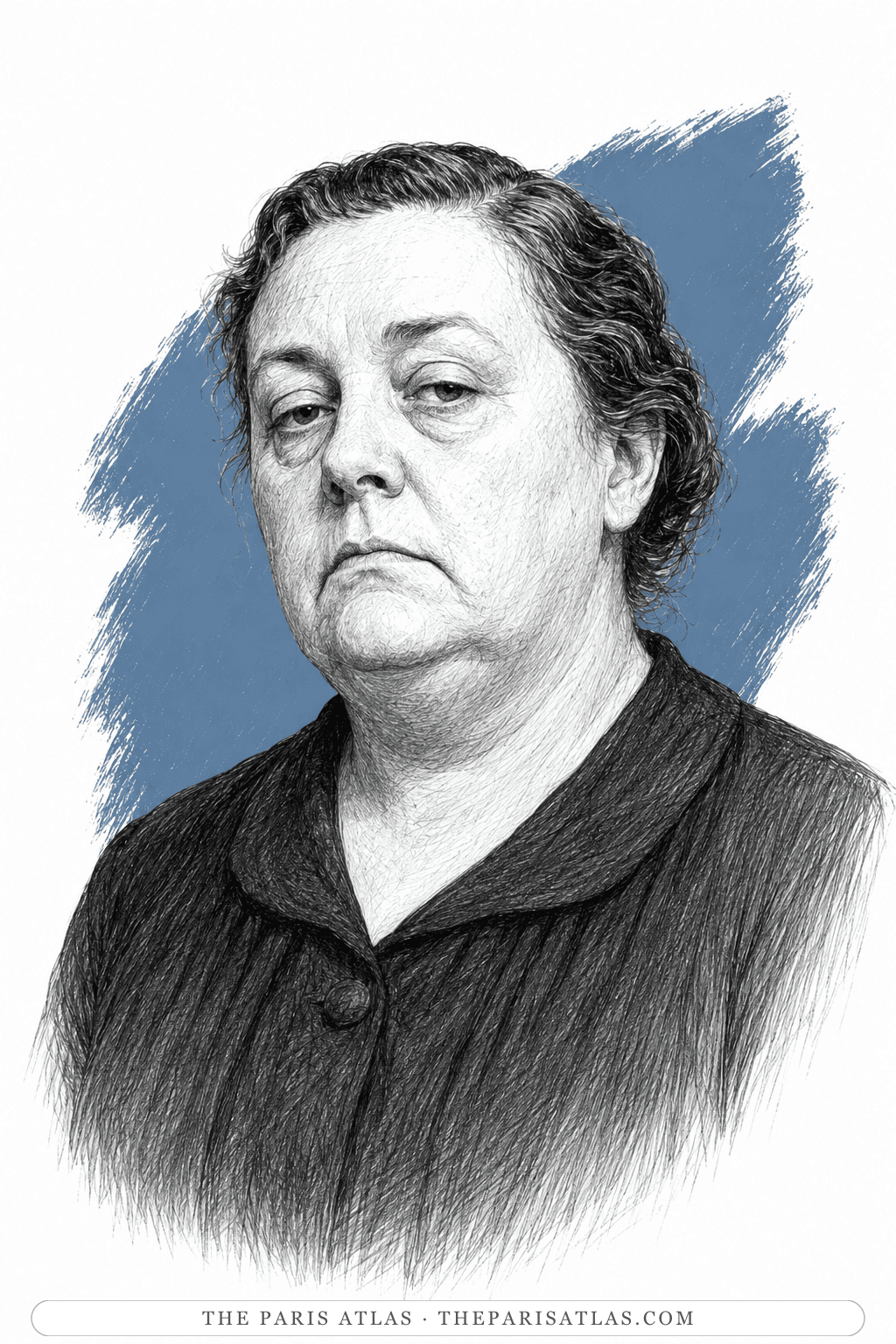
Hilda Bowling
Bowling's wife: thirty-nine, thin, anxious, and reliably certain that the family is about to end in the workhouse. She was born into the penniless Anglo-Indian officer class and married a man from the shopkeeping one.
To hold the household short of disaster, and to know where her husband actually is. She says the same three sentences about money every day, and when she doubts one of his trips she checks it against a Bradshaw and a road map.
The book

At a glance
- Bowling's wife, in the 1938 chapters
- Thirty-nine; twenty-four when they met
- Vincent
- Anglo-Indian officer family in Ealing; father retired in 1910
- Beginning of 1923
- Lorna, eleven, and Billy, seven
- Mrs Wheeler and Miss Minns
- Parts I and III, and the last chapter of Part IV
Who they are in the book
Spoiler-freeGeorge Bowling met Hilda Vincent at a tennis club in Ealing in the early 1920s, when she was twenty-four. He describes her then as small, slim and rather timid, with dark hair, beautiful movements and very large eyes that made her look like a hare. She said little, agreed with whoever had spoken last, and played tennis gracefully with a helpless, childish air. They married at the beginning of 1923.
Her family was the poverty-stricken officer class: generations of soldiers, sailors, clergymen and Anglo-Indian officials who had never had money and had never done anything Bowling would call work. Her father had served in India and somewhere further out, Borneo or Sarawak; the house in a back-street in Ealing smelled of Trichinopoly cigars and was so full of spears, blow-pipes and animal heads you could hardly move in it. Both her parents and her brother Harold were dead within a few years of the wedding. Bowling admits that he married her partly because he could not understand her, and that neither side of the arrangement understood the other: he took the family for his social superiors, and they took him for a rising businessman who would one day be worth touching for a fiver.
Fifteen years on he describes her as a depressed, lifeless, middle-aged frump, and himself as part of the reason. What he says she lacks is any capacity for enjoying things. The lack of money in her childhood taught her not thrift but a duty to be miserable about money, and she practises it daily: the butter, the gas bill, the coal, the children's boots, the school fees. He records her three commonest sentences as "We can't afford it", "It's a great saving" and "I don't know where the money's to come from". She is not mean and not selfish — he says she can hardly be persuaded to buy herself clothes when there is spare cash — and she is not a snob either. From her point of view he is the extravagant one, and they cannot have tea in a shop without an argument in whispers about the tip.
She is also, as he keeps discovering, extremely good at catching him out. He has been unfaithful whenever the chance came, she is permanently suspicious, and she checks his stories with railway timetables and road maps. Everything the book shows her doing in the present tense is either an economy or an investigation.
How Hilda Bowling Is Portrayed
- How she looked at twenty-fourAt the tennis club in Ealing in 1922 she was small, slim and timid, with dark hair, beautiful movements and very large eyes. She played gracefully and with a helpless, childish air, and Bowling calls her pretty and delicate.
- How she is drawnThe hare comparison stays with her from the tennis club to the breakfast table. At thirty-nine she is thin and wizened, with a permanently worried look, and when she is more upset than usual she hunches her shoulders and folds her arms across her breast like an old gypsy woman over a fire.
- The litanyButter is going up, the gas bill is enormous, the children's boots are wearing out, and there is another instalment due on the radio. Bowling says she gets a definite pleasure out of rocking herself to and fro and telling him he doesn't realise how serious it is. Wars, earthquakes and revolutions she pays no attention to at all.
- Negative housekeepingWhen she makes a cake she is thinking about saving butter and eggs rather than about the cake. At the pictures she spends the film indignant about the price of the seats. Bowling's mother would have had convulsions at her methods of using things up.
- The fishing-rod rowOn a pier at Bournemouth he says casually that he might do a bit of fishing. She works out that the tackle would cost about a pound, flies into a temper about the disgrace of charging ten shillings for a rod, and tells him not to be such a baby at his age. The two children take up the phrase and dance round him chanting it.
- The friendsMrs Wheeler, a widow with bitter views about men, and Miss Minns, a clergyman's daughter trying to develop her mind. The three of them go together to anything free — remnant sales, theosophy, faith-healing, hay-box cookery, eighteenpenny seances, Left Book Club meetings — and sit through lectures they cannot follow, feeling that they are getting something for nothing.
- Jealousy with methodShe says nothing until she has found every weak point in his story, then produces the whole case at once: where were you on Saturday, look at these hairs I found brushing your waistcoat, is my hair that colour. She once followed him to Colchester and walked into his hotel.
- The letterOn Mrs Wheeler's suggestion she writes to the Birmingham hotel Bowling named the day he leaves. The reply, from a firm of solicitors at that address, explains that Rowbottom's Hotel closed two years ago and has been converted into offices. It arrives by the same post as his letter from the hotel.
- What she says at the doorBowling comes home in a panic having half convinced himself she is dying, and she walks up the garden path as usual, darts him one quick look, and says there is nothing for his supper because she wasn't expecting him, and she doesn't think they have any cheese.
If you like Coming Up for Air


If you like George Orwell
Explore authors with a similar voice, perspective, and influence.

Henry Miller
The Brooklyn dropout who arrived in Paris broke at thirty-eight and wrote the exuberant, banned books that ended American censorship.
View author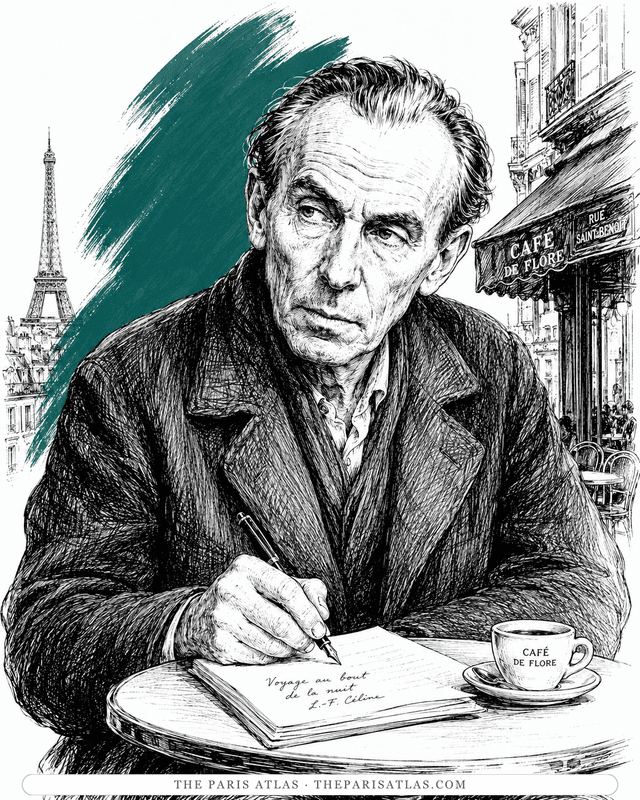
Louis-Ferdinand Céline
The doctor of the Paris slums who wrote the century's blackest, funniest novel — and changed the sound of French prose.
View author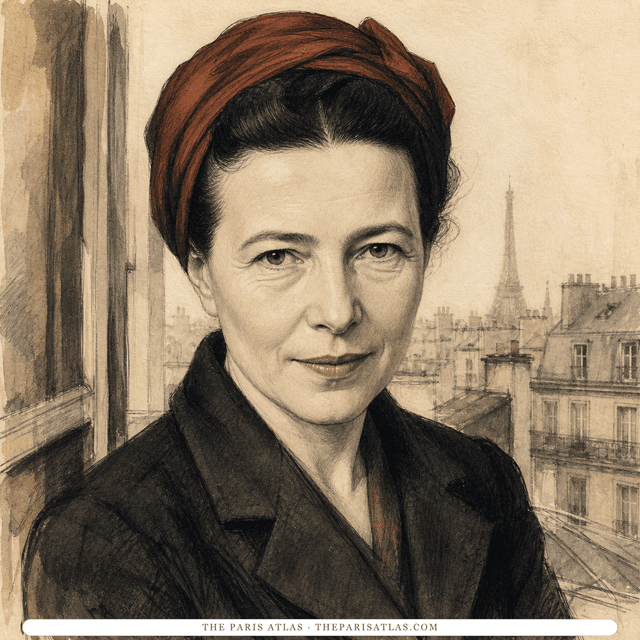
Simone de Beauvoir
French writer and philosopher whose novels, memoirs, and social analysis examined freedom, gender, responsibility, aging, and the material conditions that shape a life.
View author