The man at the model yacht club
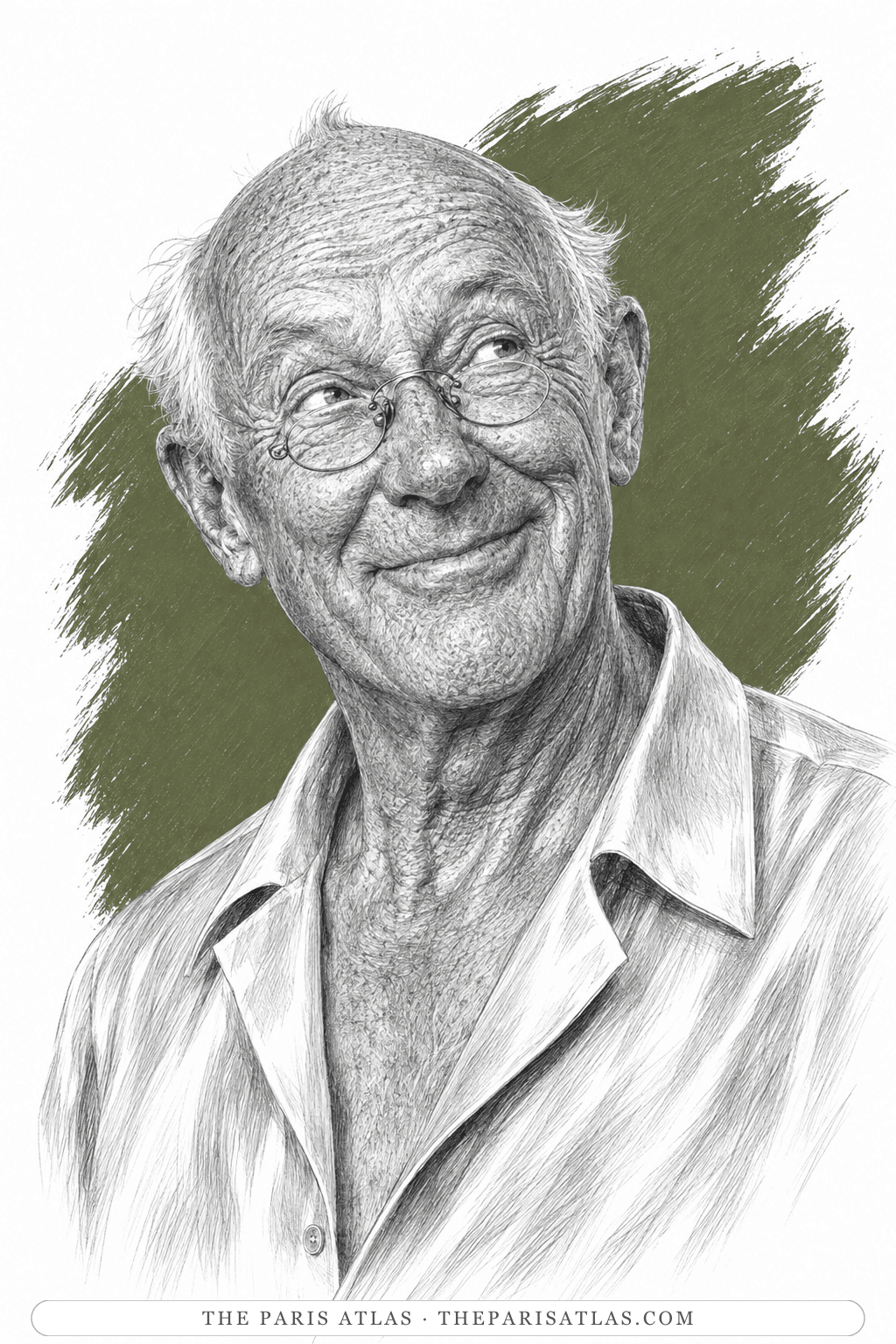
The elderly resident who shows Bowling round the Upper Binfield Estate at the end of the book: sunburnt, in shorts and sandals, twinkling behind pince-nez, chuckling te-hee, and full of the Woodland City, the vegetarians, the novelist, the psychic researcher who walks among the fairies, and the young architect with a feeling for the Tudor. He is also the man who eventually admits what happened to the second pool.
To be one of the exceptional people. Within a few minutes of meeting a stranger he has explained several times over that Upper Binfield is a colony of enlightened residents who allow no interlopers.
The book

At a glance
- A resident of the Upper Binfield Estate, above Lower Binfield
- Never given
- He arrived after 1914; the houses went up ten or fifteen years before 1938
- The old one below the houses, now the Upper Binfield Model Yacht Club
- Part Four, Chapter 5
Who they are in the book
Spoiler-freeGeorge Bowling, the forty-five-year-old insurance salesman who narrates the novel, spends the last part of it back in Lower Binfield, the invented Oxfordshire market town he grew up in. On one of his last days there he walks up to Upper Binfield, the hill above the town, where the beech woods of his boyhood were. The woods have been cut down for a colony of mock-Tudor houses. The pool at the bottom of them now carries a large white notice reading UPPER BINFIELD MODEL YACHT CLUB, and there are children splashing in it. Standing watching them is an oldish man with a bald head and a few tufts of white hair, pince-nez, and a very sunburnt face.
He lives on the estate and he wants to talk. Bowling offers one polite remark, that Upper Binfield has grown a great deal, and gets a correction: they never allow Upper Binfield to grow, they pride themselves on being rather exceptional people up there, they are a little colony all by themselves, and there are no interlopers. The chuckle that follows is printed in his dialogue as te-hee, and it arrives every few sentences. He wrinkles his face up like a rabbit when it does.
Nobody asks him for the rest, and he supplies it anyway. The estate was designed by a young architect called Edward Watkin, who has a feeling for the Tudor, a gift for finding genuine Elizabethan beams in old farmhouses and buying them at ridiculous prices, and a reputation as the life and soul of the nudist parties. Three-quarters of the residents are vegetarians, which the local butchers do not care for. There are no public houses. The residents are determined to enrich the countryside instead of defiling it, and that phrase is his. Other people talk about Garden Cities; he calls Upper Binfield the Woodland City, and waves a hand at what is left of the trees. The eminent neighbours he offers are Miss Helena Thurloe the novelist and Professor Woad, a psychic researcher who wanders off into the woods at mealtimes and says he is walking among the fairies. The old man admits to being just a wee bit sceptical about the fairies, but finds Woad's photographs most convincing.
Bowling wonders for a moment whether the man has got out of the mental home in the big house up the road, then decides he is sane enough and that he knows the type: vegetarianism, simple life, poetry, nature-worship, a roll in the dew before breakfast. His summary is that this is one of those old men who have never grown up. The book never gives him a name. He is also the person who tells Bowling what became of the second pool, the hidden one Bowling drove down from London to fish.
How The man at the model yacht club Is Portrayed
- What he looks likeAn oldish man with a bald head and a few tufts of white hair, pince-nez, and a very sunburnt face. Bowling's first note is that there is something vaguely queer about his appearance.
- The eyesVery blue, and twinkling from behind the spectacles. They are what actually strikes Bowling, more than the clothes, and what he reads in them is an old man who has never grown up.
- What he wearsShorts, sandals, and one of those celanese shirts open at the neck.
- Te-heeA benevolent old chuckle, printed in the text as te-hee, arriving at the end of his own jokes and roughly every few sentences.
- The rabbitA way of wrinkling his face up, like a rabbit, which goes with the chuckle.
- How he talks to a strangerOne remark from Bowling sets him going, and he takes the visitor through the whole estate unasked. He says several times that they are very exceptional people up there, quite different from the town below.
- The Woodland CityHis name for the estate, delivered with a hand waved at the surviving trees and a line about other people's Garden Cities. He offers the vegetarian three-quarters, the absence of public houses, and a determination to enrich the countryside instead of defiling it, which Bowling flags as the man's own phrase.
- The neighbours he offersEdward Watkin the architect, Miss Helena Thurloe the novelist, and Professor Woad the psychic researcher, who walks in the woods among the fairies. On the fairies the old man is just a wee bit sceptical, though he thinks the photographs are most convincing.
The old man is the one who tells Bowling what happened to the second pool, the hidden one behind Binfield House with the big carp in it that he came back to fish.
He has one thing left to show.
If you like Coming Up for Air


If you like George Orwell
Explore authors with a similar voice, perspective, and influence.

Henry Miller
The Brooklyn dropout who arrived in Paris broke at thirty-eight and wrote the exuberant, banned books that ended American censorship.
View author
Louis-Ferdinand Céline
The doctor of the Paris slums who wrote the century's blackest, funniest novel — and changed the sound of French prose.
View author
Simone de Beauvoir
French writer and philosopher whose novels, memoirs, and social analysis examined freedom, gender, responsibility, aging, and the material conditions that shape a life.
View author