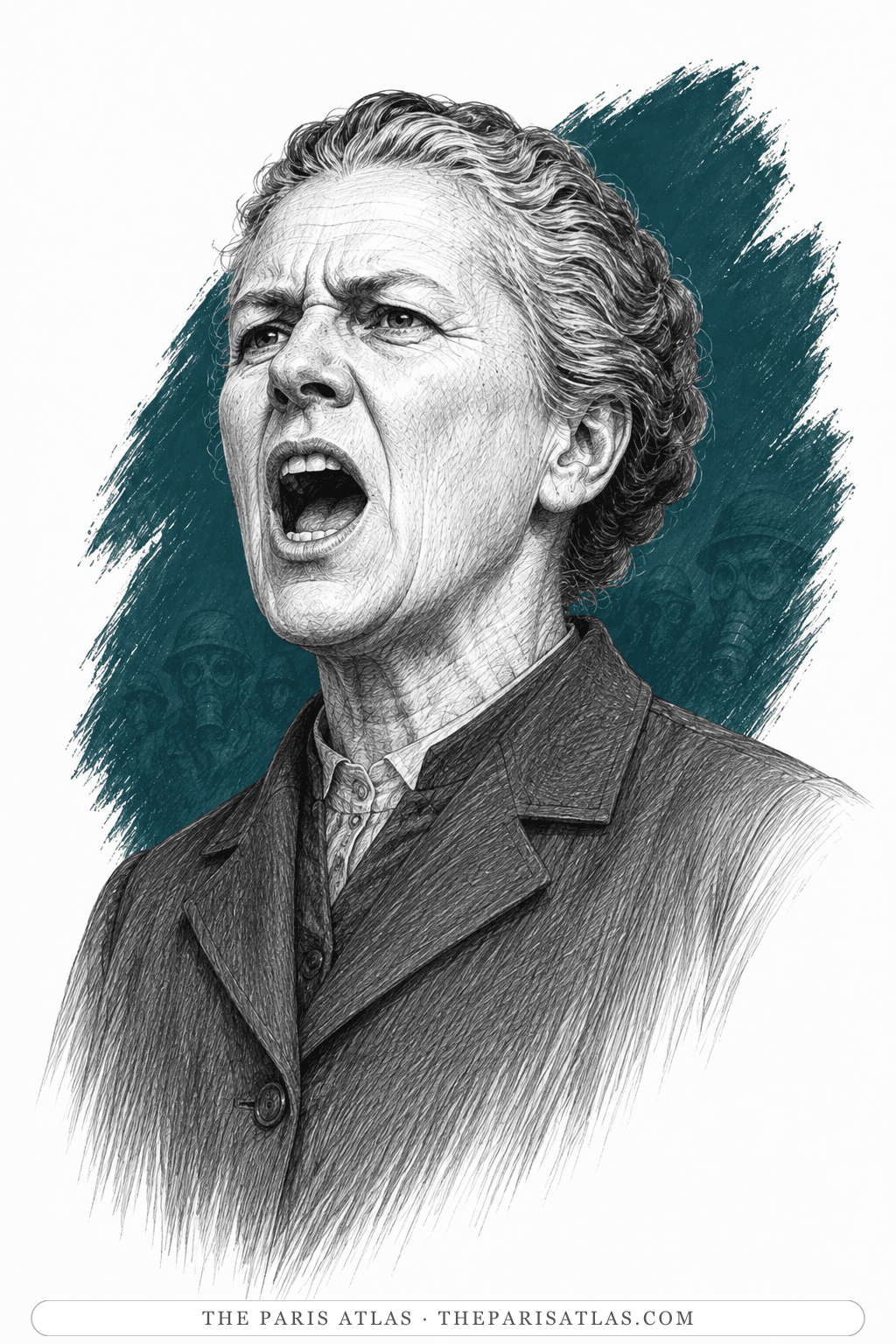
Miss Todgers
The Air Warden of Lower Binfield in 1938, and the person actually running the town's preparation for the next war: a tough old woman with grey hair and a kippered face, in a coat and skirt that somehow look like a uniform, who was in the W.A.A.C.s in the last war and, George Bowling suspects, has never had a day's fun since. She marches the schoolchildren through A.R.P. practice with a real sergeant-major yell, and it is thanks to her that they have their gas-masks when a bomb falls on the town by accident.
To have the town ready. She drills children in gas-masks in a place where nobody else believes the war is coming, and is treated as a nuisance for it.
The book

At a glance
- Air Raid Precautions warden for Lower Binfield
- The W.A.A.C.s, in the First World War
- Part Four, Chapters 2, 3 and 5
Who they are in the book
Spoiler-freeGeorge Bowling goes back to Lower Binfield in 1938 looking for the town he grew up in, and finds it three times the size, swallowed by a factory and an estate, and drilling for war. The person conducting the drill is Miss Todgers. The barmaid at the George identifies her; the barber on the corner explains the noise in the street by saying, that's Miss Todgers, that is, and supposes it is kind of propaganda, like.
Bowling's description is short and complete: the kind of tough old devil with grey hair and a kippered face, wearing a coat and skirt that somehow look like a uniform. She was in the W.A.A.C.s during the last war and, he decides, has never had a day's fun since. What he sees her doing is marching a column of schoolchildren in gas-masks up the street and shouting at one of them to lift her feet up, in the real sergeant-major yell.
The book then does something with her that it does not do with any of its other comic figures. A bomb falls on Lower Binfield by accident: planes were flying over to do a bit of bombing practice, and somebody put his hands on the lever by mistake. When it goes off, the children are already carrying the masks she made sure they were issued. Bowling notes it flatly. The joke about the ridiculous woman in the uniform-that-is-not-a-uniform and the thing she was right about are on the same page.
How Miss Todgers Is Portrayed
- The uniformA coat and skirt that somehow look like a uniform without being one, on a woman with grey hair and a kippered face.
- The war beforeShe was in the W.A.A.C.s. Bowling's guess is that she has not had a day's fun since, which is his standard verdict on people who take things seriously.
- The yellMarching the schoolchildren along in their masks and letting out a real sergeant-major shout at one of them to lift her feet up.
- What the town thinksThe barber cannot explain the parade except as propaganda, like. The barmaid says the whole business gives her the creeps and wonders how you would put a gas-mask on a baby.
- Why she is in the bookThe masks were issued because of her. When the bomb lands, the children who have them have them for one reason, and the novel does not underline it.
If you like Coming Up for Air


If you like George Orwell
Explore authors with a similar voice, perspective, and influence.

Henry Miller
The Brooklyn dropout who arrived in Paris broke at thirty-eight and wrote the exuberant, banned books that ended American censorship.
View author
Louis-Ferdinand Céline
The doctor of the Paris slums who wrote the century's blackest, funniest novel — and changed the sound of French prose.
View author
Simone de Beauvoir
French writer and philosopher whose novels, memoirs, and social analysis examined freedom, gender, responsibility, aging, and the material conditions that shape a life.
View author