Charlie (on the road)
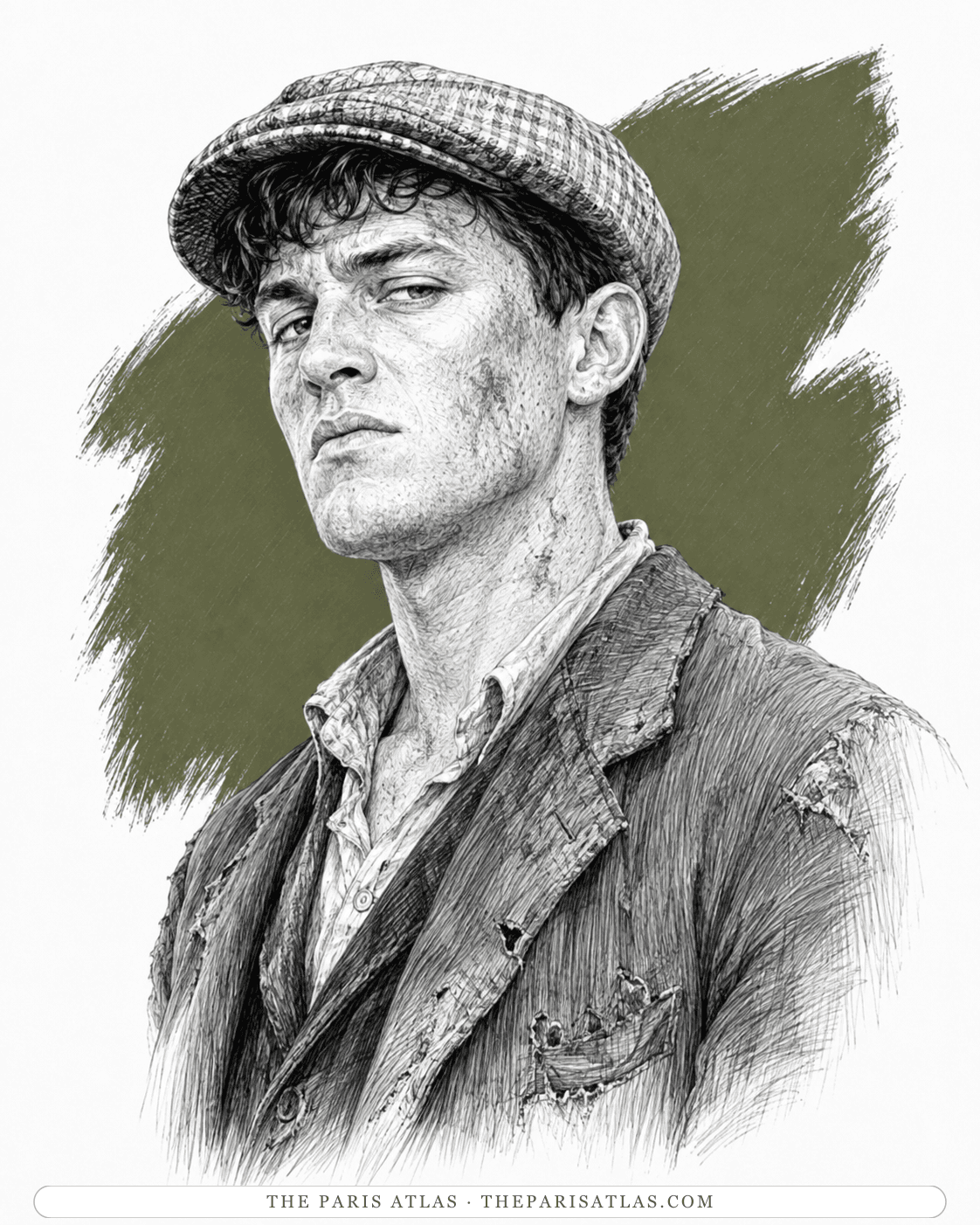
The dark youth who walks to Kent with Flo, Nobby and Dorothy Hare, and whose name the book only supplies in passing. He answers morosely at every halt and speaks in a surly, disagreeable way. He is the one who reads out the poster about the Rector's daughter and her disappearance with intense relish, and comments appreciatively on the details, in front of the woman it is about. He had been in good employment until fairly recently, and he absconds with Flo and both bundles.
The book

At a glance
- One of the four who walk from London to the Kent hop fields
- About twenty
- London; a cockney, and in good employment until fairly recently
- Charlie in Trafalgar Square, a different man in Chapter 3
- Chapter 2
Who they are in the book
Spoiler-freeCharlie is one of the three people who stop in the New Kent Road to look at Dorothy Hare on the morning she comes to herself in London with no memory of who she is. The other two are Nobby, a cheerful red-haired thief, and Flo, a young woman living on the streets. The four of them walk thirty-five miles into the Kent hop fields together. The book supplies his name late and casually, and calls him the dark youth until it does.
He is a cockney of about twenty, and until fairly recently he was in good employment. He had never been on the road before this walk, and the distances astonish him more than they tire him: twenty miles in a day was a thing he had not heard of. By the second day his courage is failing, by the third it is almost impossible to get him back on his feet after a halt, and every stage costs Nobby an argument.
The book distinguishes him carefully from another Charlie, one of the Trafalgar Square regulars in the following chapter, who is a different man entirely.
How Charlie (on the road) Is Portrayed
- How the book describes himAbout twenty, narrow-chested, black-haired and ruddy-cheeked, and good-looking -- George Orwell's qualification is that it is in a nosy cockney way.
- What he wearsThe wreck of a raffishly smart blue suit, and a check cap. He is carrying a clumsy sacking bundle when Dorothy first sees him.
- How he speaksSullenly, in an accent much baser than Nobby's. Told that Dorothy does not know what hopping means, he answers as though disgusted by her ignorance: "'Opping! Pickin' 'ops--dahn in Kent! C'n understand that, can't yer?"
- What he thinks of herVery little, and less once her half-crown is gone. He and Flo hold themselves aloof from Dorothy from the first, willing enough to share her money but with no friendly feelings, and after it runs out they scarcely deign to look at her.
- On the road"Oh, ---- getting off!" is his answer at every halt. "I wasn't brought up to this ---- 'iking and skippering like you was. I'm fed up; that's what I am ---- fed up." He lags behind, grumbles incessantly and demands more than his fair share of the food.
- The poster on the village greenHe reads it out with intense relish -- "Secret Love Life of Rector's Daughter. Startling Revelations" -- and repeats what the papers have printed about the girl leaving in a car in her nightdress, adding that it was smutty stuff and she must have been a dirty tart. He is lying beside the woman it is about, who does not know it either, and asks Nobby what a rector is.
- How he leavesWhen Flo says she cannot walk another step, he backs her up, and the two of them stay behind while Dorothy and Nobby go on to try a farm. They are gone from the rendezvous when the others get back, having taken a lift to London off a passing lorry driver, and having taken both bundles as well -- the food, the bedding and the cooking tins.
If you like A Clergyman's Daughter


If you like George Orwell
Explore authors with a similar voice, perspective, and influence.
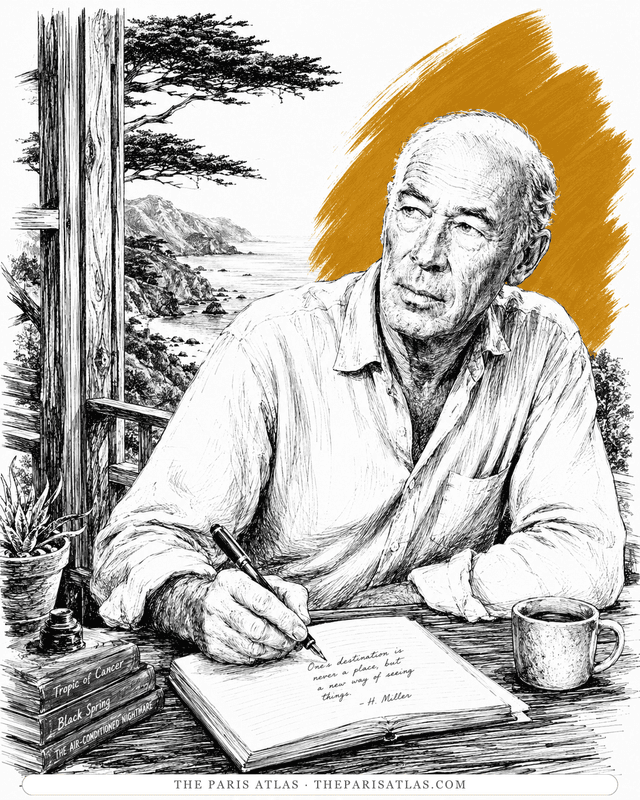
Henry Miller
The Brooklyn dropout who arrived in Paris broke at thirty-eight and wrote the exuberant, banned books that ended American censorship.
View author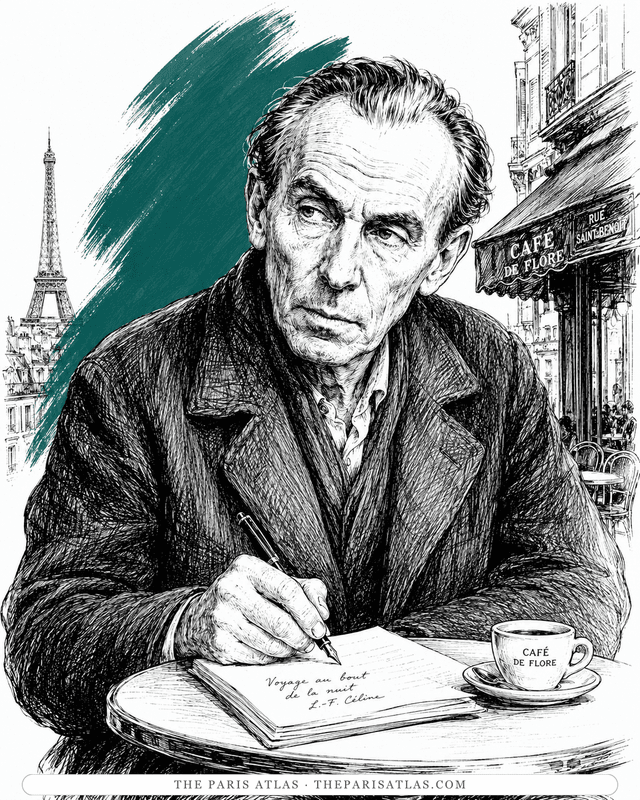
Louis-Ferdinand Céline
The doctor of the Paris slums who wrote the century's blackest, funniest novel — and changed the sound of French prose.
View author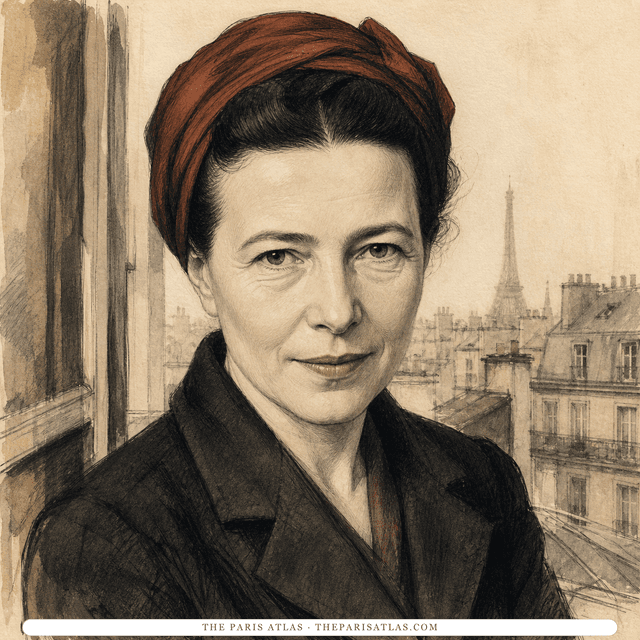
Simone de Beauvoir
French writer and philosopher whose novels, memoirs, and social analysis examined freedom, gender, responsibility, aging, and the material conditions that shape a life.
View author