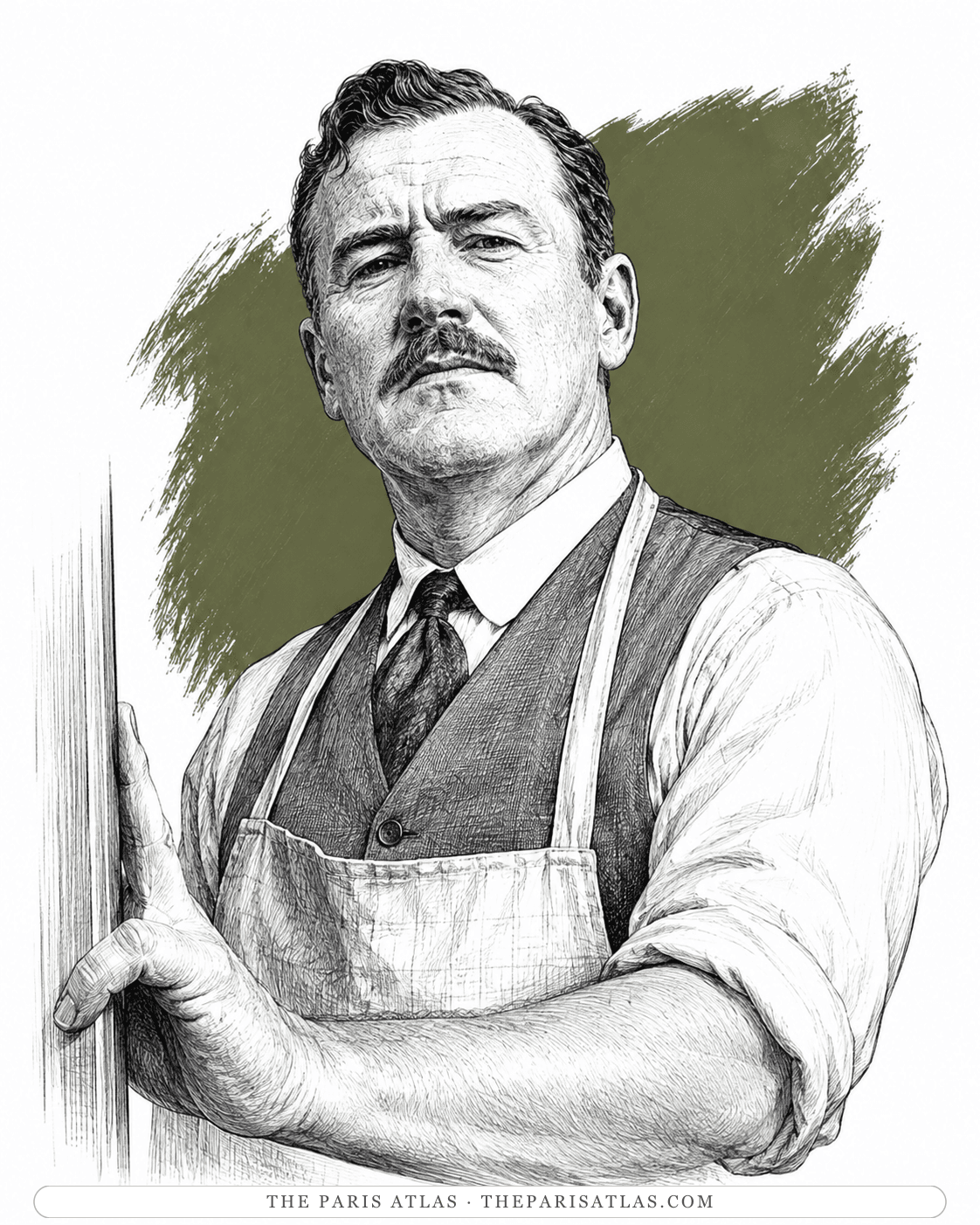
Mr Wilkins
The proprietor of the coffee shop off the Square, who lets the night people in out of the cold on his own terms and holds the glass door against forty of them while he lays the terms down: no hokey-pokey, and anyone still asleep after seven goes out on his neck.
To run the place strictly on his own terms. Every line he speaks is either a rule or a threat to withdraw service from anyone who breaks one.
The book

At a glance
- Proprietor of a cafe near the Charing Cross Road
- Five in the morning, not a minute earlier
- A penny for a cup of tea, four to a cup
- No hokey-pokey, no singing, nobody asleep after seven
- Chapter 3
Who they are in the book
Spoiler-freeMr Wilkins is a character in A Clergyman's Daughter, the 1935 novel by George Orwell. He runs a cheap cafe near the Charing Cross Road in London, a few minutes' walk from Trafalgar Square, and he appears at the end of the book's third chapter. That chapter is written as a play script: about a dozen homeless people spend a freezing night on and around one bench in the Square, and Dorothy Hare, the rector's daughter of the title, is among them.
His cafe opens at five in the morning, and for the people on the Square it is the end of the night. A penny buys a cup of tea, four of them are allowed to share one cup, and they may sleep with their heads on the table until seven. Mrs McElligot, who has been sleeping rough for years, calls it a godsend, and in the same breath calls Wilkins and his staff stingy old gets for the rule about four to a cup. Dorothy begs for the penny that gets her in.
He is not sentimental about the trade. A crowd of about forty is at his door by twenty to five, and he holds it shut from the inside and threatens them through the glass until the hour. What the reader sees of him is almost entirely him shouting rules at people he is about to feed.
How Mr Wilkins Is Portrayed
- The windowSeen from outside in the dark by people who have not eaten since the previous day: heat steaming down the pane, the tea urns just on the boil, piles of hot toast and ham sandwiches, sausages going in the pan.
- Holding the doorCharlie rattles the handle, the crowd surges, and Wilkins holds the glass door shut from within and menaces them through it. When a gang of youths hits the back of the crowd hard enough to nearly break it, he pulls the door open, shoves the leaders back and shouts, "Get out! Get out, the lot of you! Or by God not one of you comes in this morning!"
- Five o'clock, not before"Get on out of it! We don't open before five, and you know it." He slams the door on them and opens it on the hour.
- The girls at the doorThey chant his name at him through the glass -- "Mis-ter Wil-kins! BE a sport and let us in! I'll give y'a kiss all free for nothing." It makes no difference to the time he opens.
- The rules, given out on the way in"Now then, all! You know the rules, I s'pose. No hokey-pokey this morning! Sleep till seven if you like, but if I see any man asleep after that, out he goes on his neck. Get busy with that tea, girls!"
- How he keeps orderBy threatening to serve nobody. "Shut up, shut up! Stop that hollering or I don't serve any of you." When Mr Tallboys starts chanting psalms over the tables: "Stop that singing there! You know the rules."
- What a penny buysOne cup of tea between as many as four people, and a warm room until seven. Dorothy puts her penny with Mrs McElligot's halfpenny and Daddy's halfpenny for a cup shared three ways, drinking near the handle because Daddy has sores on his lip.
- What the customers make of himMrs Wayne, who spends the night insisting on her own gentility, says, "He do speak rough to you, don't he? Not what I'd call a reely gentlemanly kind of man." They all come back the next morning.
If you like A Clergyman's Daughter


If you like George Orwell
Explore authors with a similar voice, perspective, and influence.
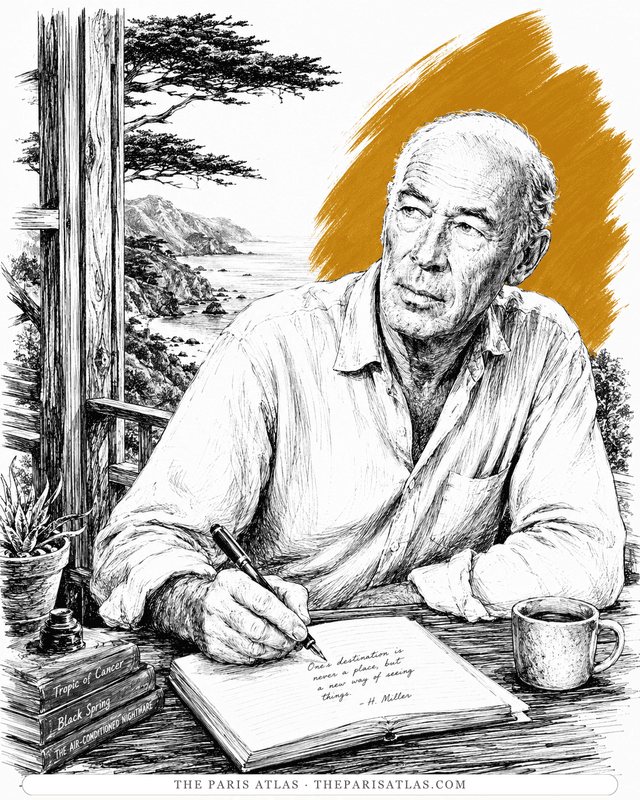
Henry Miller
The Brooklyn dropout who arrived in Paris broke at thirty-eight and wrote the exuberant, banned books that ended American censorship.
View author
Louis-Ferdinand Céline
The doctor of the Paris slums who wrote the century's blackest, funniest novel — and changed the sound of French prose.
View author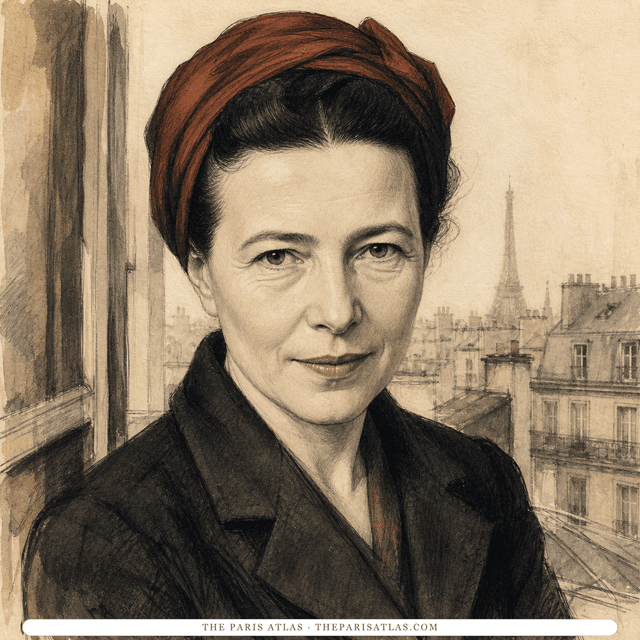
Simone de Beauvoir
French writer and philosopher whose novels, memoirs, and social analysis examined freedom, gender, responsibility, aging, and the material conditions that shape a life.
View author