Mr Warburton
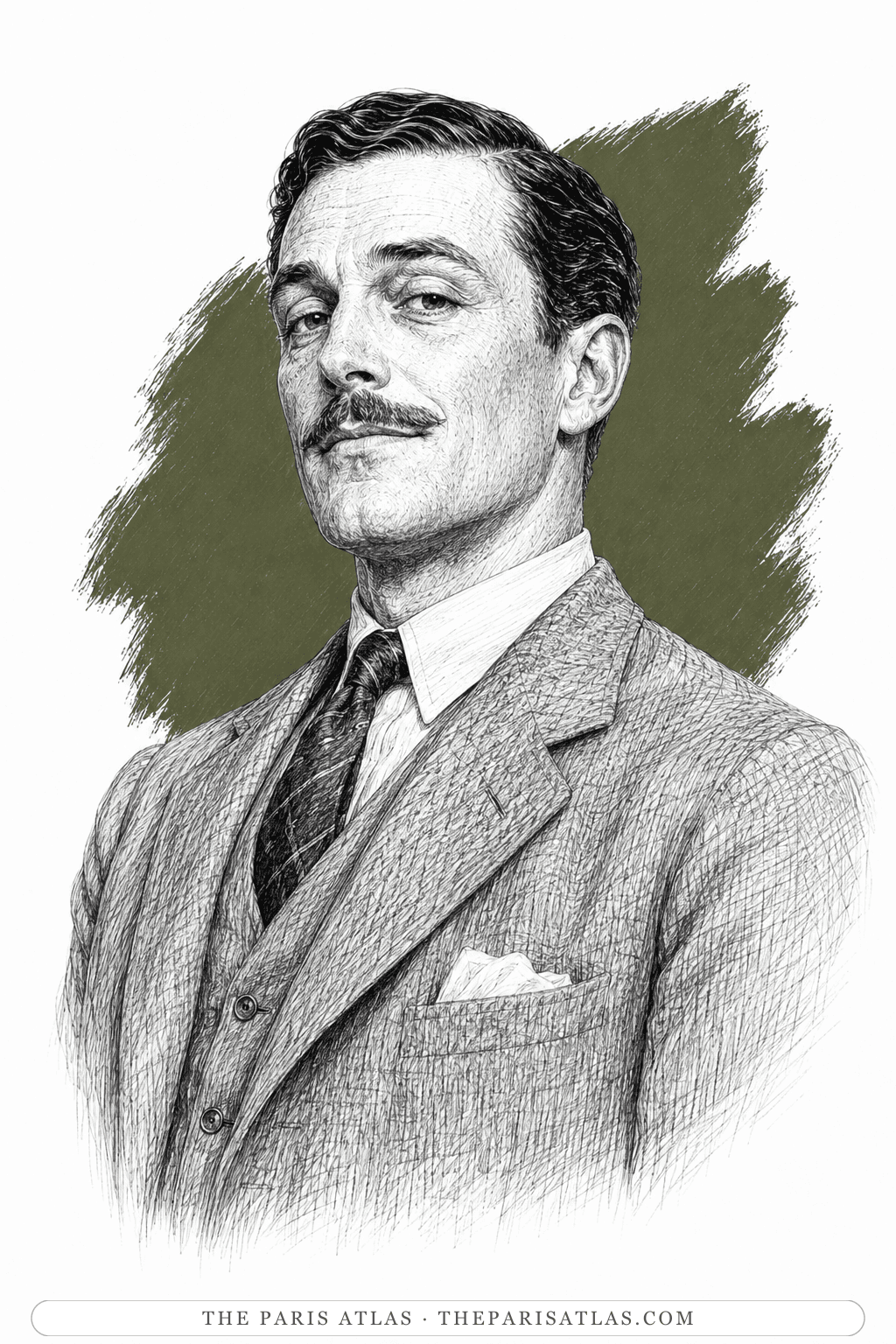
Knype Hill's resident scandal: a bald, genial man of independent means who calls himself a painter, lives openly with a housekeeper, and has three children he refers to as the bastards. He is Dorothy's only real friend in the town, and he assaults her repeatedly.
Amusement, and company that will not bore him. He tells Dorothy that every philosophy of life is hedonism, that he eats his dinner because he enjoys it and not to the greater glory of God, and that he has never seen a meaning in any of it and does not want to.
The book

At a glance
- Dorothy's friend, and the town's principal scandal
- Forty-eight, owning to forty-four; he gives his real age as forty-nine on the train
- Seven hundred a year, from no work at all
- A painter; about half a dozen mediocre landscapes a year
- Three illegitimate children he calls the bastards, and an ex-mistress, Dolores, who left him
- Large, pink, entirely bald, and at great pains to hide it
Who they are in the book
Spoiler-freeMr Warburton came to Knype Hill two years before the book opens and bought one of the new villas behind the Rectory, where he lives, or rather stays periodically, in open concubinage with a woman he calls his housekeeper. He arrived posing as a widower with two children; a little later the housekeeper gave birth to a third in the middle of the night. Four months before the story starts she left him, and the children are parked with a relative in London. George Orwell describes a fine, imposing man with a large pink Micawberish face, a sizeable belly carried as though it were an annexe to his chest, a silver-headed cane, and a completely bald head that he is at great pains to conceal. He is forty-eight and owns to forty-four. He calls himself a painter and produces about half a dozen mediocre landscapes a year. His income is seven hundred a year and he has never in his life needed to work.
Dorothy counts him as a friend, and the friendship is real. He is the only person in Knype Hill who talks to her about books, teases her, or treats her as an adult with a mind, and she gets from him a kind of sympathy she cannot get anywhere else. Orwell explains the attraction plainly: the hold the blasphemer and evil-liver has over the pious, and a shoddy conversational brilliance he calls Oscar Wilde seven times watered, which she is too inexperienced to see through.
He also handles her, over and over, against her stated wishes. Two years before the book opens, at her first visit to his house, he sat down beside her on the sofa immediately after tea and began making love to her violently, outrageously, even brutally; Orwell's sentence for it is that it was practically an assault. She escaped, white and shaking and almost in tears. He was unashamed and rather amused, and explained afterwards that he always tried it on with every presentable woman he met, and got a good many snubs and a fair number of successes. After that she never went to his house without making sure another visitor would be there, and he found other opportunities. The book states his defining quality once, flatly: he was totally devoid of shame.
How Mr Warburton Is Portrayed
- The grey felt hatHe goes about in a rakish, rather broad-brimmed grey felt hat and keeps it on, being unwilling to expose his baldness. Under it the crown is bare except for a wisp or two of golden hair by the ears. George Orwell's image for it is a monstrous pink pearl.
- His handsLarge, pink and very masculine, with thick fingers and a fleece of gold hairs on the back. Dorothy sees one of them properly for the first time while it is running down her arm.
- The elbowHe pinches Dorothy's bare elbow in the middle of the High Street. Asked to stop, he says that nobody could resist an elbow like hers and that pinching it is a reflex action.
- Ronald BewleyHe invites her to meet a celebrated novelist, Ronald Bewley, author of Fishpools and Concubines, and mentions that Bewley's wife is coming too: full chaperonage. Orwell tells the reader outright that Bewley, the wife and the novel were all invented on the spur of the moment, because Dorothy would never come to the house unchaperoned.
- Behind the chairAt his house that evening he moves behind her, takes her by the shoulders and presses her back into her seat when she tries to get up, then runs his hand down her arm. Orwell describes the lingering, appraising touch of a man to whom a woman's body is valuable in the same way as something to eat. He tells her not to turn round, and that if she keeps still she can imagine he is Ivor Novello.
- What stops him at the gateLeaving, he manoeuvres himself between Dorothy and the gate, puts his arm round her and kisses her cheek while she struggles helplessly; he would have kissed her mouth if she had not turned her head in time. What makes him let go is not her struggling but her pointing out that they are standing in front of Mrs Semprill's window. Orwell notes that he would not have been impressed by any other argument.
- AfterwardsHaving failed, he suggests they change the subject and talk about moral theology, or cathedral architecture, or the Girl Guides' cooking classes. He walks her home in perfect good humour, talking so pleasantly that she finds it impossible to stay angry.
- The argumentsHe steers every conversation towards religion because it is the only aspect of the subject that interests him: a pretext for blasphemy. Do you believe in Hell as you believe in Australia? What will you say at the Judgement Seat? I am reserving my defence. Orwell's verdict on these bouts is that Dorothy was always right and not always victorious.
- The telegramWhen the news is good he wires it in full, punctuation dictated aloud: "Rejoice in the lord o ye righteous note of exclamation great news note of exclamation your reputation absolutely reestablished stop". It runs to two pages and Dorothy has great difficulty understanding it.
- What he actually does for herHe is abroad while the scandal runs and hears nothing about it for months. When he does hear, he goes to Knype Hill, is refused admission by her father, gets her address out of the schoolmaster, contradicts the story everywhere he can, and corners Mrs Semprill in person, getting nothing out of her but hypocritical snivellings about "poor, POOR Dorothy". Then he collects Dorothy from the school in a taxi and retrieves her luggage from Mrs Creevy himself.
Mr Warburton quotes
You stick to the Christian scheme of things, but you leave Paradise out of it.
The train home is his last long scene, and it turns on a piece of deliberate cruelty.
If you like A Clergyman's Daughter


If you like George Orwell
Explore authors with a similar voice, perspective, and influence.
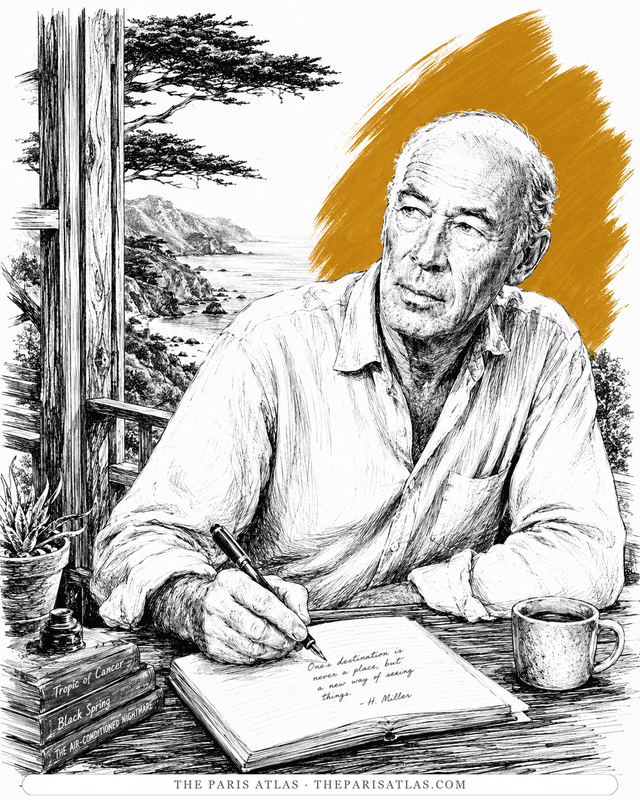
Henry Miller
The Brooklyn dropout who arrived in Paris broke at thirty-eight and wrote the exuberant, banned books that ended American censorship.
View author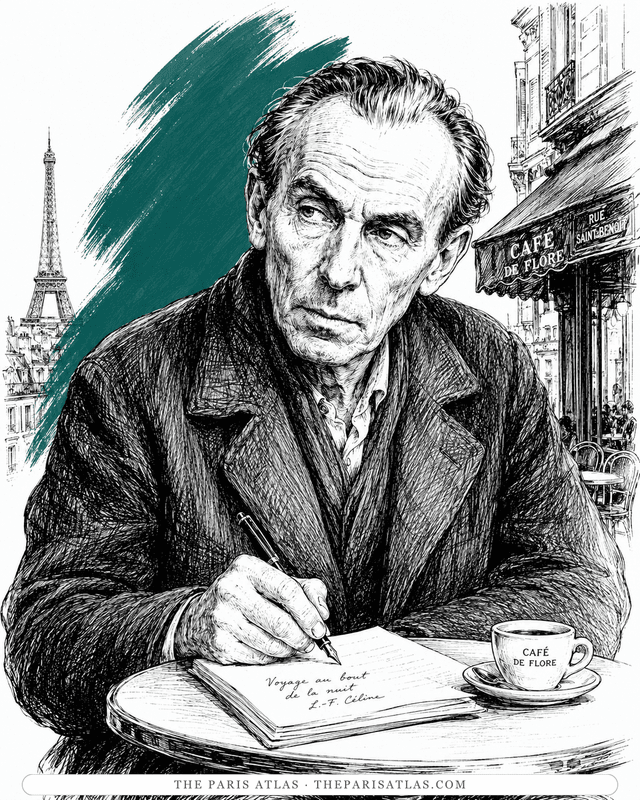
Louis-Ferdinand Céline
The doctor of the Paris slums who wrote the century's blackest, funniest novel — and changed the sound of French prose.
View author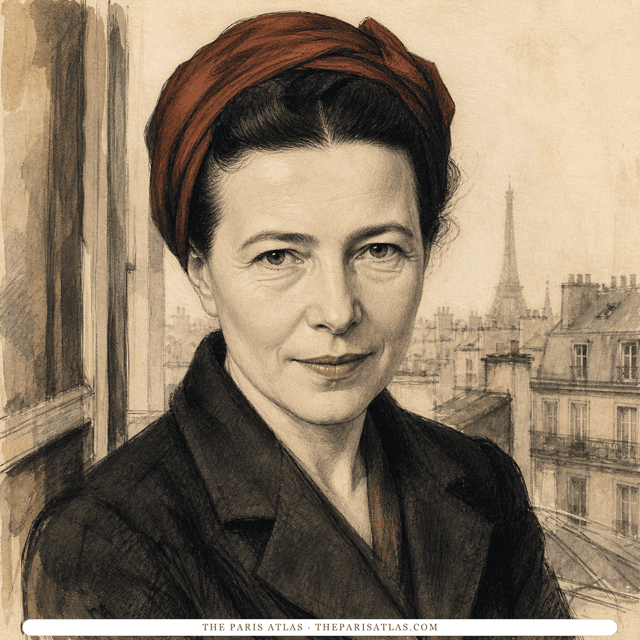
Simone de Beauvoir
French writer and philosopher whose novels, memoirs, and social analysis examined freedom, gender, responsibility, aging, and the material conditions that shape a life.
View author