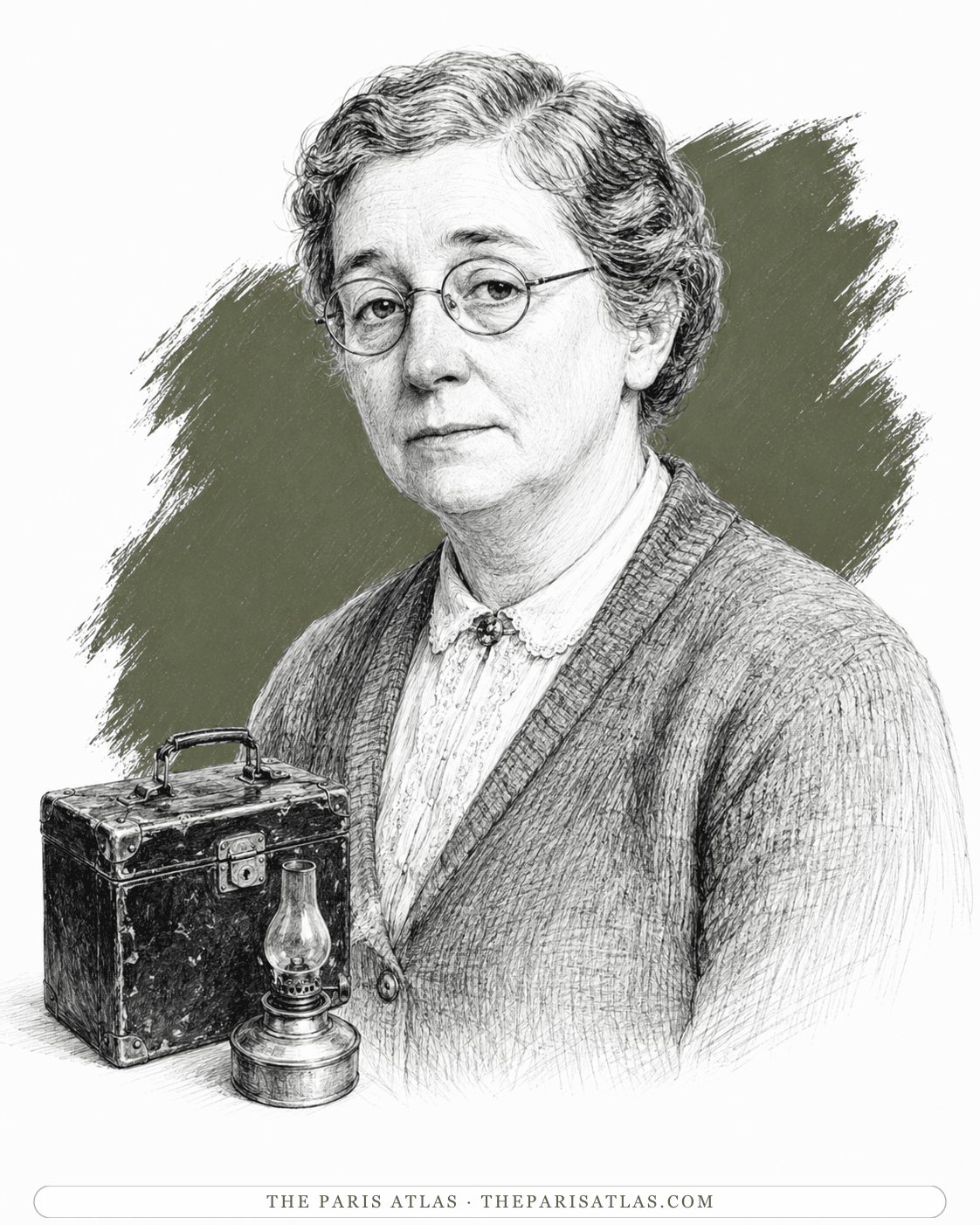
Miss Beaver
Geography mistress at another Southbridge school, met by chance in the public library, and the only friend Dorothy makes in eight months. Twenty years of slave-driving have brought her four pounds a week, a bed-sitting room, and the photographs of one trip to the Tyrol in 1913.
The book

At a glance
- Geography mistress at Toot's Commercial College, Southbridge
- Four pounds a week, after twenty years
- A bed-sitting room in Southbridge
- Chapter 4
Who they are in the book
Spoiler-freeMiss Beaver teaches geography at Toot's Commercial College, one of the private schools in the London suburb of Southbridge. Dorothy Hare, the clergyman's daughter of the title, is by this point in the book working at a smaller and shabbier school in the same suburb, alone and homesick, and the two of them meet by chance in the public library near the end of the holidays. She is the only friend Dorothy makes in eight months there.
Her school is the grander of the two. It has a hundred and fifty day-pupils, a dozen boarders, and a watchword, Efficiency; twice a week, instead of prayers, the whole school recites a catechism called the Efficiency Ritual, which asks what the secret of success is and answers that it is efficiency, then asks what the test of efficiency is and answers that it is success. Miss Beaver's part in this is Commercial Geography.
Twenty years of it have brought her four pounds a week and the privilege of living out instead of putting the boarders to bed. She lives in one room under a landlady who does not approve of visitors, so the two women can only meet at long intervals, and when they do there is nothing much to do but the Daily Telegraph crossword. George Orwell's own verdict is blunt, and he sets her against Miss Strong, the teacher Dorothy replaced, as the two ends every third-rate schoolmistress travels towards: Miss Strong's road, by way of whisky to the workhouse, or Miss Beaver's, by way of strong tea to a decent death in the Home for Decayed Gentlewomen.
How Miss Beaver Is Portrayed
- How she looksA prim little woman with a round body, a thin face and a reddish nose. She walks with the gait of a guinea-hen.
- The teaShe keeps a spirit lamp in a japanned travelling case and brews pots of tea as black as coal-tar on it, swallowing about a bucketful in the course of a day. She takes a Thermos to school as well, for a hot cup during the break and another after dinner.
- The Tyrol, 1913One trip to Austria, and the summit and glory of her life. The photographs she took there are what she has to show a visitor, and the travelling case that holds the spirit lamp went with her.
- Where she livesIn "rooms", meaning one bed-sitting room. The landlady does not approve of visitors, which is why Dorothy Hare can only come at rare intervals and why the invitations feel like an event.
- What twenty years boughtFour pounds a week, and the right to go home at night instead of putting the boarders to bed. Orwell's word for the work itself is slave-driving.
- What they do togetherSolve the crossword out of the Daily Telegraph over a cup of tea less wishy-washy than the one served at Dorothy's school. Dorothy grows very fond of her, and the hours are the only ones in that year she looks forward to.
- Orwell's verdictThat she was in truth a dull little woman, and that her soul seemed to have withered until it was as forlorn as a dried-up cake of soap in a forgotten soap dish. Dorothy does not think this; the narration does, and lets both stand.
If you like A Clergyman's Daughter


If you like George Orwell
Explore authors with a similar voice, perspective, and influence.

Henry Miller
The Brooklyn dropout who arrived in Paris broke at thirty-eight and wrote the exuberant, banned books that ended American censorship.
View author
Louis-Ferdinand Céline
The doctor of the Paris slums who wrote the century's blackest, funniest novel — and changed the sound of French prose.
View author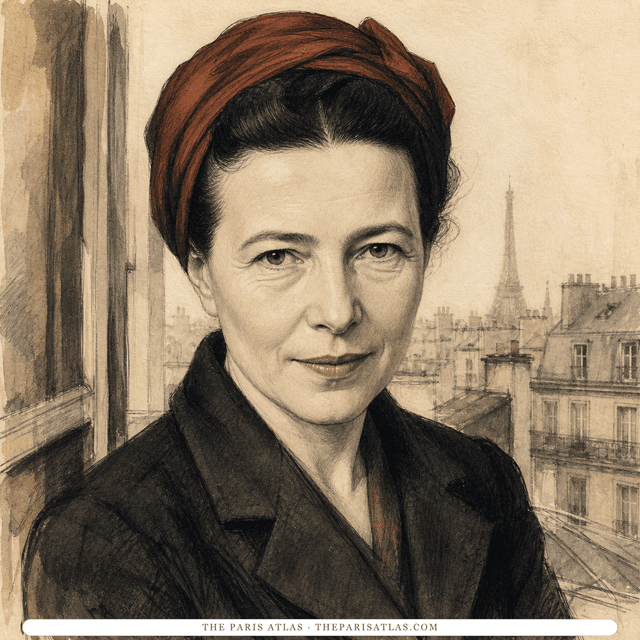
Simone de Beauvoir
French writer and philosopher whose novels, memoirs, and social analysis examined freedom, gender, responsibility, aging, and the material conditions that shape a life.
View author