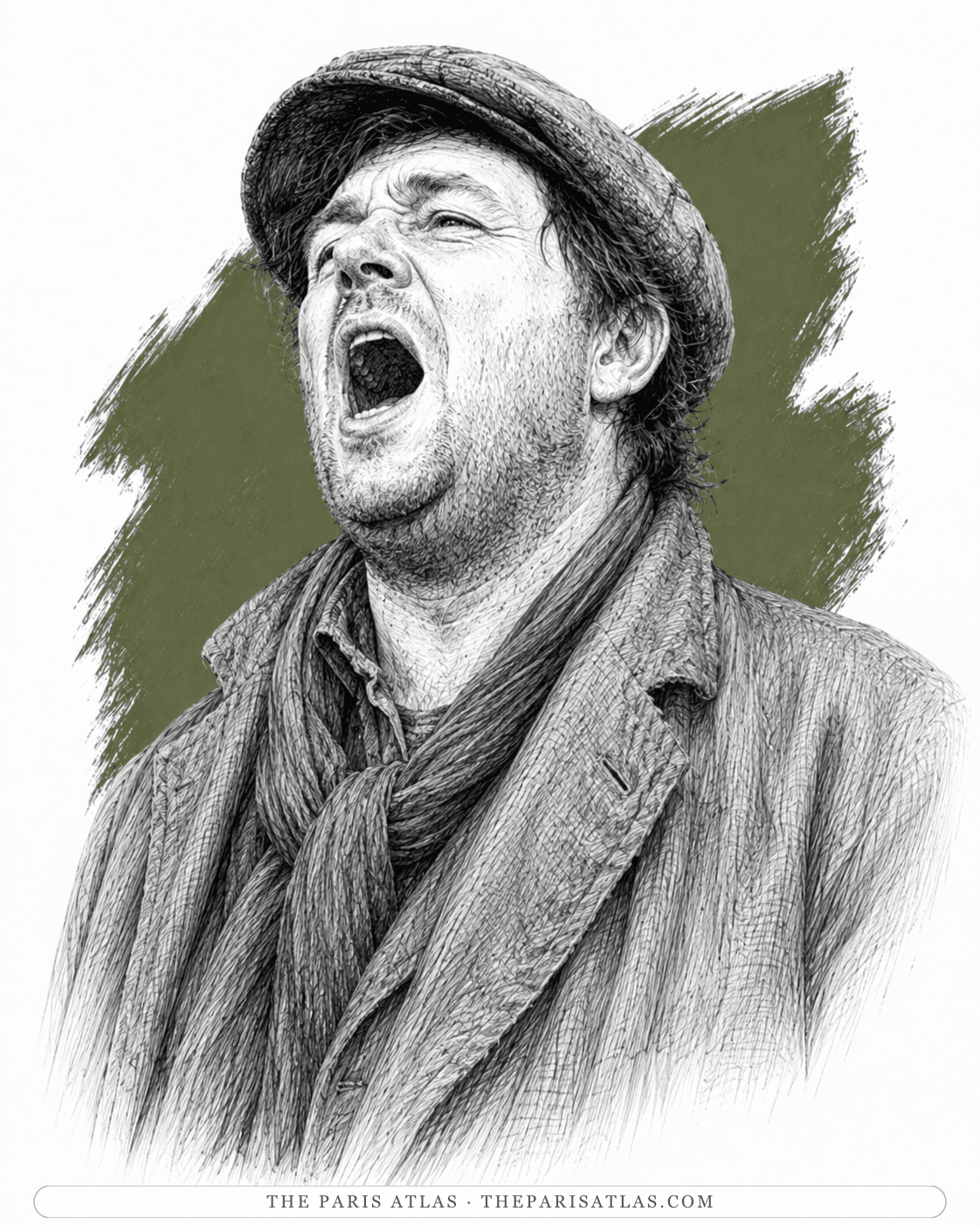
Charlie (in Trafalgar Square)
The loudest of the Trafalgar Square regulars through the night chapter, and the one who opens it, singing a hymn in a voice that carries across the Square. He has nine convictions, has had his bellyful of Dartmoor, works the streets with Snouter at Christmas singing carols, and talks in his sleep in the formula of the police court.
To get through the night, loudly. He sings, jokes, boasts of convictions and organises whatever will keep the group awake and moving until it is light enough to be somewhere else.
The book

At a glance
- One of the Trafalgar Square regulars on the night chapter
- Nine convictions, by his own count
- Chapter 3
Who they are in the book
Spoiler-freeChapter 3 of the novel is set out like a play, in a single freezing night on Trafalgar Square among people with nowhere to sleep, and Charlie has more of it than anyone except Mr Tallboys. He opens the chapter singing a hymn — 'Ail Mary, 'ail Mary — and the word perishing turns up in almost every line he speaks afterwards.
What he supplies to the group is noise and information. He roars out a bawdy song in an enormous voice to make everybody dance and keep warm. He explains the Christmas trade: he and Snouter go out hymn-busking, and there is money in it if you pick your street. He compares convictions with the others and claims nine of his own, and mentions that he has had his perishing bellyful of Dartmoor. He describes a smash-and-grab he did with Nosy Watson for a window full of cigarettes.
The two moments the chapter gives him alone are less funny. Pressed against the window of a coffee shop he cannot afford to enter, he slavers like a dog. And when he finally sleeps, he talks in the exact rhythm of the charge sheet, giving his own name and offence: Charles Wisdom, drunk and incapable.
How Charlie (in Trafalgar Square) Is Portrayed
- The voiceEnormous, and the first thing in the chapter. He starts with a hymn and later roars out a bawdy song to get everyone dancing, because dancing is the only warmth available.
- PerishingHis adjective for everything, in almost every line. Orwell writes the whole chapter in dialect and Charlie is the one it clings to hardest.
- The Christmas tradeHe and Snouter sing hymns for money towards Christmas, and he recommends it as work. It is one of the few pieces of practical advice anybody offers.
- Nine convictionsClaimed in the general comparison of records, along with the observation that he has had his bellyful of Dartmoor.
- The coffee-shop windowHe stands at the glass looking in at food he cannot buy, slavering like a dog. The chapter's comedy stops for the length of the sentence.
- AsleepHe talks in police-court formula, running his own name and charge together as the clerk would read them out. It is the closest the chapter comes to saying how often he has heard it.
If you like A Clergyman's Daughter


If you like George Orwell
Explore authors with a similar voice, perspective, and influence.

Henry Miller
The Brooklyn dropout who arrived in Paris broke at thirty-eight and wrote the exuberant, banned books that ended American censorship.
View author
Louis-Ferdinand Céline
The doctor of the Paris slums who wrote the century's blackest, funniest novel — and changed the sound of French prose.
View author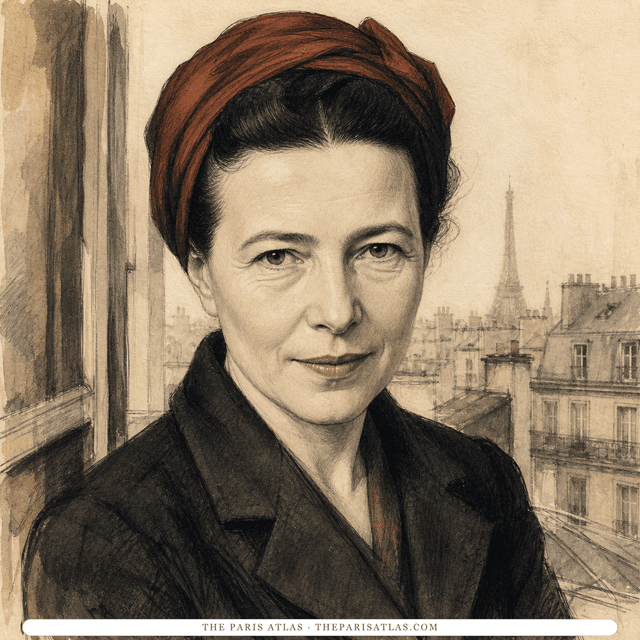
Simone de Beauvoir
French writer and philosopher whose novels, memoirs, and social analysis examined freedom, gender, responsibility, aging, and the material conditions that shape a life.
View author