Miss Mayfill
The Grange's ancient owner, and the only communicant besides Dorothy at the seven o'clock service. She has never been known to put more than sixpence in the collection bag, and her contribution to the jumble sale is two handleless chamber-pots.
To get to the altar rail on her own feet. She can barely walk, and she takes bitter offence if anyone offers to help her.
The book

At a glance
- The second communicant at the seven o'clock service at St Athelstan's
- Very old; no one at Knype Hill remembers her as anything else
- The Grange, an imitation castle of dark red brick built about 1870
- Sixpence in the bag, and two handleless chamber-pots to the jumble sale
- Chapter 1
Who they are in the book
Spoiler-freeMiss Mayfill owns The Grange at Knype Hill, an imitation castle of dark red brick built about 1870 and almost hidden in its shrubberies, and she is the only person of any standing in the town who has stayed loyal to St Athelstan's. She is very old. George Orwell puts it as flatly as it can be put: so old that no one remembered her as anything but an old woman.
She appears once, at the seven o'clock Holy Communion that opens the novel, where she is the only other communicant. Almost nothing happens. She crosses herself at intervals, which the Rector, the Reverend Charles Hare, turns a disapproving eye on; she struggles to her feet at the end of the consecration; she creeps up to the altar and kneels and drinks. Orwell gives that hour most of a page of description, more than he gives anyone else in the book, and then never returns to her.
The description is a hostile one, and it works because of who is looking. Dorothy Hare, the clergyman's daughter of the title, is kneeling in the pew behind, failing to keep her mind on her prayers and cataloguing the coat, the smell and the mouth in front of her instead. What the passage builds to is a sentence Dorothy hears herself pray at the altar steps: that she may not have to take the chalice after Miss Mayfill. She is horrified at herself, drives the pin from her lapel into her arm, and then kneels deliberately on Miss Mayfill's left so as to make quite sure of drinking second.
Her money is the parish's standing hope and standing disappointment. Most of it is left to the Church, she says. Meanwhile she has never been known to put more than sixpence in the collection bag, and Proggett, the sexton, advises Dorothy not to go anywhere near her about the belfry fund, on the grounds that hearing the tower is unsafe would frighten her out of the building for good.
How Miss Mayfill Is Portrayed
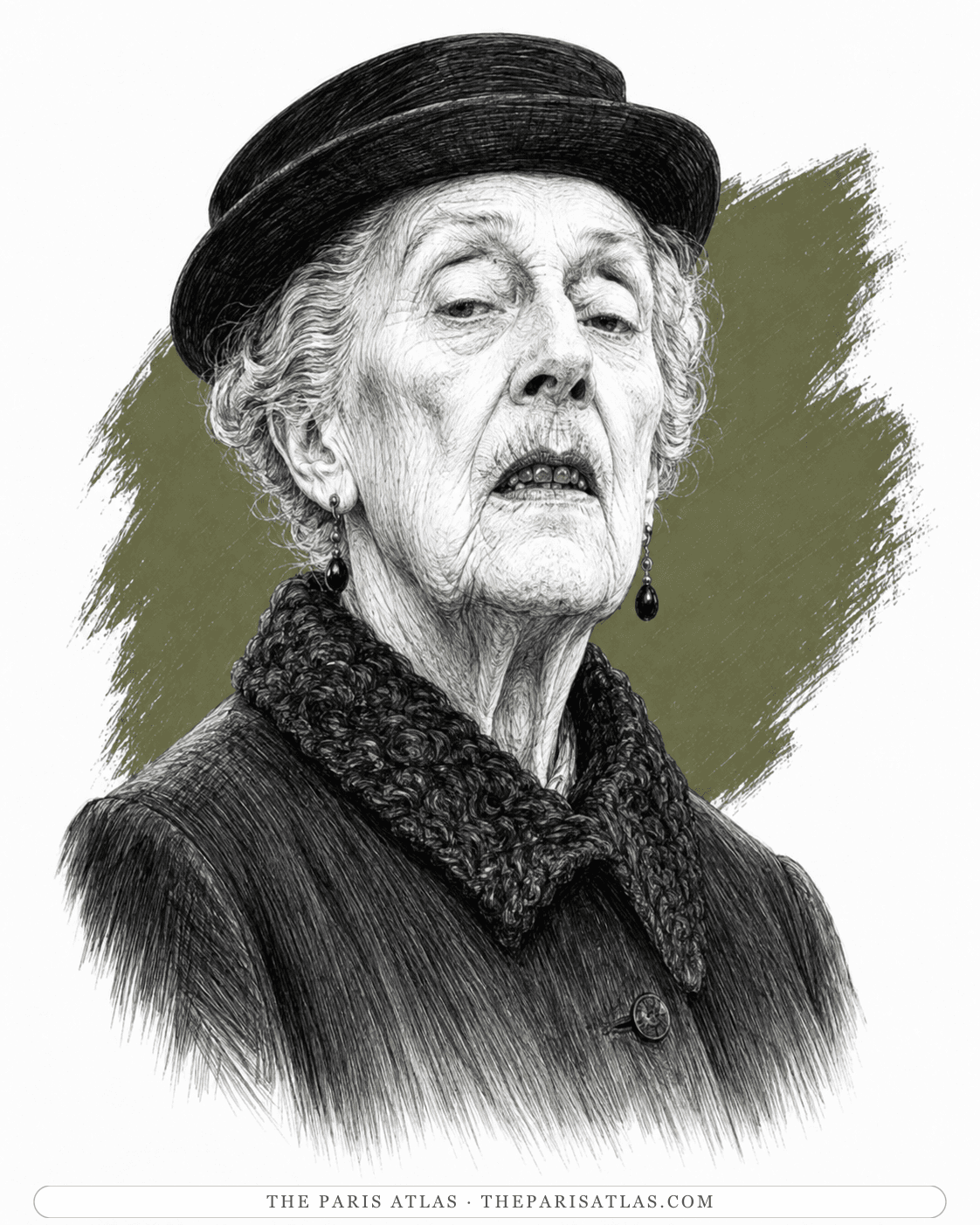
- The overcoatLong, musty and black, with a little collar of greasy-looking astrakhan, and the same one ever since Dorothy Hare can remember. The stuff is like watered silk but coarser, with rivulets of black piping wandering over it in no discoverable pattern. George Orwell suggests it might even be that legendary and proverbial substance, black bombazine. With it go a black quasi-pork-pie hat and trembling jet ear-rings.
- The scentFaint, and Orwell breaks it into three parts: eau-de-Cologne, mothballs, and a sub-flavour of gin. Kneeling at the altar rail later, Dorothy can smell dust, eau-de-Cologne and mothballs and nothing else.
- Getting to her feetIt takes her a long time and she does it in sections, like a disjointed wooden creature picking itself up, releasing a whiff of mothballs at each movement. Her stays creak like bones grating against one another. You could imagine, Orwell writes, that there was only a dry skeleton inside the coat.
- The walk to the altarShe creeps up to the altar with slow, tottering steps. She can barely walk, and she takes bitter offence if anyone offers to help her.
- The mouthIn an ancient, bloodless face it is surprisingly large, loose and wet. The underlip hangs forward and exposes a strip of gum and a row of false teeth as yellow as the keys of an old piano, and there is a fringe of dark, dewy moustache above it. Orwell closes the description by saying it is not the kind of mouth you would like to see drinking out of your cup.
- Crossing herselfShe does it at intervals through the service, and again at the altar, doubling herself up like a geometrid caterpillar with many creakings and signing herself so elaborately that she might be sketching a row of braid frogs down the front of her coat.
- The chaliceShe drinks first and leaves the wet imprint of her lips on the silver rim. Dorothy takes it after her and tastes it with repulsion, and with an added joy in the small act of self-abasement.
- SixpenceMost of her money is bequeathed to the Church, so she says. In the meantime she has never been known to put more than sixpence in the collection bag, and Orwell adds that she seemed likely to go on living for ever.
- The jumble saleDorothy has seen a Lowestoft china tea service in a cupboard at The Grange, put away unused for over twenty years, and spends a morning making special prayers that it will be given to the sale. What comes down the drive, carried by a disgusted-looking manservant, is two handleless chamber-pots.
Miss Mayfill gets the last word of the novel's argument without being in the room for it.
If you like A Clergyman's Daughter


If you like George Orwell
Explore authors with a similar voice, perspective, and influence.

Henry Miller
The Brooklyn dropout who arrived in Paris broke at thirty-eight and wrote the exuberant, banned books that ended American censorship.
View author
Louis-Ferdinand Céline
The doctor of the Paris slums who wrote the century's blackest, funniest novel — and changed the sound of French prose.
View author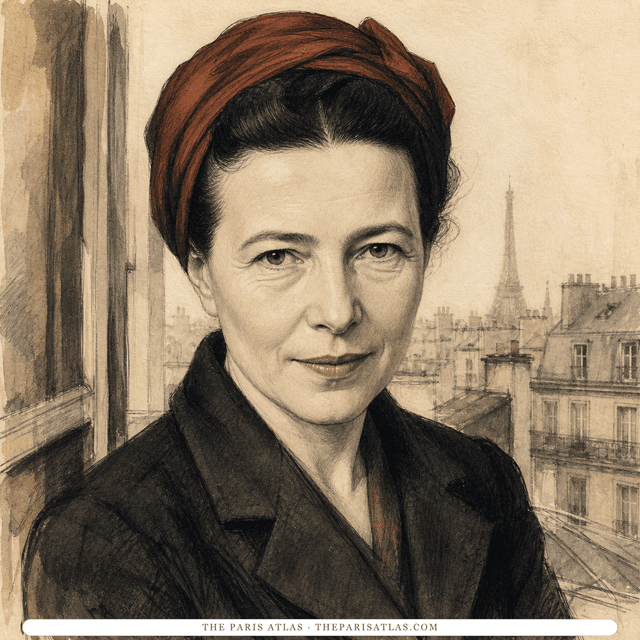
Simone de Beauvoir
French writer and philosopher whose novels, memoirs, and social analysis examined freedom, gender, responsibility, aging, and the material conditions that shape a life.
View author