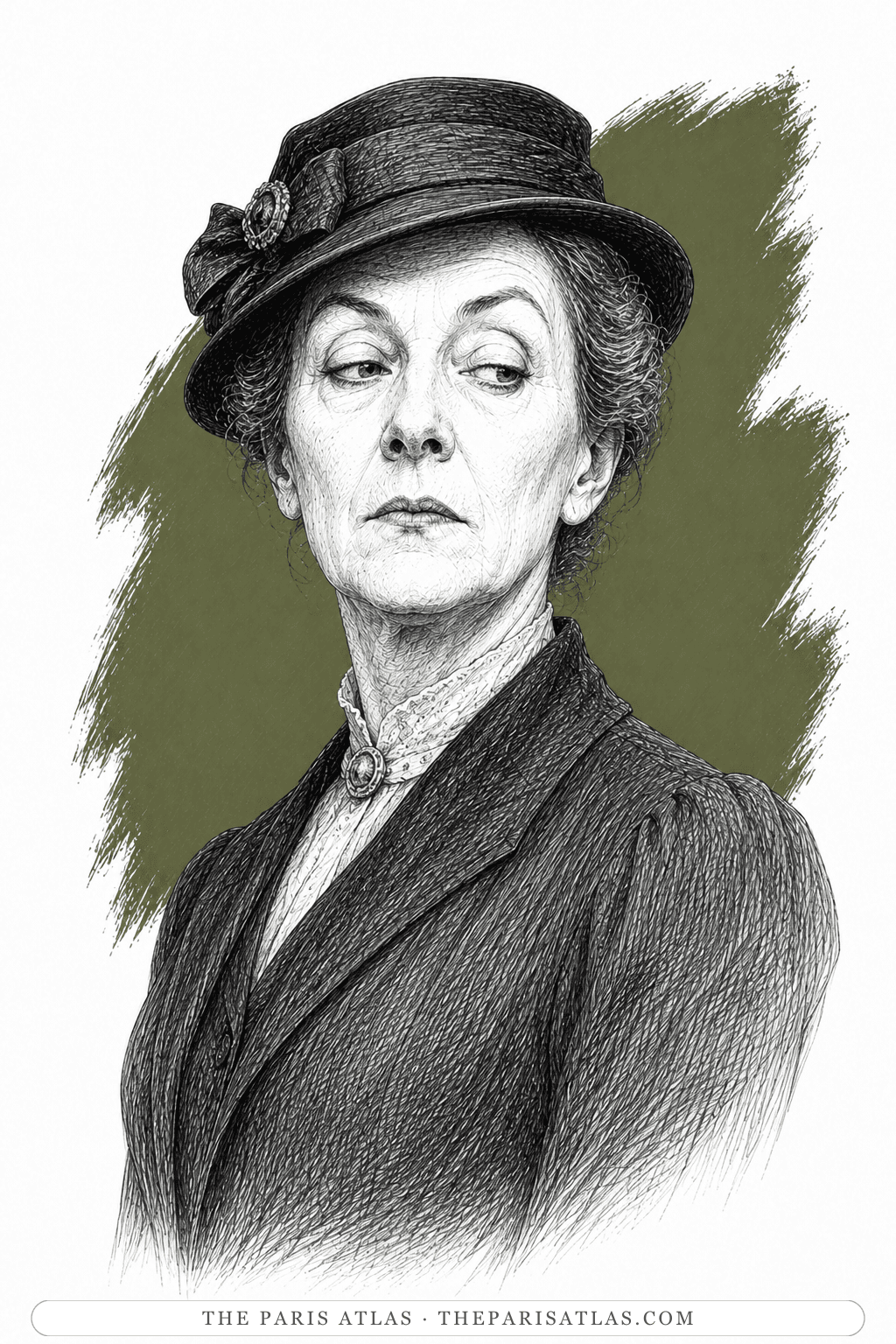
Mrs Creevy
Owner and principal of Ringwood House Academy for Girls, Southbridge, where Dorothy teaches. She does not teach herself, sorts the twenty-one pupils into good, medium and bad payers, and states her educational philosophy in one sentence: it is the fees she is after.
Sixpence saved rather than a pound earned. Orwell files her with the petty misers who have not the enterprise to make money but will take a farthing off a dunghill with their teeth, and her pleasures are the fees, the feud with the school next door, and any chance of doing somebody a bad turn.
The book

At a glance
- Owner and principal of Ringwood House Academy, Brough Road, Southbridge
- Somewhere in her forties
- Twenty-one, at five guineas a term plus extras
- Hardly more than a hundred and fifty pounds a year
- Ten shillings a week and board in term time; board alone in the holidays
- The Baptist Chapel every Sunday, to impress the parents. No belief of any kind
- Mr Boulger, who runs the boys' school in the other half of the house
Who they are in the book
Spoiler-freeRingwood House Academy for Girls occupies half a semi-detached house of yellow brick in Brough Road, Southbridge, a suburb ten or a dozen miles from London, with a board on the front advertising ages five to eighteen and music and dancing taught. There are twenty-one pupils, one schoolroom, one teacher and no atlas. Mrs Creevy owns it. George Orwell puts her somewhere in her forties: lean, hard and angular, with abrupt decided movements, something discoloured about her whole appearance as though she lived in a bad light, and a sullen, ill-shaped mouth with the lower lip turned down that recalls a toad. Not a bully exactly, he writes, because she would not take enough interest in you to want to bully you, but a person who would use you and then throw you aside with no more compunction than a worn-out scrubbing-brush.
She does not teach. She has the house to run, seven children staying to dinner, and above all the business of getting the fees out of the parents, which takes all her time. Two evenings a week she goes out canvassing likely parents, an activity she calls going after the girls. The rest of the time she is audibly present: banging crockery, harrying the charwoman, rapping the schoolroom wall with a broom-handle when she hears noise, or restitching pairs of harsh white linen bloomers from a workbox she gets out whenever occupation fails her for five minutes.
Orwell is careful to say that the school is not exceptional. He puts the number of private schools in England at somewhere near ten thousand, of which fewer than a thousand are subject to government inspection, and describes the type: started by a small businessman who works out that there is money in a school and no overhead to speak of, sited in a district where the parents are too poor for a decent school and too proud for the council school, and built up like a milk round. Ringwood House is the fourth-rate specimen. A government inspector visits once, measures the schoolroom to check the cubic feet of air per girl, and leaves, having no power to do anything else.
How Mrs Creevy Is Portrayed
- The first sight of herShe opens her own front door and Dorothy takes her for the servant: tall, and gaunt-looking in the dark hallway. Sitting down, she clasps her hands on her skinny forearms. Her clothes are never itemised, and the book gives one negative instead, that she never dressed herself in any kind of finery.
- The noise she makesShe cannot move anything without banging it, and George Orwell says she is as full of thumps and raps as a poltergeist. Her voice is sharp, commanding and penetrating, with a bad accent and occasional vulgar turns of speech.
- The three listsDorothy is handed a penny notebook and told to learn three lists of names by heart. The good payers are not to be smacked on any account. The medium payers may be smacked if they get saucy, but not where it will leave a mark a parent can see; the recommended method is twisting their ears, which the children cannot bear and which shows nothing. Of the three bad payers: "I don't care WHAT you do to that lot — well, short of a police-court case, naturally."
- The marmaladeAt breakfast the two fried eggs are sliced into thin strips and served so that Dorothy gets about two-thirds of one. The dish of marmalade sits under Mrs Creevy's lean left arm, in a protective position on its left flank, as though she suspected an attack on it. Dorothy goes without marmalade for an entire term.
- The morning prayerShe wrote it herself, and leads the girls through it with her eyes darting over them: make us industrious, punctual and ladylike, make the school prosper so that it may grow in numbers and be a good example to the neighbourhood, and not a disgrace like some schools of which Thou knowest, O Lord.
- The curriculum, explainedTwo hours a day of handwriting, because it is the one thing parents can see the sense of and the copies can be shown off to neighbours. Plenty of arithmetic, especially money sums. A little "Passey moi le beurre" instead of French grammar. Latin on the prospectus because it looks classy, and nobody to teach it. Geography reduced to lists of county capitals. The plasticine map is scraped off its board and thrown away.
- History with the losses removedShe will not have the library books Dorothy has been bringing home. She opened one of them and the first thing she saw was a passage saying the English had been beaten in some battle or other. The class goes back to The Hundred Page History of Britain, dated 1888, with Boadicea on the frontispiece and a Union Jack over the front of her chariot.
- Reports in red inkNothing in a girl's exercise book may be marked bad, crossed out, or underlined too heavily, because the books go home. Dorothy writes applauding comments to dictation instead: "A very creditable performance" and "Excellent! You are making great strides. Keep it up!" Mrs Creevy does the end-of-term marking herself, so that the marks come out as the parents would like them.
- The chimneyMr Boulger, who runs the boys' school in the other half of the house, complained to the landlord that her kitchen chimney smoked into his windows and asked for it to be raised two feet. The day the landlord's letter arrived she called in bricklayers and had it lowered two feet. It cost her thirty shillings and she considered it worth the money.
- The plum treeFinding that the roots of Mr Boulger's plum tree had grown under the wall into her garden, she injected a whole tin of weed-killer into them and killed the tree. It is the only occasion in the book on which Dorothy hears her laugh.
- The talking-toAfter the row over Macbeth she keeps Dorothy in front of six seated parents for ten minutes of reprimand, working in the phrases "girl that I've taken into my house", "eating my bread" and "living on my charity". Dorothy understands that the performance is for the parents, so that they feel they are getting their money's worth. She digs her nails into her palms hard enough to draw blood rather than cry.
Mrs Creevy quotes
The fees come first, and everything else comes afterwards.
In the Easter term her manner softens.
If you like A Clergyman's Daughter


If you like George Orwell
Explore authors with a similar voice, perspective, and influence.
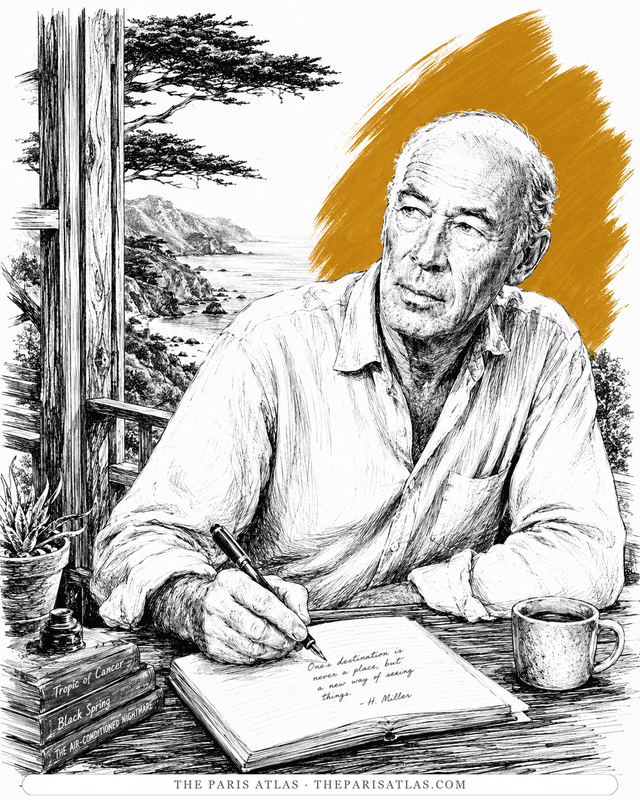
Henry Miller
The Brooklyn dropout who arrived in Paris broke at thirty-eight and wrote the exuberant, banned books that ended American censorship.
View author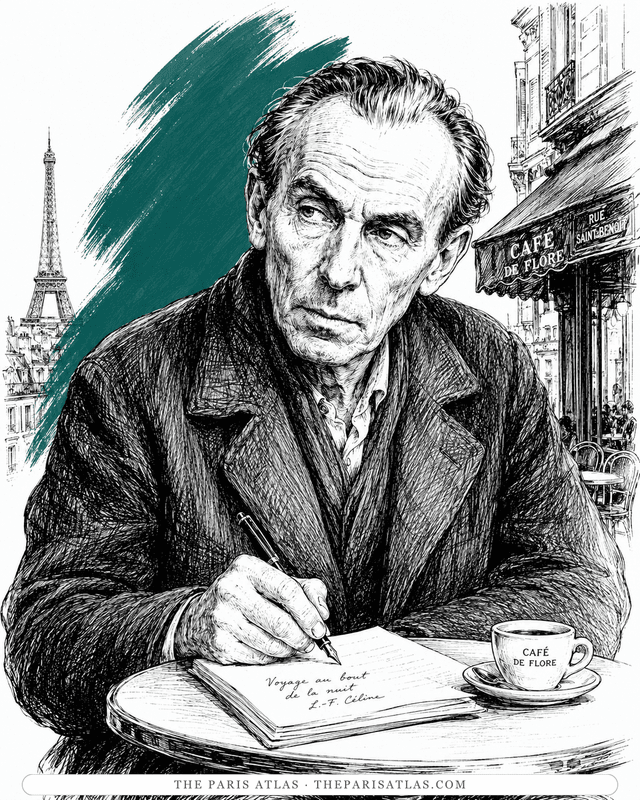
Louis-Ferdinand Céline
The doctor of the Paris slums who wrote the century's blackest, funniest novel — and changed the sound of French prose.
View author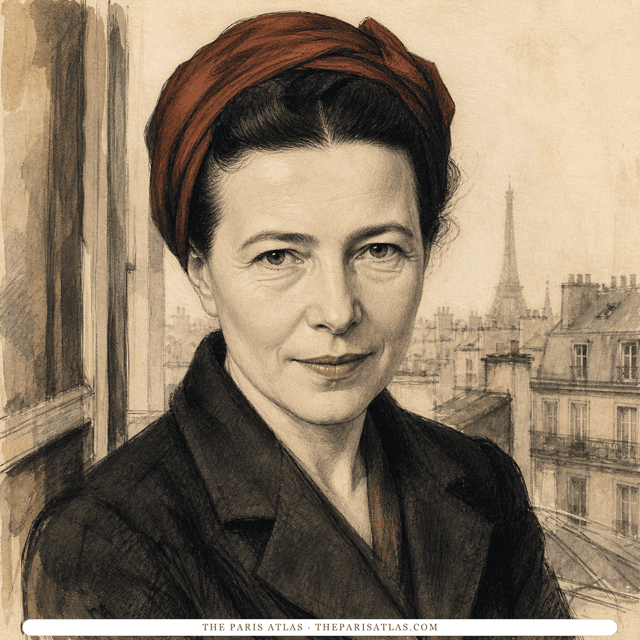
Simone de Beauvoir
French writer and philosopher whose novels, memoirs, and social analysis examined freedom, gender, responsibility, aging, and the material conditions that shape a life.
View author