Daddy
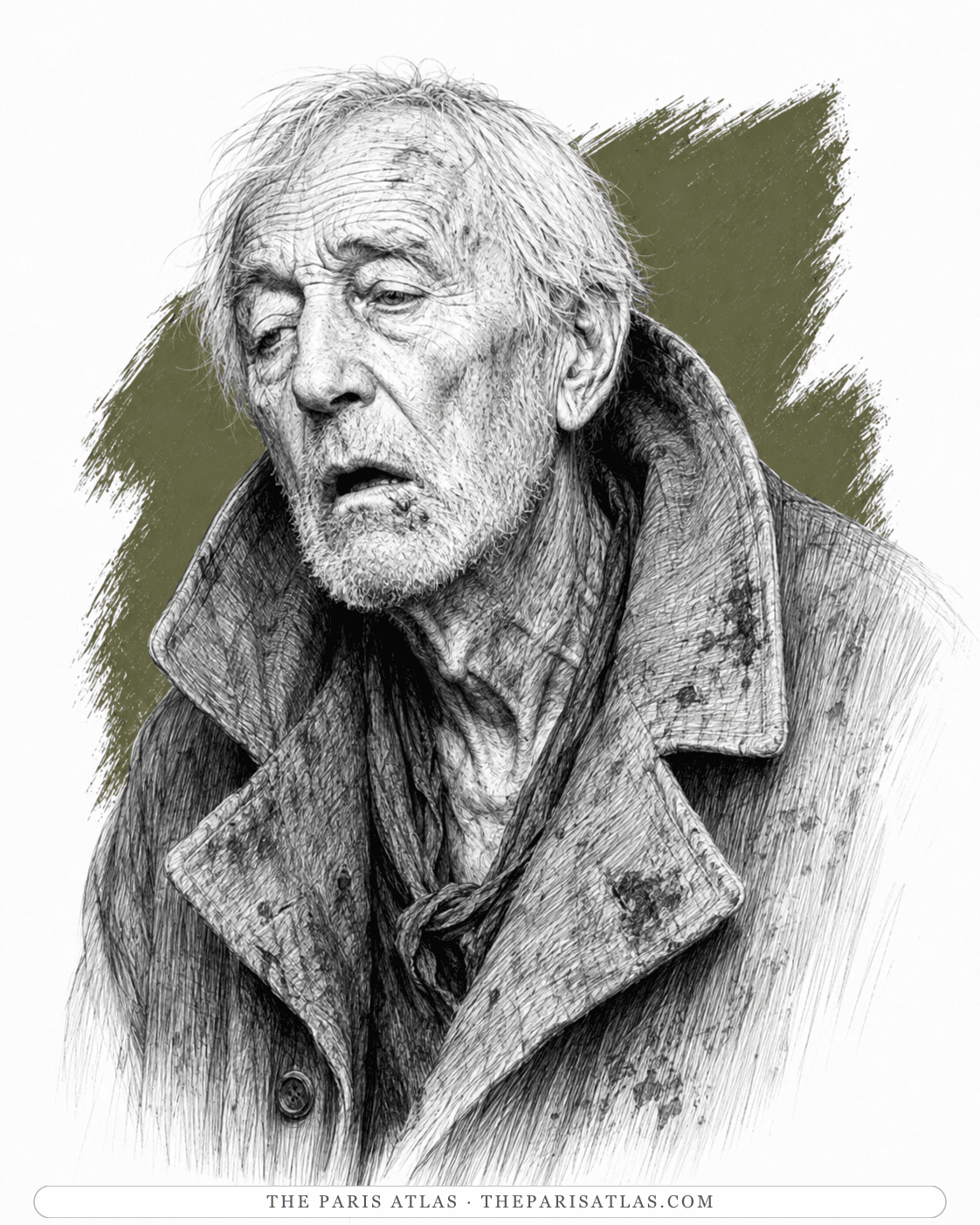
The oldest of the Trafalgar Square group, fifty years on the road, man and boy. His head comes out of his overcoat like a tortoise's out of its shell, he sleeps with his mouth open and an Adam's apple like the blade of a tomahawk, he belches, and his advice on money is that you should never buy what you can bum.
The book

At a glance
- The oldest of the group on Trafalgar Square through the night chapter
- Fifty years, by his own account
- Chapter 3
Who they are in the book
Spoiler-freeDaddy is the oldest of the dozen people spending a freezing night on the benches of Trafalgar Square in the third chapter of the book, which George Orwell writes as a play. Fifty years on the road, man and boy, is his own account of himself, and it is the only biography he gives.
He is not really part of the conversation. He spends the night inside his overcoat, and the chapter's running device is his head appearing out of the collar when something rouses him, delivering a verdict, and going back in. There are four or five of these emergences, and two of them are on the same subject: what you should and should not pay for.
The group is frank about him to his face. He is old, he smells, he has sores on his lip, and he is lousy -- their word for it is chatty. None of that stops them pressing up against him for warmth, and when Dorothy Hare, the clergyman's daughter of the title, is stiff with cold, it is Daddy the Irishwoman Mrs McElligot sits her against.
How Daddy Is Portrayed
- The overcoatHe lives inside it. His head comes out of it like a tortoise's out of its shell to say something, and retires within it again as soon as he has finished.
- AsleepHalf woken and still half asleep, he lets his head fall back with his mouth open, and his Adam's apple stands out of his withered throat like the blade of a tomahawk.
- His rule about moneyGiven at full volume when someone proposes paying a penny for hot water. "Bum it, boy, bum it! Don't buy what you can bum and don't bum what you can steal. That's my word--fifty year on the road, man and boy."
- What he used to eatGood solid tommy, he says, not this bread and marge and tea: beef stew, black pudding, bacon dumpling, pig's head. Fed like a fighting-cock on sixpence a day. Then fifty years of spud-grabbing, pea-picking, lambing and turnip-topping, sleeping in wet straw, and not once in a year filling his guts right full.
- The belchIt arrives twice, both times attached to tea. "Drum o' tea, eh? I could sup a drum o' tea." And at five in the morning: "Even the tea they give you ain't no more than water with a bit of dust in it."
- What the others say about himTo his face and across him. Mrs Bendigo does not want his lousy old head on her shoulder, and tells him he is sitting on her sugar. Charlie asks whether old Daddy doesn't stink when you get up against him.
- And what they do anywayPress up against him. "He's chatty, but he'll keep you warm," Mrs McElligot tells Dorothy, putting her under his arm. When three of them club together for one cup of tea at five in the morning, the arrangement is that he has sores on his lip, so drink near the handle and there is no harm done.
- The benchHe is the one everybody shoves along. "Shove up, Daddy, shove up!" "Shift yourself, Daddy, and make room for my little sit-me-down." He is also one of the three men who do not roll cigarettes from picked-up fag-ends.
If you like A Clergyman's Daughter


If you like George Orwell
Explore authors with a similar voice, perspective, and influence.
Henry Miller
The Brooklyn dropout who arrived in Paris broke at thirty-eight and wrote the exuberant, banned books that ended American censorship.
View author
Louis-Ferdinand Céline
The doctor of the Paris slums who wrote the century's blackest, funniest novel — and changed the sound of French prose.
View author
Simone de Beauvoir
French writer and philosopher whose novels, memoirs, and social analysis examined freedom, gender, responsibility, aging, and the material conditions that shape a life.
View author