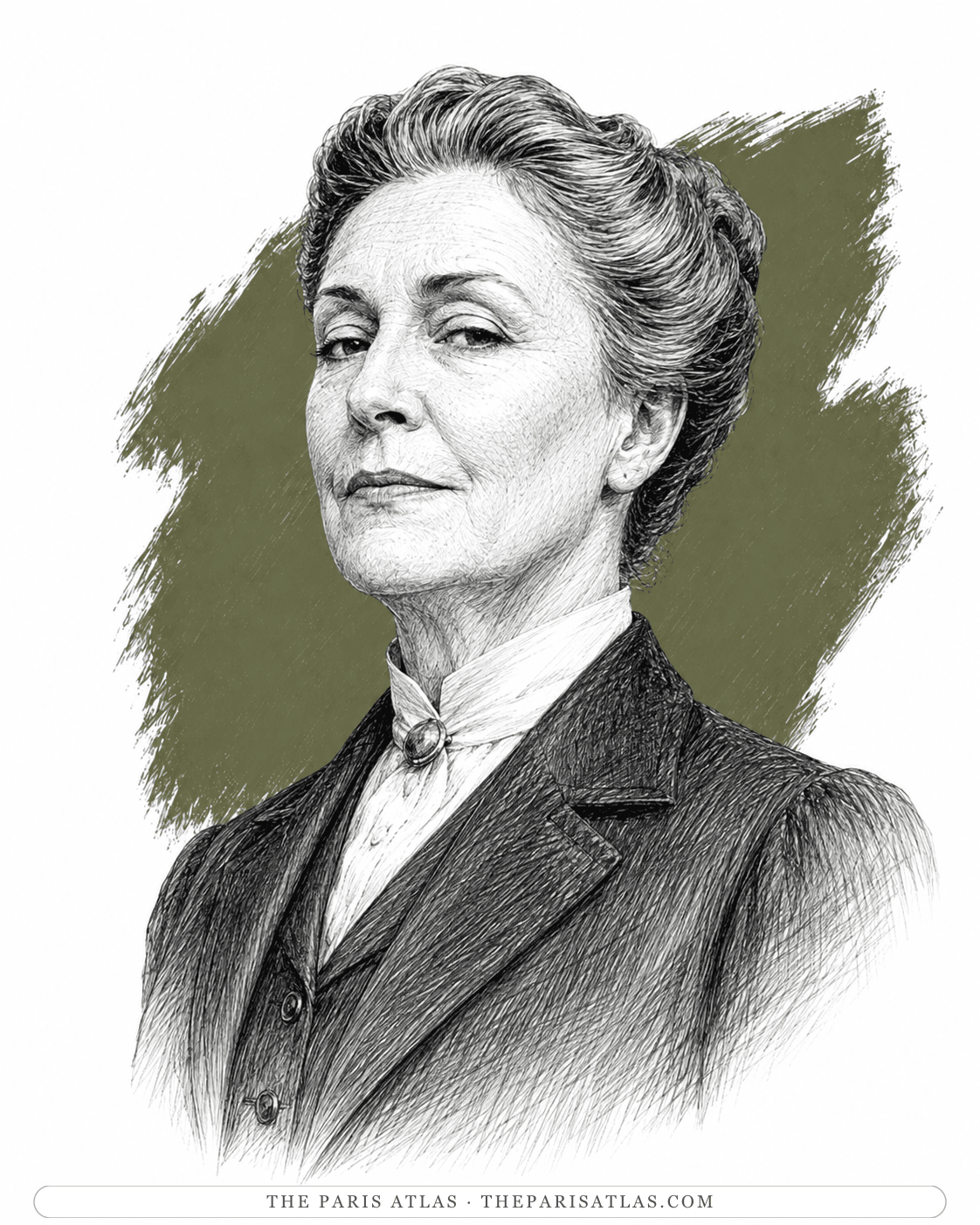
Miss Allcock
Dorothy Hare's predecessor's predecessor at Ringwood House, described as an incompetent old hack who had been at thirty-eight different schools and was not fit to have charge of a tame canary. She was very good at double-crossing her employers: she stole three of her last employer's seven pupils and sold them to Mrs Creevy, who beat her commission down from fifteen per cent to twelve and a half, while Miss Allcock planned to rob her in turn.
To get a footing in a school and then leave with its pupils. She has just done it once, and she plans to do it again to the woman who has hired her.
The book

At a glance
- The teacher who replaces Dorothy at Ringwood House, Southbridge
- The Gables, a nearby school of seven pupils
- Thirty-eight
- Dorothy's job, plus twelve and a half per cent on the pupils she brought
- Chapter 4; she never meets Dorothy
Who they are in the book
Spoiler-freeMiss Allcock is a character in A Clergyman's Daughter, the 1935 novel by George Orwell. She takes the teaching job away from Dorothy Hare, the book's central character, in the fourth chapter, and she does it without the two of them ever meeting.
The setting is Southbridge, a suburb ten or a dozen miles from London, where Dorothy has been teaching at Ringwood House Academy for Girls, a private school of twenty-one pupils run for profit by its proprietor, Mrs Creevy. Miss Allcock taught at The Gables, another small school nearby, which was down to seven pupils and dying. The book calls her an incompetent old hack who had been at thirty-eight different schools in her life and was not fit to have charge of a tame canary.
She had one real skill, and George Orwell states it plainly: she was very good at double-crossing her employers. In schools of this kind, he explains, pupils are regularly stolen from one to another. A teacher goes to the parents privately, one by one, offering to take the child ten shillings a term cheaper, and when she has enough of them she leaves and takes them with her.
Miss Allcock got three of The Gables' seven children that way and offered them to Mrs Creevy in exchange for Dorothy's job. Dorothy is told nothing until the morning she is sacked, and is sent upstairs to pack because there is nothing in the house for her dinner.
How Miss Allcock Is Portrayed
- Her recordThirty-eight different schools in the course of her working life. The book's judgement of her teaching is that she was not fit to have charge of a tame canary.
- The one thing she is good atDouble-crossing her employers. George Orwell presents this not as her private vice but as the ordinary economics of third-rate and fourth-rate private schools, where a sort of piracy is constantly going on.
- How the theft worksThe teacher approaches the parents secretly, one at a time -- send your child to me and I'll take her at ten shillings a term cheaper -- and when she has corrupted enough of them she deserts and sets up on her own, or carries the children off to another school.
- The dealThree of The Gables' seven pupils, delivered to Mrs Creevy, in return for Dorothy's post and a commission on the children she brought with her.
- The hagglingWeeks of furtive chaffering before it was settled, at the end of which Miss Allcock had been beaten down from fifteen per cent to twelve and a half.
- What each of them intended nextMrs Creevy privately decided to sack her the moment the three children were certain to stay. At the same time Miss Allcock was planning to start stealing Mrs Creevy's pupils as soon as she had a footing in the school. Neither knows the other's plan; the reader is told both in the same paragraph.
- Why Dorothy never sees it comingBecause it was worth money to Mrs Creevy that she should not. A teacher who knows she is going would start stealing pupils herself, or stop working. Hence the sudden dish of marmalade at breakfast and the creaky smiles in Dorothy's last weeks, which anyone who knew the trade would have read at once.
If you like A Clergyman's Daughter


If you like George Orwell
Explore authors with a similar voice, perspective, and influence.
Henry Miller
The Brooklyn dropout who arrived in Paris broke at thirty-eight and wrote the exuberant, banned books that ended American censorship.
View author
Louis-Ferdinand Céline
The doctor of the Paris slums who wrote the century's blackest, funniest novel — and changed the sound of French prose.
View author
Simone de Beauvoir
French writer and philosopher whose novels, memoirs, and social analysis examined freedom, gender, responsibility, aging, and the material conditions that shape a life.
View author