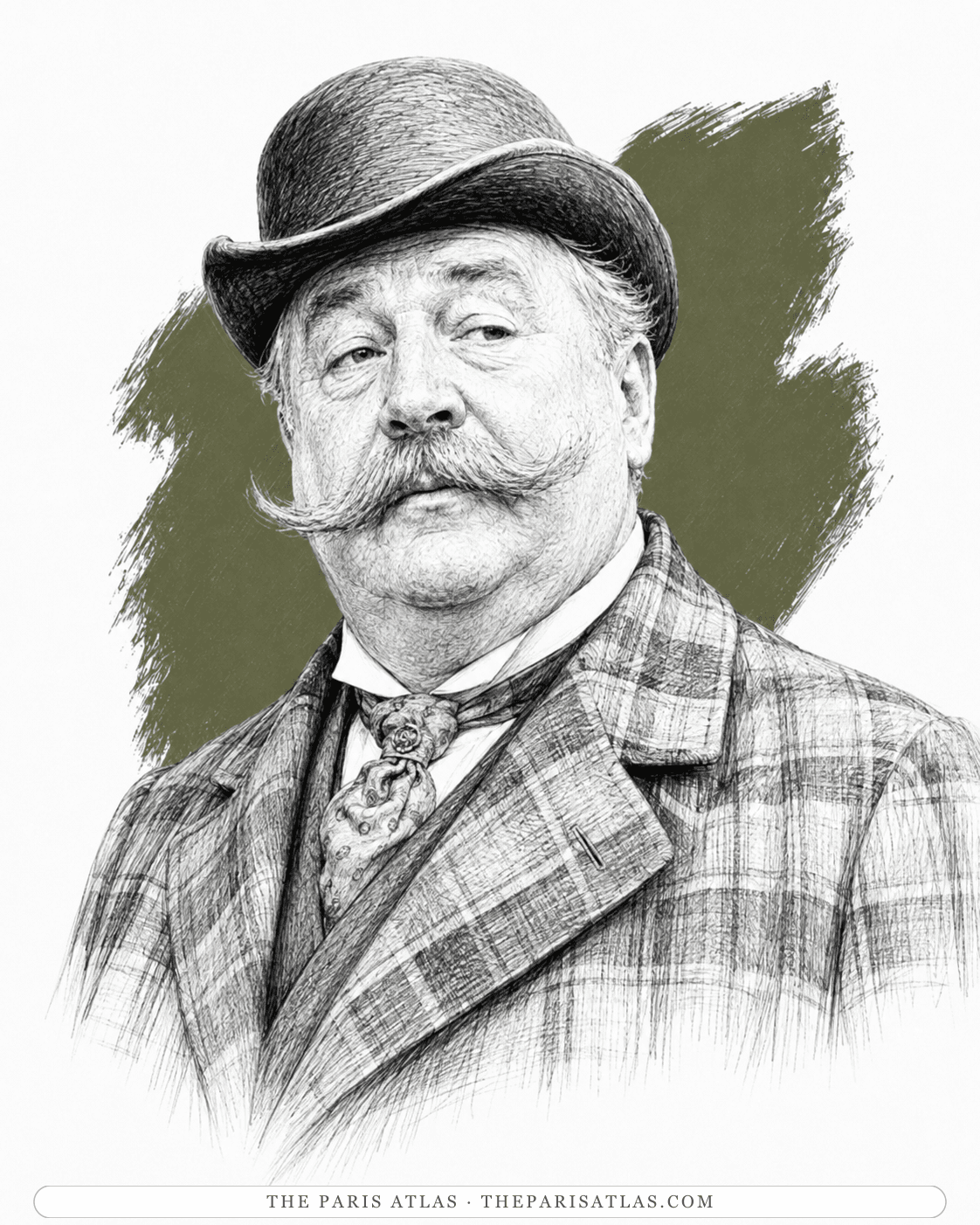
Sir Thomas Hare
Dorothy's cousin, a widowed baronet of about sixty-five who has never met her and cannot remember whether she is his cousin or his niece. He has her tracked down and locked in his empty London house, chiefly because she shares his surname and the newspapers keep printing it.
To stop reading his own surname in the newspapers. Every instruction he gives about Dorothy Hare is aimed at that and not at her.
The book

At a glance
- Dorothy Hare's cousin, and the relative her father applies to
- About sixty-five
- A widower; Lady Hare died five years ago, and there are three children
- A large shuttered house between Knightsbridge and Mayfair
- Chapter 4
Who they are in the book
Spoiler-freeSir Thomas Hare is the rich relative. He is the cousin of the Reverend Charles Hare, the country clergyman of the title, and so the cousin of Charles Hare's daughter Dorothy Hare, though he has never met her and the two branches have not spoken for fifteen years, since a quarrel about a borrowed fifty pounds. He is a widower of about sixty-five who lives in a large shuttered house on the borderland between Knightsbridge and Mayfair, and takes his meals at his club.
He enters the book because Dorothy has disappeared from home and the newspapers have made a serial out of it. What reaches him is not his cousin's distress but his own surname in print. "Rector's Daughter" has made his life a misery for a fortnight, and he foresees worse if she is left at large, so he sends for his butler and orders her found and kept under lock and key until he gets back from the pheasant shooting.
When he does get back, the woman in his house upsets every idea he had formed from the newspapers. He had expected a painted siren and finds a countrified, spinsterish girl. He accepts her account of what happened with a chivalrous "Of course, m'dear, of course!" and then betrays in every other sentence that he does not believe a word of it. He is genuinely anxious to find her work, and completely unable to arrange it; his solicitor settles the matter in three days, and a bribe of five pounds, miscalled a premium, buys her the teaching post that fills the rest of the book. Sir Thomas makes her a present of ten pounds and never appears again.
How Sir Thomas Hare Is Portrayed
- How he looksAbout sixty-five, with an obtuse rosy face and curling moustaches. George Orwell calls him good-hearted and chuckle-headed.
- What he wearsChecked overcoats and curly-brimmed bowler hats, at once dashingly smart and four decades out of date. At first glance he seems to have carefully disguised himself as a cavalry major of the 1890s.
- How he talks"Don't you know?" and "What! What!", and he loses himself in the middle of his own sentences. His chief characteristic, the book says, is an abysmal mental vagueness.
- The prawnWhen he is puzzled his moustaches bristle forward and he takes on the appearance of a well-meaning but exceptionally brainless prawn. Orwell liked the image enough to use it twice more, once as an adverb and once as an eye.
- Cousin or nieceHe cannot keep the relationship straight for the length of a conversation. He calls Dorothy his niece, is corrected, agrees, and then starts again a few days later with "being your uncle and all that--what? What's that? Not your uncle? No, I suppose I'm not, by Jove!"
- The jobs he proposesCompanion to some dear old girl in black mittens who will die and leave her ten thousand pounds and the care of the parrot. Privately he had also considered manicurist, and private secretary to a bookmaker.
- Where the vagueness stopsDorothy repeatedly says she would rather be a housemaid or a parlourmaid, and that is the one suggestion he answers sharply. "What! A dashed skivvy? Girl of your upbringing? No, m'dear--no, no!"
If you like A Clergyman's Daughter


If you like George Orwell
Explore authors with a similar voice, perspective, and influence.

Henry Miller
The Brooklyn dropout who arrived in Paris broke at thirty-eight and wrote the exuberant, banned books that ended American censorship.
View author
Louis-Ferdinand Céline
The doctor of the Paris slums who wrote the century's blackest, funniest novel — and changed the sound of French prose.
View author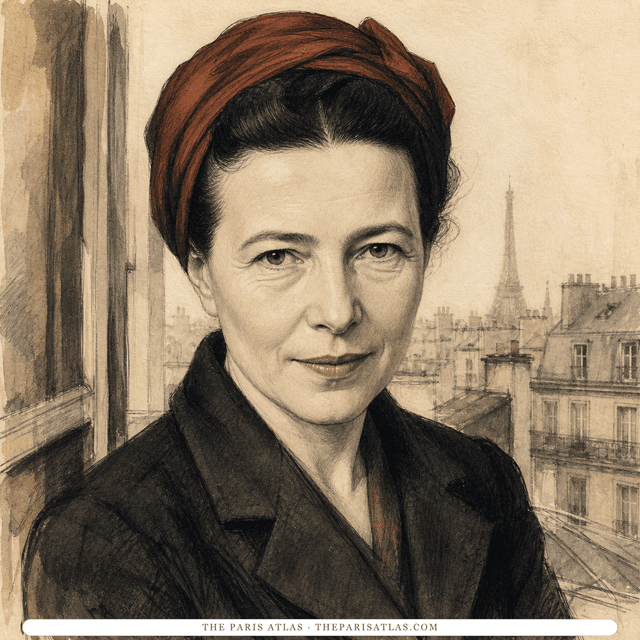
Simone de Beauvoir
French writer and philosopher whose novels, memoirs, and social analysis examined freedom, gender, responsibility, aging, and the material conditions that shape a life.
View author