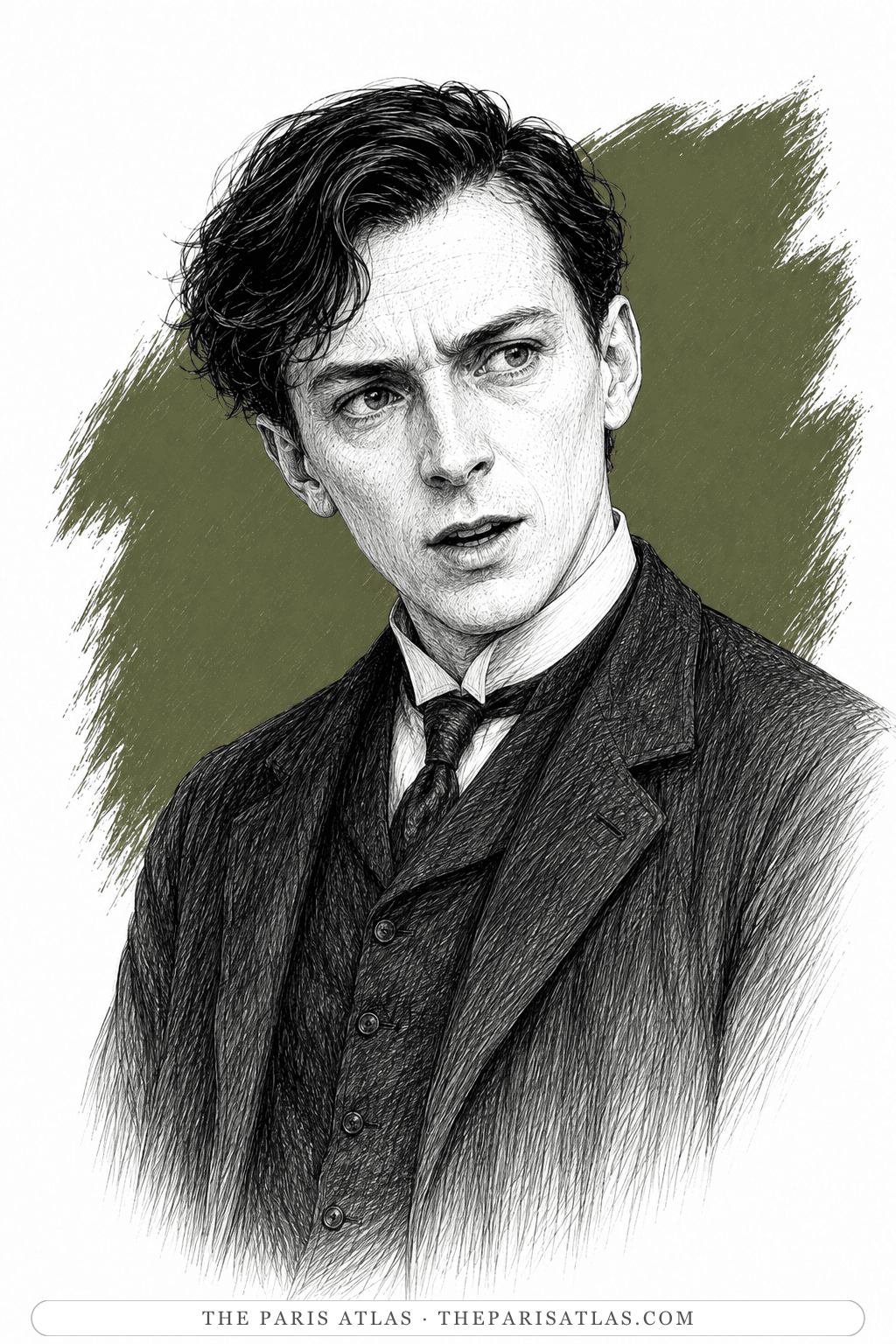
Victor Stone
The Church schoolmaster and organist at Knype Hill, twenty-seven and permanently at war. He produces the school plays Dorothy makes the costumes for, and writes a letter to the Church Times most weeks.
A procession. He is forever pressing the Rector for more processions, more incense, more voluptuous music: down the aisle, out through the west door and back through the south, choir with candles behind and Boy Scouts in front with a borrowed banner.
The book

At a glance
- Church schoolmaster and organist at Knype Hill
- Twenty-seven
- Anglo-Catholic, of the Church Times variety
- A slight gift for music and a pronounced one for handling children
Who they are in the book
Spoiler-freeVictor Stone is a small-boned, excitable, black-haired young man of twenty-seven in dark sub-clerical clothes, schoolmaster and organist at the Church school. George Orwell describes a pale, fine-featured face wearing what looks like discontent and is really boyish eagerness, and a man only happy when he is quarrelling with somebody or something. He had always meant to enter the Church and would have done, if he had possessed the kind of brain that can learn Greek and Hebrew; barred from the priesthood, he drifted into the schoolmaster's job because it kept him inside the Church precincts.
He is an Anglo-Catholic of the most truculent Church Times breed, more clerical than the clerics, expert on vestments, and ready at any moment with a tirade against Modernists, Protestants, scientists, Bolshevists and atheists. He and Dorothy argue about ritual every time they meet and she sides with her father. Orwell's verdict on him is one sentence: for all his churchiness he had not an atom of real piety in his constitution, and religious controversy appealed to him as a game, the most absorbing ever invented, because it goes on for ever and a little cheating is allowed.
How Victor Stone Is Portrayed
- How he soundsHe sings a stave in a thin but tuneful tenor. With children he uses an abrupt, ruthless tone that George Orwell says he never departs from.
- At the rehearsalHe directs the school play by striding up and down haranguing six dense-looking children in a vehement slangy style and lunging at them with a wooden sword. "Do you think Oliver Cromwell would come slinking on like a dog that's just had a hiding?" Orwell notes he is a natural actor, genuinely gifted with children, and thoroughly bored by them.
- The Church TimesIt is very rarely that a week passes without a letter from him. He has twice been in combat with Dr Major, written letters of withering irony about Dean Inge and the Bishop of Birmingham, and attacked Bertrand Russell himself, who did not dare to reply.
- Hymn 642On his own responsibility he chose for Advent a hymn with the refrain "Hail Mary, hail Mary, hail Mary full of grace!" The Rector laid down his hymn book at the end of the first verse, turned round in his stall and regarded the congregation so stonily that some of the choirboys almost broke down.
- Where he draws the lineHe will talk all day about a point of ritual, but the mention of private devotions strikes him as slightly indecent. When Dorothy says she has been making special prayers about the jumble sale, he says "Oh?", less enthusiastically than usual, and changes the subject back to the procession.
- The jumble saleAsked for an old pair of trousers, which always sell, he offers instead a copy of The Pilgrim's Progress and one of Foxe's Book of Martyrs that he has been wanting to get rid of for years. Beastly Protestant trash, given him by a Dissenting aunt.
- Where he is headingDorothy thinks he is the kind to go over to Rome if he is not prevented, and Orwell says she was very likely right. Victor has no idea; for the moment the Anglo-Catholic war on three fronts fills his whole horizon.
If you like A Clergyman's Daughter


If you like George Orwell
Explore authors with a similar voice, perspective, and influence.

Henry Miller
The Brooklyn dropout who arrived in Paris broke at thirty-eight and wrote the exuberant, banned books that ended American censorship.
View author
Louis-Ferdinand Céline
The doctor of the Paris slums who wrote the century's blackest, funniest novel — and changed the sound of French prose.
View author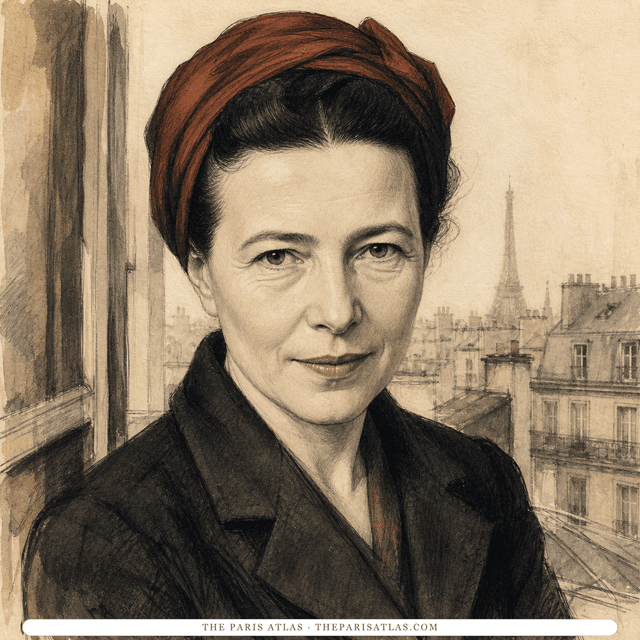
Simone de Beauvoir
French writer and philosopher whose novels, memoirs, and social analysis examined freedom, gender, responsibility, aging, and the material conditions that shape a life.
View author