Mrs Pither
One of the few genuinely pious people on Dorothy's visiting list, and one of the most exhausting. She has two subjects, the miseries of her rheumatism and the joys of Heaven, and she is ready for a little prayer at any hour of the night or day.
Heaven, described in detail. Rest, soft beds, good food, clean clothes, and no more rheumatism nor digging nor cooking nor laundering.
The book

At a glance
- A parishioner on Dorothy Hare's daily visiting round
- Over seventy, as is her husband
- A cottage at Fennelwick, a mile from Knype Hill
- To Mr Pither, a jobbing gardener, since 1882
- Chapter 1, and by report afterwards
Who they are in the book
Spoiler-freeMrs Pither lives in a cottage at Fennelwick, a mile out of Knype Hill, and she is one of the six to a dozen parishioners Dorothy Hare, the clergyman's daughter of the title, visits by bicycle every day. She and her husband, Mr Pither, a jobbing gardener still digging other people's flower-beds at his age, are both over seventy, and they are one of the few genuinely pious couples on the round. Dorothy arrives with a cutting from the Daily Mail about angelica tea for rheumatism.
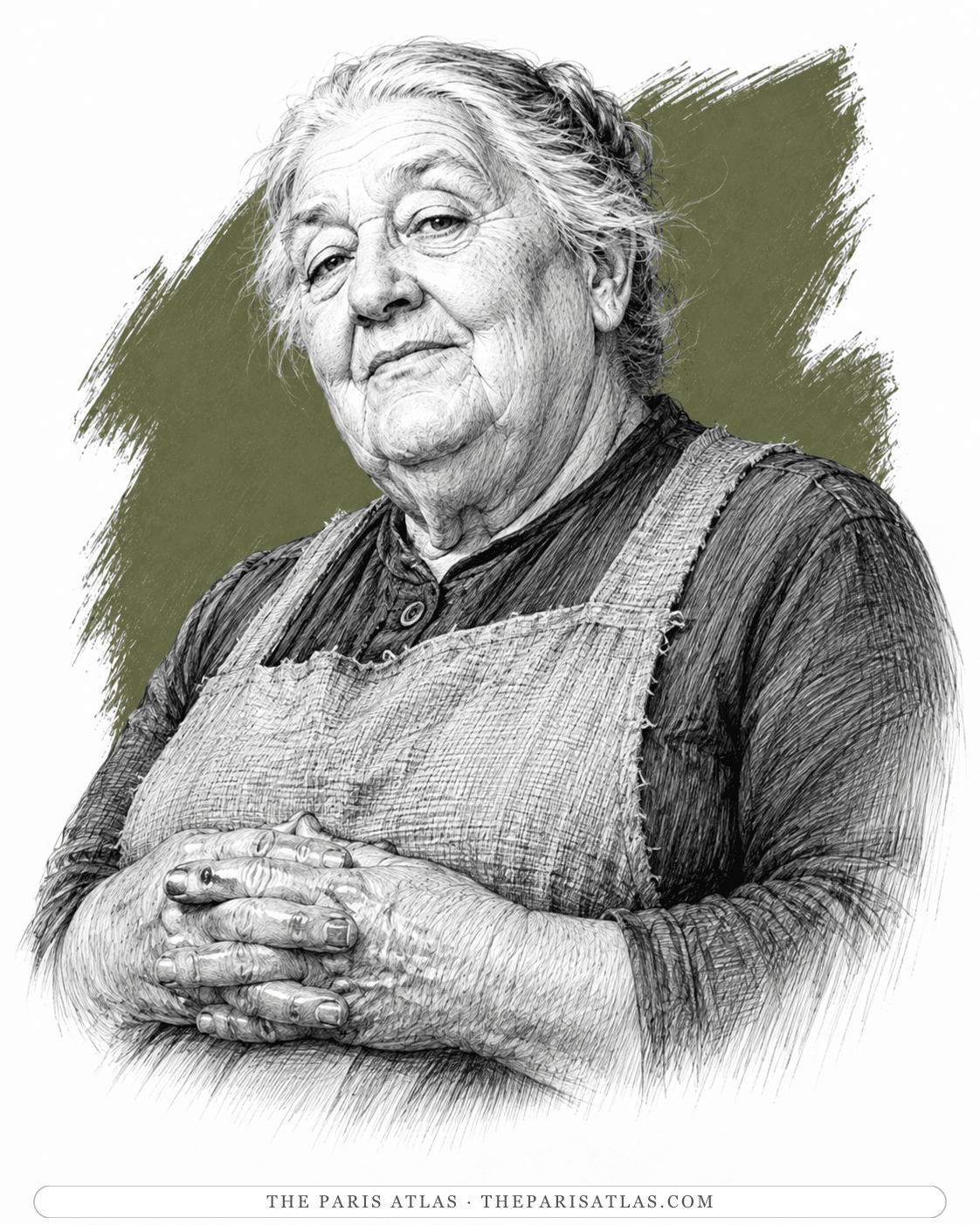
George Orwell describes her life in a single sentence, as a dreary, wormlike shuffling to and fro between the well, the sink, the fireplace and the tiny plot of kitchen garden, with a perpetual crick in her neck because the door lintels are too low for her. The kitchen is decently tidy and oppressively hot, and smells of boiled cabbage and dish-water from outside the door. At the end away from the fire she has made a prie-dieu out of a greasy rag mat.
She has exactly two subjects of conversation, and the visit runs through both of them in order. The first is the miseries of her present state: her husband's rheumatism and the pain he cannot account for, her own rheumatism all down the backs of her legs, and her settled conviction that she is not a case for curing in this world. The second is Heaven, and it is set off by Dorothy saying the word. Her voice quickens with something close to joy, although Orwell notes that her dull grey eye is not capable of brightening.
Her Heaven is furnished, and the furniture is what makes the scene more than comic. Golden streets and gates of orient pearl, but also soft beds, delicious food, clean silk clothes every morning, and no work of any description ever again. She has struck a bargain, setting a lifetime of labour against an eternity of rest, and she takes some satisfaction in the thought that poor working folks are Heaven's principal inhabitants. Orwell writes that her faith was almost too great, if that is possible, and that Dorothy came away from that certainty uneasy.
How Mrs Pither Is Portrayed
- How she looksA large, stooping, grey woman with wispy grey hair, a sacking apron and shuffling carpet slippers. The cottage door invariably sticks to the jamb, and shakes the whole building when it is wrenched open.
- Her handsLarge and gnarled, with knuckles as shiny as skinned onions from age and ceaseless washing up. She takes Dorothy Hare between them and gives her a wet kiss.
- The voiceDreary and lifeless but not unaffectionate, and George Orwell also calls it depressing and doleful. Months later, homesick in a Kent hop field, what comes back to Dorothy is Mrs Pither's doleful voice chronicling the pains in the backs of her legs.
- The complaintRheumatism coming and going all down the backs of her legs, so that some mornings she does not feel she can walk as far as to pull a handful of onions in the garden. "I ain't a case for curing, not in THIS world, I ain't." Her husband is out digging at Dr Gaythorne's with his own rheumatism, which she thinks bitter hard.
- The corner of the kitchenA greasy rag mat laid in front of a tiny defunct harmonium, with an oleograph of the crucifixion on top of it, "Watch and Pray" done in beadwork, and a photograph of the Pithers on their wedding day in 1882.
- A little prayerShe is ready for one at any hour of the night or day, and Orwell says it is her equivalent of a nice cup of tea. They kneel on the rag mat for the Lord's Prayer and the Collect for the week, and then she asks for the parable of Dives and Lazarus and talks over the top of it: "Amen! That's a true word, ain't it, Miss Dorothy?"
- The wellShe has been too poorly to draw the day's water, so Dorothy hauls three bucketfuls up for her. It is very deep, has no winch, and has a parapet so low that Orwell remarks her final doom will almost certainly be to fall in and get drowned.
- The rub-downAsked for as Dorothy is leaving, from a bottle of Elliman's kept under the sink. Upstairs there is a window jammed shut by the creeper for twenty years, a damp double bed that almost fills the room, and a smell of urine and paregoric. She creeps on to it face down with many groans and Dorothy anoints her large, grey-veined, flaccid legs. Dorothy has done it many times before, does not enjoy it, and pinches herself hard where Mrs Pither cannot see before saying yes.
- In the round-up of town newsThe last chapter reports that her rheumatism is better, thanks to the angelica tea, no doubt, and that Mr Pither has been under the doctor with what they are afraid is stone in the bladder.
Mrs Pither's legs turn up in the argument that settles the end of the book.
If you like A Clergyman's Daughter


If you like George Orwell
Explore authors with a similar voice, perspective, and influence.

Henry Miller
The Brooklyn dropout who arrived in Paris broke at thirty-eight and wrote the exuberant, banned books that ended American censorship.
View author
Louis-Ferdinand Céline
The doctor of the Paris slums who wrote the century's blackest, funniest novel — and changed the sound of French prose.
View author
Simone de Beauvoir
French writer and philosopher whose novels, memoirs, and social analysis examined freedom, gender, responsibility, aging, and the material conditions that shape a life.
View author