Azaya
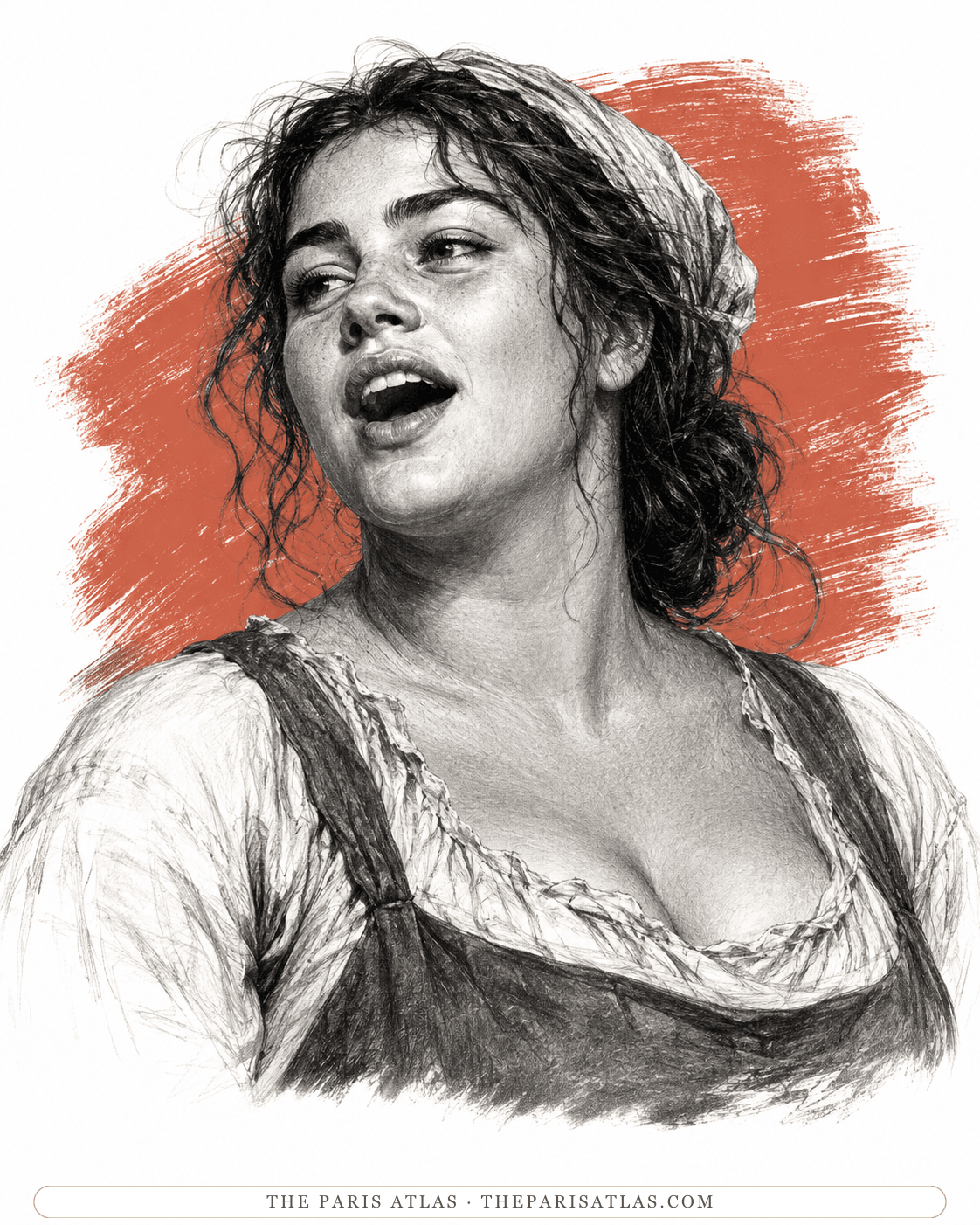
A peasant girl who worked fourteen hours a day in a glass factory and sang at the Saturday drinking nights in the bistro below the narrator's hotel.
The book

At a glance
- A regular at the Saturday nights in the bistro below Orwell's hotel
- Fourteen hours a day in a glass factory
- The rue du Coq d'Or, Paris
- Chapters XVII and XVIII
Who they are in the book
Spoiler-freeAzaya was one of the regulars at the Saturday drinking nights in the bistro at the foot of the Hôtel des Trois Moineaux, the cheap lodging hotel in the rue du Coq d'Or where George Orwell lived during his first months in Paris. She worked fourteen hours a day in a glass factory. Orwell describes her in five words — a great clumping peasant girl — and then puts her in two scenes.
The room was brick-floored and fifteen feet square, packed with twenty people, and dim with smoke. Everybody was either talking at the top of his voice or singing, and every so often the whole room went into the same song. Azaya's was a comic one about a man who lost his trousers dancing the Charleston. Her friend Marinette, a thin dark Corsican girl, tied her knees together and danced the danse du ventre; a Spaniard called Manuel dragged the girls to the bar and shook the dice-box against their bellies for luck.
At about midnight came the set piece. Furex, a Limousin stonemason who worked steadily all week and drank himself into a paroxysm on Saturdays, banged a bottle on the table and made the patriotic speech he made every week, word for word the same, ending by partly undressing to show the wound he had taken at Verdun. Then somebody asked him for the Marseillaise. He sang it well, in a fine bass voice, with tears running down his cheeks and too drunk to see that the room was laughing at him. Two strong workmen took him by the arms and held him down, and Azaya shouted "Vive l'Allemagne!" from just out of his reach. The whole bistro took it up. Furex went purple and struggled to get at them, then turned pale and was sick on the table, and Madame F., the hotel's patronne, hoisted him like a sack and carried him up to bed.
Her name comes up once more, in the mouth of someone else. Charlie, a young man of family and education living in the quarter on money from home, told a story at the bar one Saturday about a girl he had lived with called Yvonne, and reached across the room for his comparison: a great half-witted peasant girl, he said, like Azaya there. Orwell prints the story in Charlie's voice, with Azaya sitting in the room while it was told.
How Azaya Is Portrayed
- How the book describes herA great clumping peasant girl. That is the whole description; Orwell gives her no face, age or dress, and never says where she came from.
- Her weekFourteen hours a day in a glass factory, and then the Saturday nights in the bistro under her hotel.
- Her songA comic number about a man who lost his trousers dancing the Charleston, sung across a room of twenty people where everyone else was shouting or singing too.
- Baiting FurexWhen two workmen pinned the drunk patriot Furex by the arms, she shouted "Vive l'Allemagne!" from just out of his reach, and the rest of the room joined in.
If you like Down and Out in Paris and London


If you like George Orwell
Explore authors with a similar voice, perspective, and influence.
Henry Miller
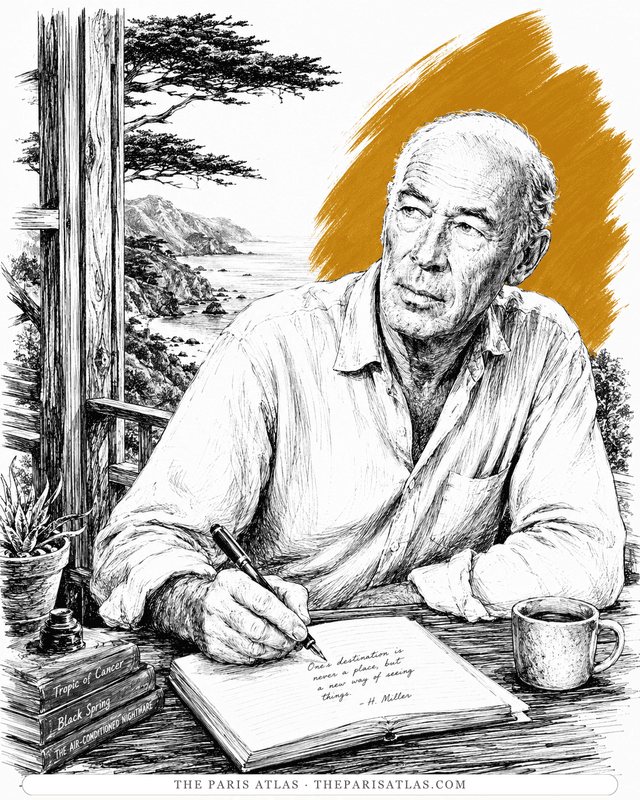
The Brooklyn dropout who arrived in Paris broke at thirty-eight and wrote the exuberant, banned books that ended American censorship.
View author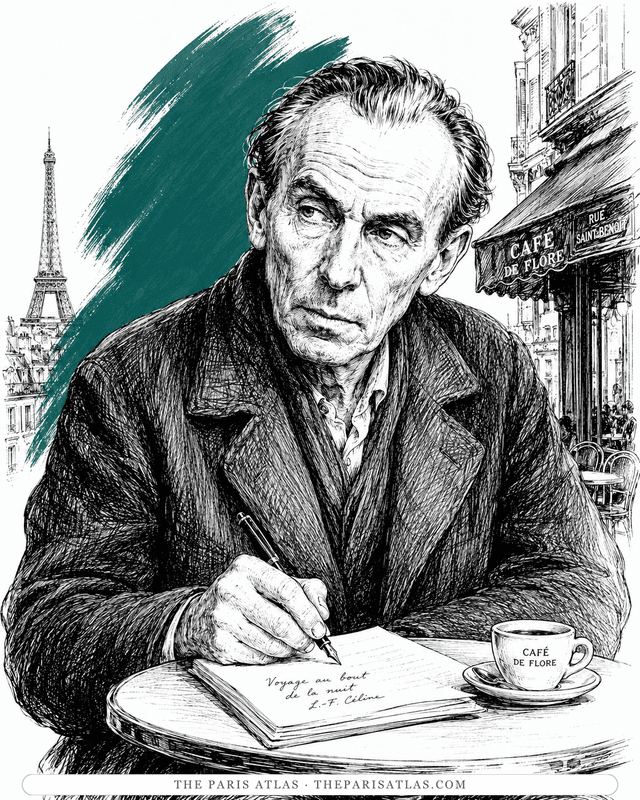
Louis-Ferdinand Céline
The doctor of the Paris slums who wrote the century's blackest, funniest novel — and changed the sound of French prose.
View author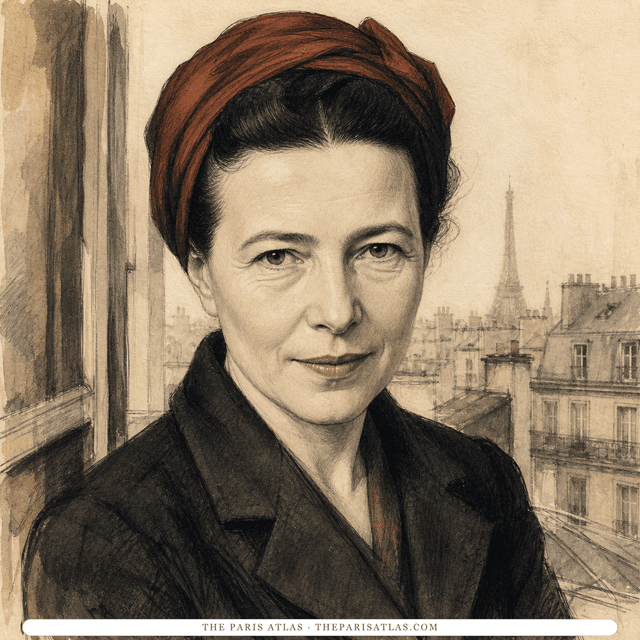
Simone de Beauvoir
French writer and philosopher whose novels, memoirs, and social analysis examined freedom, gender, responsibility, aging, and the material conditions that shape a life.
View author