Numéro 83
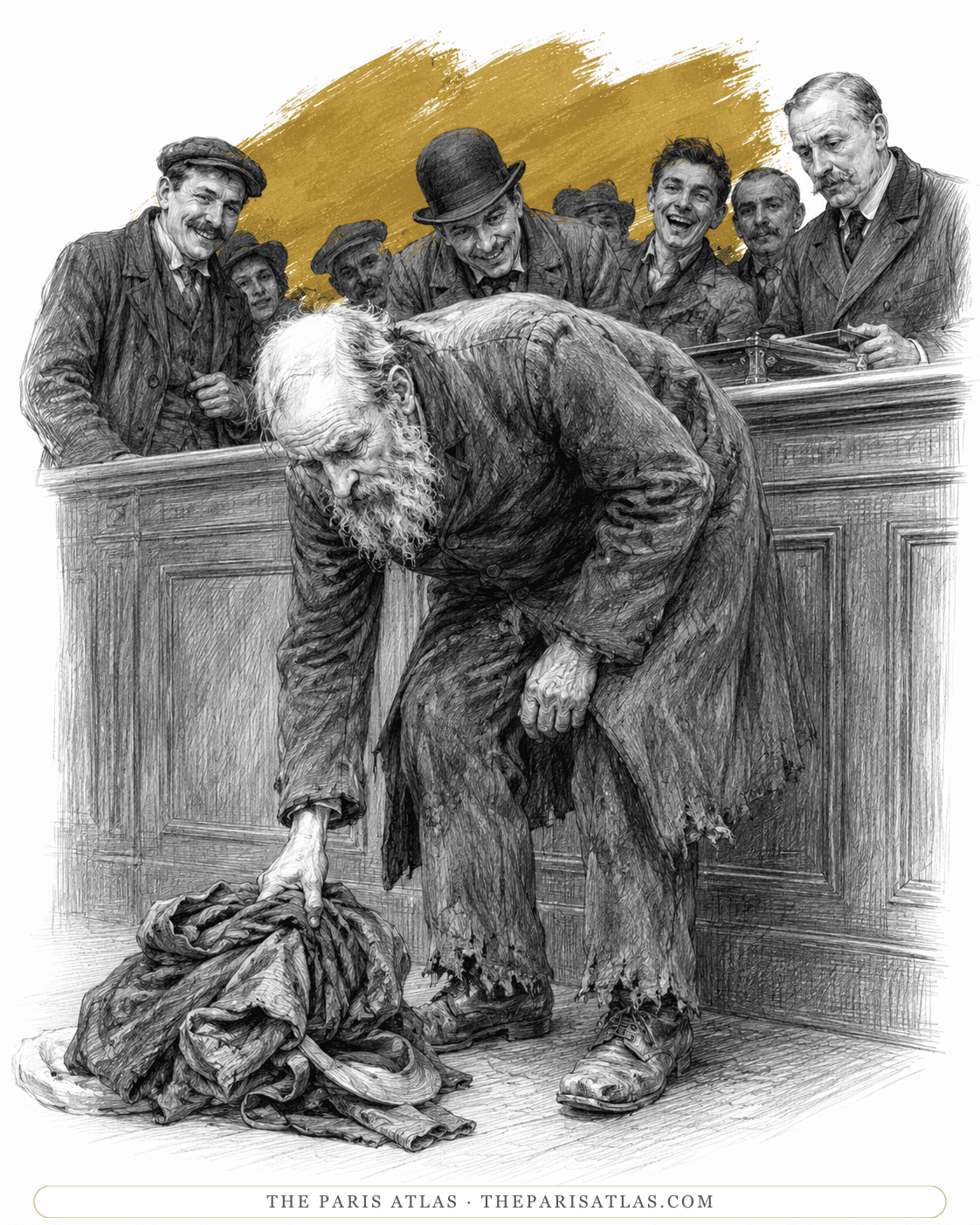
The old bearded man ahead of the narrator in a Paris pawnshop, whose bundle the clerk shot back across the counter without a word. It fell open on the floor showing four pairs of woollen pants, the room laughed, and he gathered them up and shambled out muttering. Orwell thinks of him again the next time he goes in.
The book

At a glance
- A customer called to the counter ahead of Orwell at a Paris pawnshop
- Never given; the clerk calls him by his ticket number
- Four pairs of men's woollen pants, refused
- Chapter IV, and recalled in Chapter VII
Who they are in the book
Spoiler-freeGeorge Orwell's English lessons stopped without warning — one pupil dismissed him, the other left his lodgings owing twelve francs — and he was left with thirty centimes and no tobacco. After a day and a half without food he packed his remaining clothes into his suitcase and carried them to the municipal pawnshop. It was the first French pawnshop he had been inside.
The procedure was public. You went through stone portals marked Liberté, Égalité, Fraternité into a large bare room like a school classroom, with a counter and rows of benches and forty or fifty people waiting. You handed your pledge over and sat down, and when the clerk had assessed it he called out your ticket number and the figure, so that the whole room heard what your possessions were worth. Sometimes it was fifty francs. Sometimes it was five.
As Orwell came in, the clerk called with an air of offence for number 83, and gave a little whistle and a beckon, as though calling a dog. Numéro 83 stepped up to the counter: an old bearded man with his overcoat buttoned at the neck and his trouser-ends frayed. Without a word the clerk shot the bundle back across the counter. It fell to the ground and came open, showing four pairs of men's woollen pants, and nobody in the room could help laughing. He gathered them up and shambled out, muttering to himself.
Orwell's own clothes had cost over twenty pounds and were in good condition. He was offered seventy francs, took the money without arguing, and learned afterwards that it is wiser to go to a pawnshop in the afternoon, because the clerks are in a bad temper until they have had lunch.
The man returns once. Later in the book, having eaten nothing for sixty hours, Orwell went back to the same room with two shabby overcoats in a cardboard suitcase. He sat on the front bench so as not to see the other customers laughing when the sum was called, and the thing he was most afraid of was being refused altogether, like poor Numéro 83 on the previous occasion.
How Numéro 83 Is Portrayed
- How he was calledThe clerk announced the number with an air of offence, then gave a little whistle and a beckon, as though calling a dog.
- How the book describes himAn old bearded man, his overcoat buttoned up at the neck and his trouser-ends frayed. Orwell never hears his name; the ticket number is all anyone in the room has.
- The bundleThe clerk shot it back across the counter without a word. It fell on the floor and came open, showing four pairs of men's woollen pants, and the room laughed.
- How he leftHe gathered the pants up off the floor and shambled out, muttering to himself.
- What he became to OrwellThe measure of the worst that could happen in that room. Later, waiting his turn again, Orwell sat on the front bench in the same pawnshop, dreading being refused outright, like poor Numéro 83 on the previous occasion.
If you like Down and Out in Paris and London


If you like George Orwell
Explore authors with a similar voice, perspective, and influence.

Henry Miller
The Brooklyn dropout who arrived in Paris broke at thirty-eight and wrote the exuberant, banned books that ended American censorship.
View author
Louis-Ferdinand Céline
The doctor of the Paris slums who wrote the century's blackest, funniest novel — and changed the sound of French prose.
View author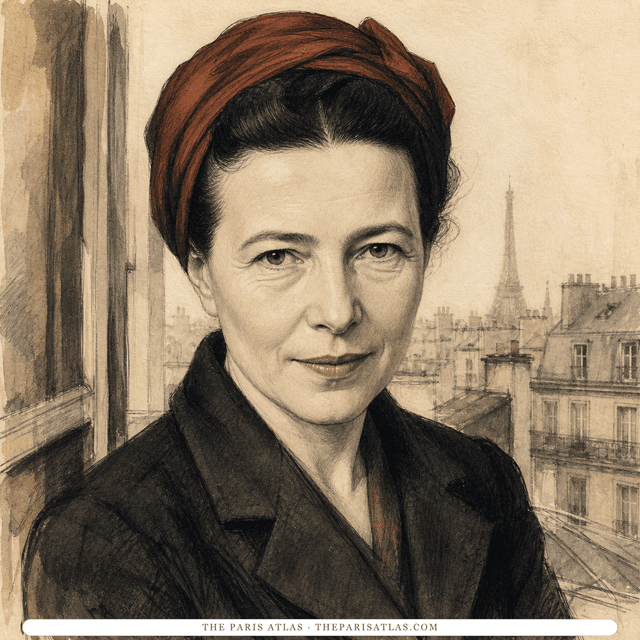
Simone de Beauvoir
French writer and philosopher whose novels, memoirs, and social analysis examined freedom, gender, responsibility, aging, and the material conditions that shape a life.
View author