The red-nosed man
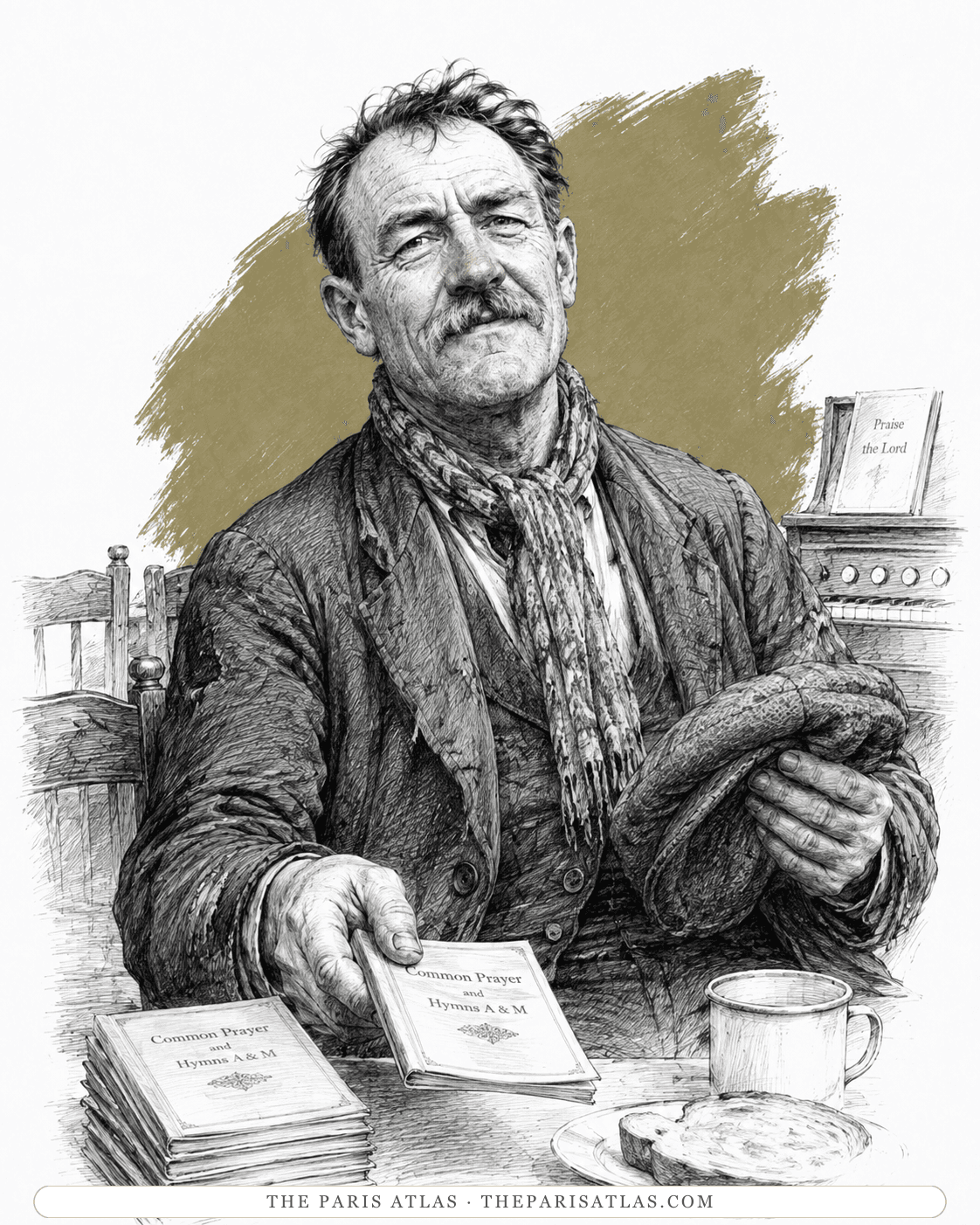
A tramp at the free tea in Romton who could say "the dear Lord Jesus" with less shame than anyone Orwell had met, a knack he thought the man had picked up in prison. He pulled the harmonium into place, then dealt out the prayerbooks behind the lady's back like a hand of cards, and was the only man in the room to speak the responses above a whisper.
The book

At a glance
- One of about twenty-five tramps at a free tea in Romton
- Never given
- Half an hour of prayers afterwards
- Chapter XXVI
Who they are in the book
Spoiler-freeDown to a halfpenny, George Orwell walked out to Romton to spend a night in the casual ward, the overnight shelter for tramps attached to the workhouse. It did not open until six. An old Irish tramp he had fallen in with in the market-place told him about a place nearby that gave away a free cup of tea and a bun, on the understanding that you stayed for the prayers afterwards, and took him along.
About twenty-five men were waiting outside a small tin-roofed shed in a side-street, a few of them habitual vagabonds and most of them decent-looking lads from the north, probably miners or cotton operatives out of work. A lady in a blue silk dress, gold spectacles and a crucifix let them in. Inside were hard chairs, a harmonium and a lithograph of the Crucifixion. She handed out the tea and moved about talking to them benignly about Jesus Christ while they drank it, and they hated it, sitting against the wall turning pink and fingering their caps. One of the northern lads was so ashamed when his stomach rumbled at the sight of the buns that he could hardly swallow.
One man in the room was entirely at ease. Orwell describes him as a spry, red-nosed fellow who looked like a corporal who had lost his stripe for drunkenness. He was the only one of the twenty-five who could answer the lady in her own style, and he could pronounce the words "the dear Lord Jesus" with less shame than anyone Orwell had ever seen. Orwell's guess was that he had learned the knack in prison.
When the lady announced the prayers, he made himself useful. He pulled the harmonium into place and handed out the prayerbooks, and because his back was to her while he did it he dealt them out like a pack of cards, whispering to each man as he went — there you are, mate, there's a nap hand for you, four aces and a king. Then the men knelt bareheaded among the dirty teacups and mumbled the general confession, grinning and winking at one another whenever the lady's eyes were elsewhere. He was the only man in the room self-possessed enough to speak the responses above a whisper.
The prayers lasted half an hour. Outside afterwards the tramps agreed that they had paid for the bun, and Orwell, who thought the tea excellent and honestly given, records that they were not grateful all the same.
How The red-nosed man Is Portrayed
- How the book describes himSpry and red-nosed, with the look of a corporal who had lost his stripe for drunkenness. Orwell gives him no other physical detail and never learns his name.
- The one man who could answerOf about twenty-five tramps he was the only one who could talk back to the lady in her own language, saying "the dear Lord Jesus" with less shame than anyone Orwell had seen. Orwell assumed the trick was learned in prison.
- The prayerbooksHe hauled the harmonium into place and handed the books round, and with his back to the lady he dealt them like a hand of cards — there's a nap hand for you, four aces and a king.
- During the prayersThe rest of the room mumbled the responses. He was the only man there self-possessed enough to say them aloud.
If you like Down and Out in Paris and London


If you like George Orwell
Explore authors with a similar voice, perspective, and influence.

Henry Miller
The Brooklyn dropout who arrived in Paris broke at thirty-eight and wrote the exuberant, banned books that ended American censorship.
View author
Louis-Ferdinand Céline
The doctor of the Paris slums who wrote the century's blackest, funniest novel — and changed the sound of French prose.
View author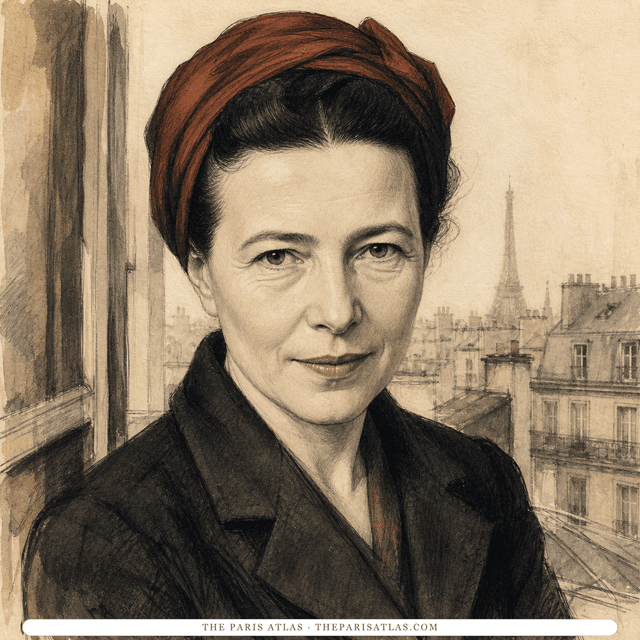
Simone de Beauvoir
French writer and philosopher whose novels, memoirs, and social analysis examined freedom, gender, responsibility, aging, and the material conditions that shape a life.
View author