The woman tramp
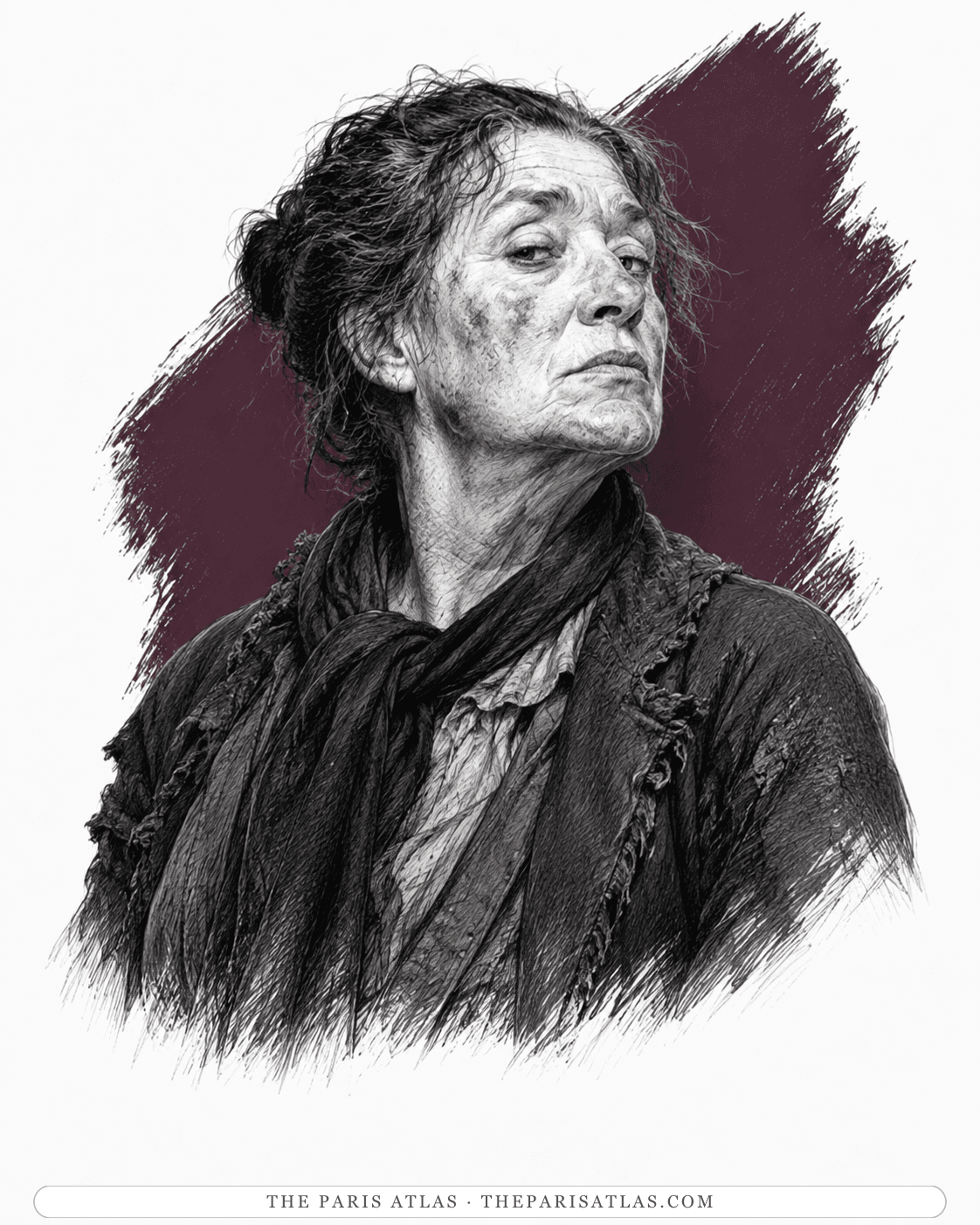
The only woman among the several dozen tramps waiting on the green at Lower Binfield, and the first woman tramp the narrator had seen. She kept apart from the men, and said so when one of them tried to talk to her.
To not be counted one of them. She keeps apart from the men waiting for the spike to open, moves farther off if anyone sits down near her, and when a tramp calls across to tell her to cheer up and be chummy because they are all in the same boat, she answers that when she wants to get mixed up with a set of tramps she will let him know.
The book

At a glance
- The one woman among the tramps waiting for the Lower Binfield spike
- Sixty, by Orwell's description
- A long trailing black skirt
- No name. Orwell calls her the first woman tramp he had ever seen
- Chapter XXXV, on the green at Lower Binfield, on a Saturday evening
Who they are in the book
Spoiler-freeGeorge Orwell meets her in the London half of the book, on the green outside the casual ward at Lower Binfield, where several dozen men are waiting for the spike to open at six on a Saturday evening. She is the only woman there, and Orwell says she is the first woman tramp he had ever seen. He describes her as a fattish, battered, very dirty woman of sixty, in a long trailing black skirt.
She sat apart from the rest. She put on great airs of dignity, Orwell writes, and if anyone sat down near her she sniffed and moved farther off. One of the tramps called across to ask where she was bound for, and she looked into the distance without answering. He tried again, telling her to cheer up and be chummy because they were all in the same boat. She answered: "Thank you, when I want to get mixed up with a set of tramps, I'll let you know."
That is the whole of her appearance. Orwell then gives his own reading of it: the way she said the word tramps showed her whole soul in a flash, and he calls it a small, blinkered, feminine soul that had learned nothing from years on the road. His guess is that she was a respectable widow woman who had become a tramp through some grotesque accident. She is not named, and the book does not return to her.
How The woman tramp Is Portrayed
- The only woman thereSeveral dozen men were waiting on the green for the spike to open, and she was the one woman among them. Orwell records her as the first woman tramp he had ever seen.
- How she is drawnA fattish, battered, very dirty woman of sixty, in a long trailing black skirt. Orwell gives her no name and no history.
- Keeping her distanceShe put on great airs of dignity, and if anyone sat down near her she sniffed and moved farther off.
- The answerA tramp asked where she was bound for, then told her to cheer up and be chummy, since they were all in the same boat. She said: "Thank you, when I want to get mixed up with a set of tramps, I'll let you know."
- Orwell's reading of herHe says the way she said the word showed her whole soul in a flash, and calls it a small, blinkered, feminine soul that had learned nothing from years on the road. He guesses she was a respectable widow woman who had become a tramp through some grotesque accident. Both are his judgements, offered in his own voice.
If you like Down and Out in Paris and London


If you like George Orwell
Explore authors with a similar voice, perspective, and influence.

Henry Miller
The Brooklyn dropout who arrived in Paris broke at thirty-eight and wrote the exuberant, banned books that ended American censorship.
View author
Louis-Ferdinand Céline
The doctor of the Paris slums who wrote the century's blackest, funniest novel — and changed the sound of French prose.
View author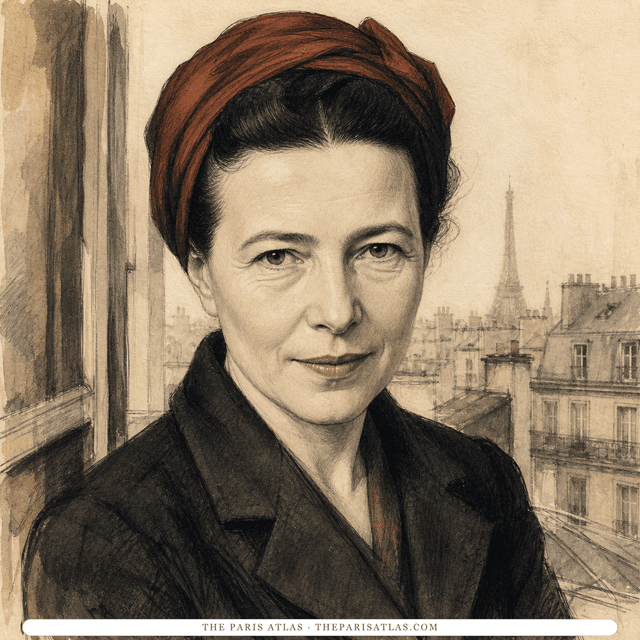
Simone de Beauvoir
French writer and philosopher whose novels, memoirs, and social analysis examined freedom, gender, responsibility, aging, and the material conditions that shape a life.
View author