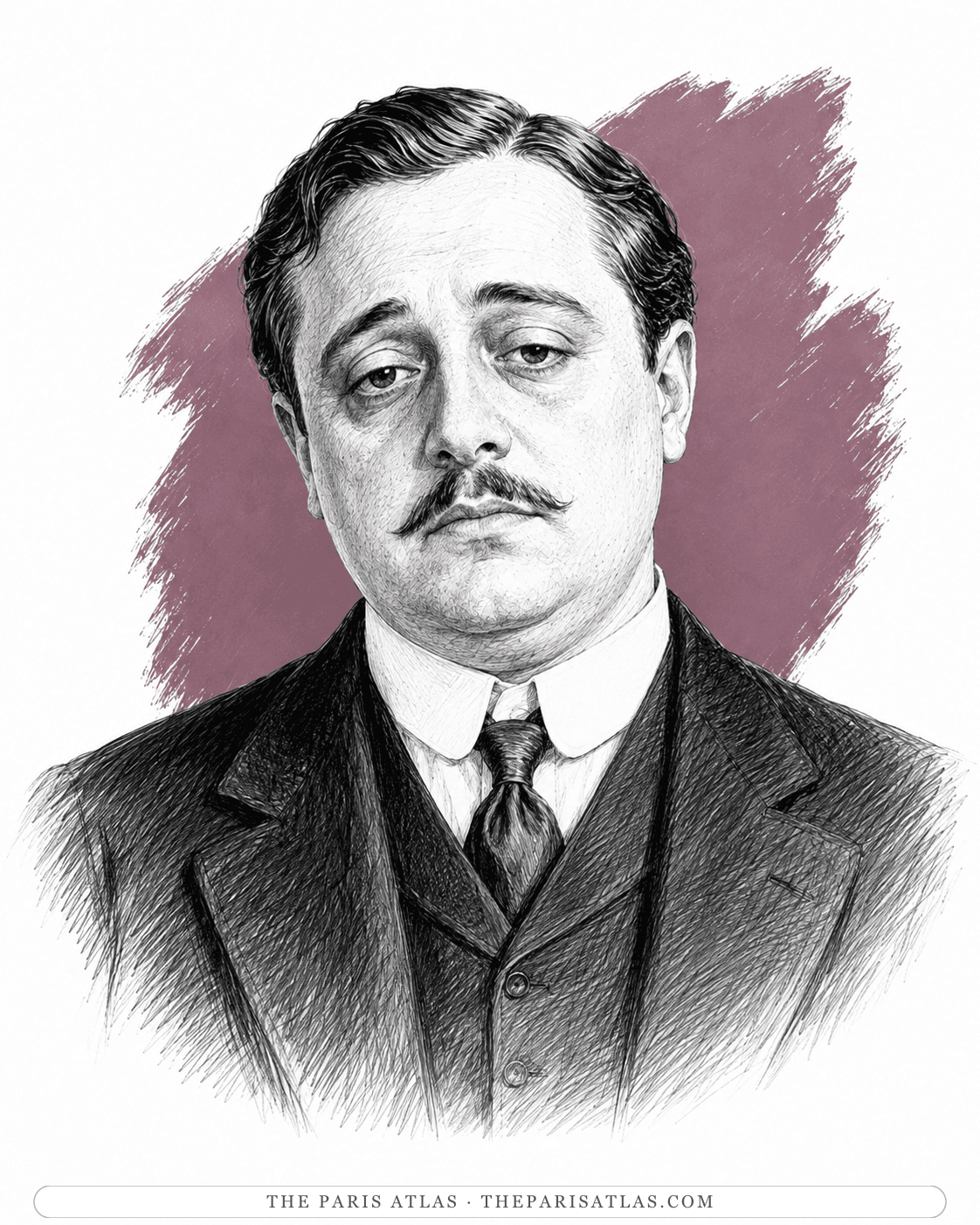
The chef du personnel
The assistant manager at the Hôtel X. He hires the narrator at the service door, sets what he does all day, and can sack a dishwasher or fine a waiter.
To keep the basement staffed and the hotel's customs observed. He hires on the spot when a man looks useful, and he will not bend the rule that the hotel engages men only by the month.
The book

At a glance
- The chef du personnel of the Hôtel X, a sort of assistant manager
- Never. The book gives him only his job title
- An Italian with a round, pale face, haggard from overwork
- Fifteen hundred francs a month; can sack plongeurs and fine waiters
Who they are in the book
Spoiler-freeGeorge Orwell never gives this man a name. He is the chef du personnel of the Hôtel X, the grand hotel near the Place de la Concorde where the narrator finds work, and the book calls him a sort of assistant manager: an Italian with a round, pale face, haggard from overwork. He does the hiring.
In the hotel's pay order he comes below the manager, the head waiter and the head cook, drawing fifteen hundred francs a month. What separates him from the men beneath him is that he wears a black coat, does no manual work, and can sack dishwashers and fine waiters. Orwell notes that he generally spoke in quite a pleasant tone, which did not make his instructions negotiable.
How The chef du personnel Is Portrayed
- How the book describes himAn Italian with a round, pale face, haggard from overwork. The black coat was the marker of his rank: he did no manual work, in a basement where a new dishwasher was handed a blue apron and a pile of dishcloths on his first morning.
- The hiringHe asks whether the narrator is an experienced dishwasher, is told yes, then glances at his hands and sees that he is lying. On hearing the man is English he changes his tone and engages him anyway. The clients are all American, he explains, and the staff have been wanting someone to practise their English on; the only English they have is a phrase little boys write on walls in London.
- The way downHe leads the new man down a winding staircase into a stifling passage deep underground, and into a cellar below a cellar with a sink and some gas ovens. It is too low to stand upright in, at around 110 degrees Fahrenheit. He explains the job, which is to fetch meals for the senior staff, clean their room and wash their crockery, and leaves.
- By the monthAt the end of the first day he offers a permanent job, reporting that the head waiter would enjoy having an Englishman to call names. Asked for a fortnight instead of a month, he shrugs and says the hotel engages men only by the month. When the narrator comes back and agrees, he signs him on without comment.
- The moustacheOn the third day he calls the narrator up and says sharply that he is to shave his moustache off at once, asking who ever heard of a dishwasher with one, and cutting the protest short. Boris explains afterwards that there is no reason beyond custom: waiters do not wear moustaches, and to mark their superiority they decree that dishwashers shall not either.
- The beerWhen work stopped at half past eight and the men lay full length on the floor resting their legs, he would sometimes come in with bottles of beer, which the hotel stood the staff after a hard day.
If you like Down and Out in Paris and London


If you like George Orwell
Explore authors with a similar voice, perspective, and influence.

Henry Miller
The Brooklyn dropout who arrived in Paris broke at thirty-eight and wrote the exuberant, banned books that ended American censorship.
View author
Louis-Ferdinand Céline
The doctor of the Paris slums who wrote the century's blackest, funniest novel — and changed the sound of French prose.
View author
Simone de Beauvoir
French writer and philosopher whose novels, memoirs, and social analysis examined freedom, gender, responsibility, aging, and the material conditions that shape a life.
View author