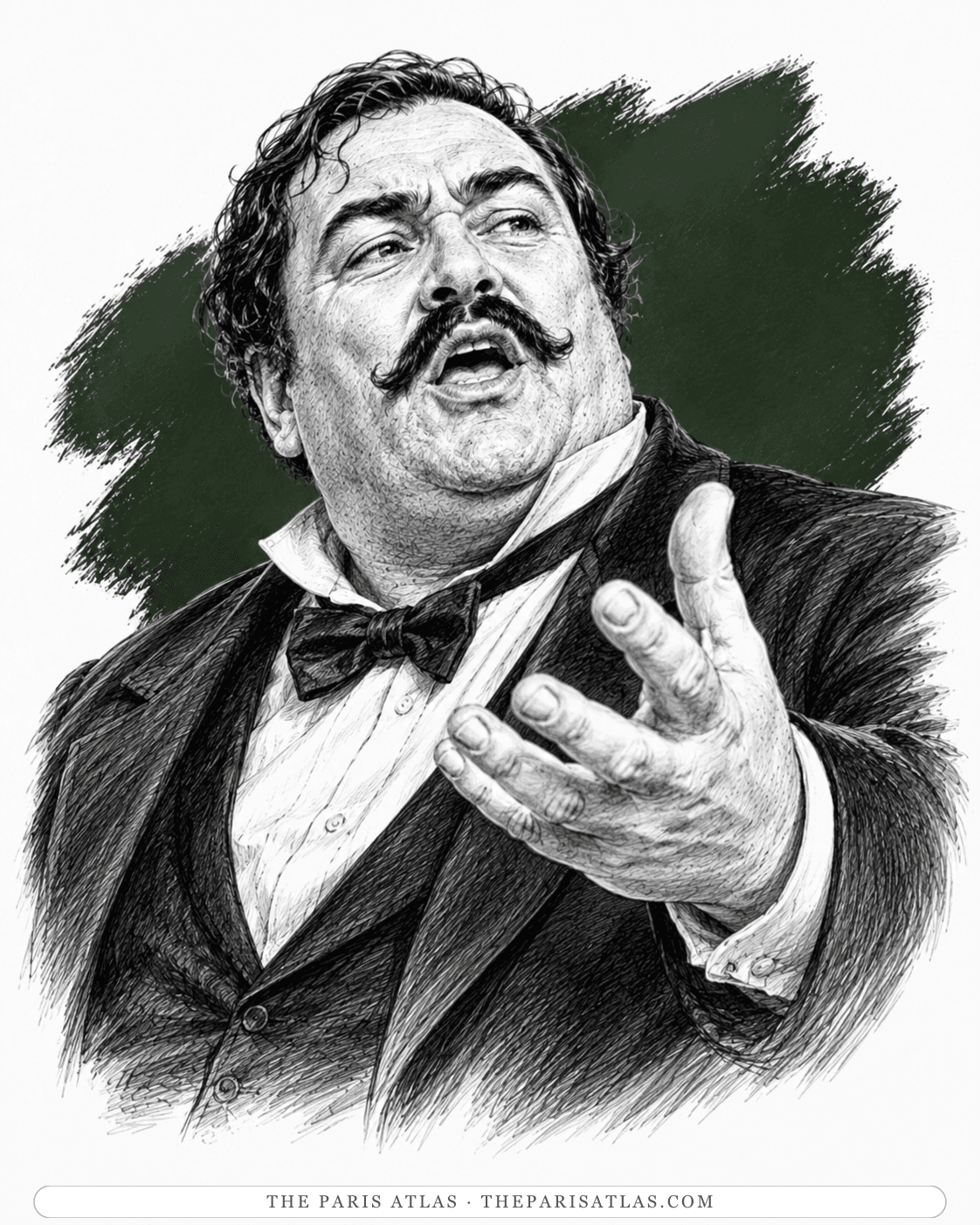
Mario
The Italian in charge of the cafeterie at the Hôtel X. Fourteen years underground, and the reason the breakfast orders go out at all.
To get through the boulot, the job, and to be given more of it rather than less. "Faut être dur," he says when anyone complains: you have to be hard.
The book

At a glance
- Mario, in charge of the cafeterie at the Hôtel X
- A huge, excitable Italian; like a city policeman with operatic gestures
- Fourteen years in the cafeterie
- A thousand francs a month, against five hundred for the others in the room
Who they are in the book
Spoiler-freeMario is one of four men working in the cafeterie of the Hôtel X, the underground still-room where George Orwell's narrator is put to work washing up and running meals. Orwell describes him as a huge, excitable Italian, like a city policeman with operatic gestures. He is in charge of the room and has been in it for fourteen years.
He is also the one who keeps it working. The narrator is inexperienced, the man the others call the Magyar is no help, and Boris shirks, partly because of his lame leg and partly because he is ashamed of doing a dishwasher's job after having been a waiter. Mario carries them through, and the hotel pays him a thousand francs a month against five hundred for everyone else in the room. When Orwell closes the book by naming the people he would like to have known properly rather than in passing, Mario is the first name on the list.
How Mario Is Portrayed
- How the book describes himA huge, excitable Italian, whom Orwell compares to a city policeman with operatic gestures. He was one of the big men in the cafeterie, and at the rush hours the four of them collided incessantly.
- At full speedOrwell watches him reach his arms right across the cafeterie to fill a coffee pot with one hand and boil an egg with the other, watching the toast and shouting directions to the Magyar at the same time, and singing snatches of Rigoletto in between.
- Fourteen yearsHe tells the narrator that it takes a year to make a reliable cafetier, and Orwell thinks he is probably right. His own fourteen years underground have left him, in Orwell's phrase, with about as much natural laziness as a piston rod.
- The pride of the drudgeOrwell files him under the kind of honour hotel work breeds. All Mario thinks about is getting the work done, and he dares anyone to give him too much of it. It is the word the dishwashers use to boast about themselves, dur, hard, as though they were soldiers rather than male charwomen.
- The cockroachesThe bread bin in the cafeterie is infested and the dark corners hold year-old filth. When the narrator suggests killing the cockroaches, Mario asks him reproachfully why he would want to kill the poor animals.
- What he passes onThe remedy for the bedbugs in the narrator's room is his: pepper, strewn thick over the bedclothes. It makes the narrator sneeze, but the bugs hate it and move to other rooms.
If you like Down and Out in Paris and London


If you like George Orwell
Explore authors with a similar voice, perspective, and influence.

Henry Miller
The Brooklyn dropout who arrived in Paris broke at thirty-eight and wrote the exuberant, banned books that ended American censorship.
View author
Louis-Ferdinand Céline
The doctor of the Paris slums who wrote the century's blackest, funniest novel — and changed the sound of French prose.
View author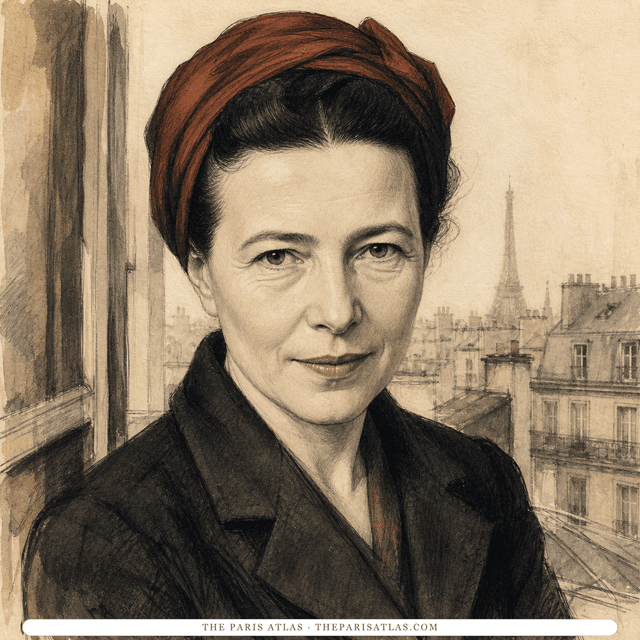
Simone de Beauvoir
French writer and philosopher whose novels, memoirs, and social analysis examined freedom, gender, responsibility, aging, and the material conditions that shape a life.
View author