The young Italian
A lodger at the narrator's hotel who called himself a compositor, cut duplicate keys during his six nights there, and robbed a dozen rooms on the last one. The theft left the narrator with forty-seven francs, and the poverty the book describes begins from there.
To get into the other rooms. In Orwell's account he pays a week ahead, keeps his head down for six nights while he cuts copies of the keys, and clears the floor on the last one.
The book

At a glance
- A lodger at the Hôtel des Trois Moineaux for six nights
- A compositor, a printer who sets type by hand
- Robbed a dozen rooms in one night with keys he had copied
- Everything but forty-seven francs — about seven shillings and tenpence
- Chapter III
Who they are in the book
Spoiler-freeGeorge Orwell's Down and Out in Paris and London, published in 1933, is his own account of the months he spent washing dishes in Paris hotel kitchens and then tramping the roads of England. The young Italian is the man who set the whole thing off. He is never given a name.
Orwell had been living in the rue du Coq d'Or quarter for about a year and a half, teaching English for thirty-six francs a week. One day in summer he counted up and found he had four hundred and fifty francs left, so he decided to look for a proper job — a guide for one of the tourist companies, he thought, or an interpreter. He also took the precaution of paying two hundred francs for a month's rent in advance, which turned out to be the one thing that saved him.
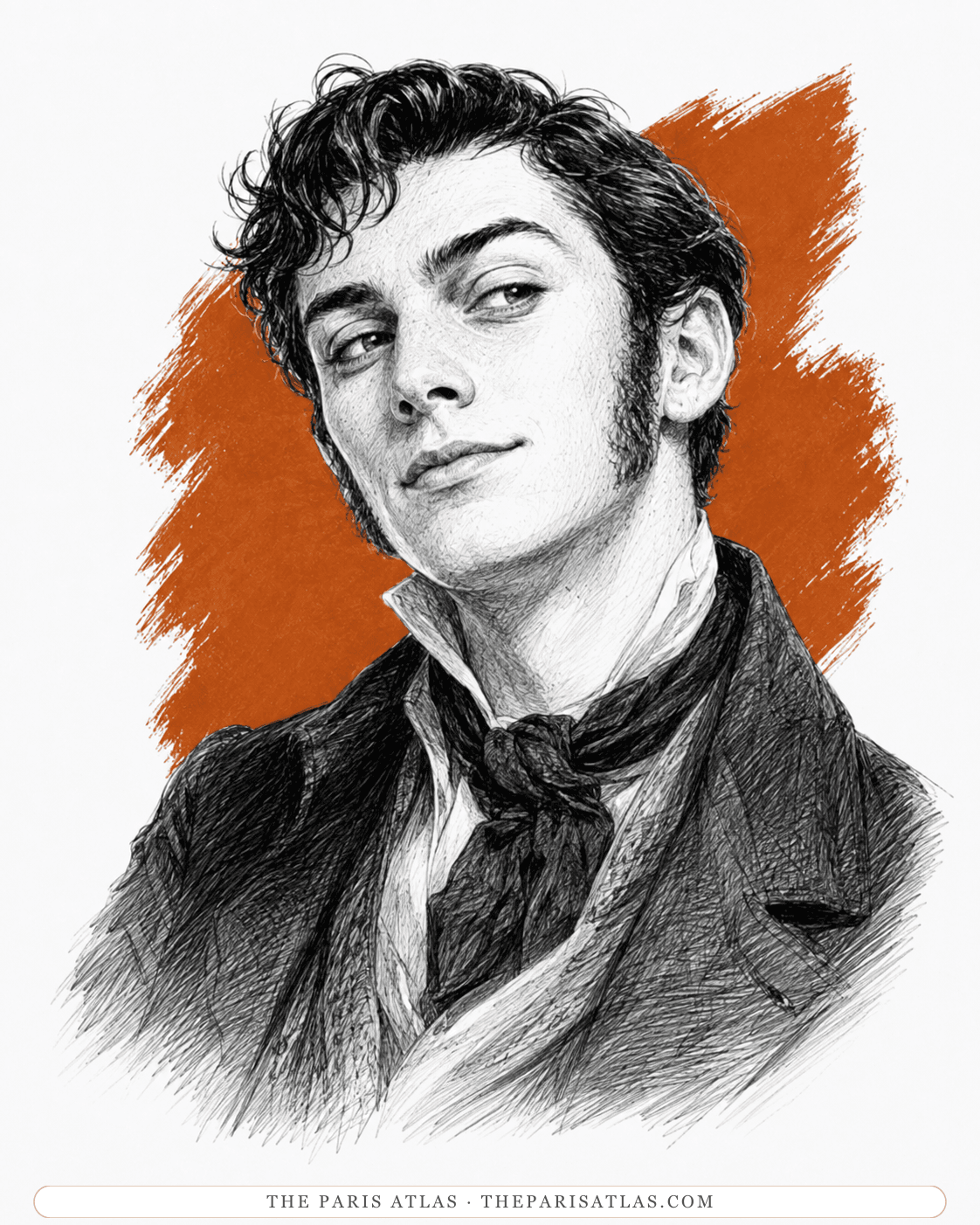
Around then a young Italian turned up at the hotel and said he was a compositor, a printer who sets type by hand. Nobody could quite place him. He wore side whiskers, which in Paris at that time marked a man out as either a street criminal or an intellectual, and the hotel could not decide which he was. Madame F., who kept the place, did not like the look of him and made him pay a week's rent in advance. He paid it, and stayed six nights.
He spent those nights making duplicate keys. On the last one he robbed a dozen rooms, Orwell's among them, and left. He missed the money Orwell had in his pockets, so Orwell was not quite cleaned out: he was left with forty-seven francs, which he converts for English readers as seven shillings and tenpence.
That ended the job hunt. From then on Orwell had to live on about six francs a day, roughly a shilling, and he marks the moment plainly — this, he writes, is where his experiences of poverty began.
How The young Italian Is Portrayed
- The side whiskersThe one physical detail Orwell gives him. Side whiskers were worn in Paris both by street toughs and by intellectuals, so they told you nothing, and the hotel never worked out which sort he was.
- What he said he did for a livingHe called himself a compositor — a printer who sets type. Orwell records the claim as a claim, and it is never confirmed.
- A week's rent in advanceMadame F., the hotel's owner, distrusted him on sight and made him pay a week ahead before she gave him a room. He handed the money over without argument, which bought him the run of the building.
- Six nights with the keysHe stayed six nights, and used them to prepare duplicate keys to the rooms. Nobody noticed while it was happening.
- The last nightHe robbed a dozen rooms and disappeared. He is never described again, never named, and never caught in the book.
- Forty-seven francsWhat Orwell had left afterwards, because the thief missed the cash in his trouser pockets. It killed the plan to find work and started the six-francs-a-day existence that the first half of the book is about.
If you like Down and Out in Paris and London


If you like George Orwell
Explore authors with a similar voice, perspective, and influence.
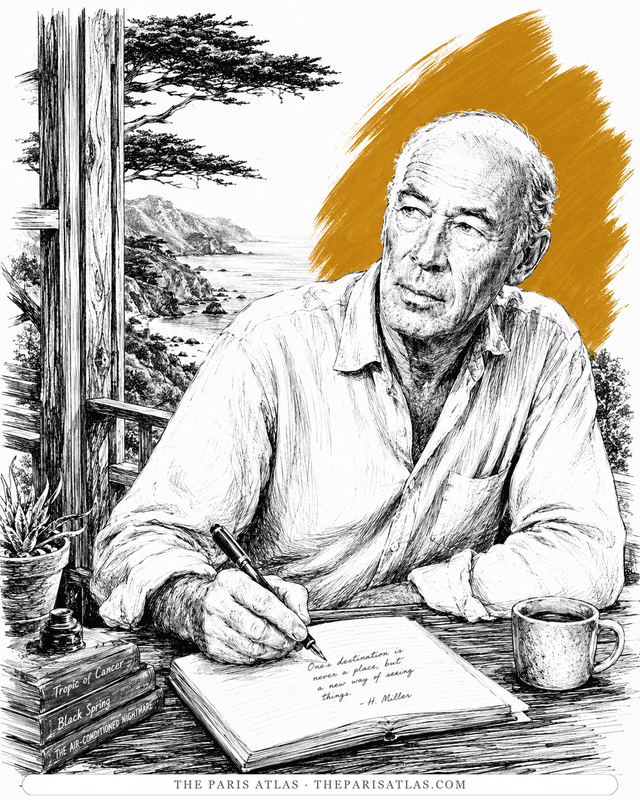
Henry Miller
The Brooklyn dropout who arrived in Paris broke at thirty-eight and wrote the exuberant, banned books that ended American censorship.
View author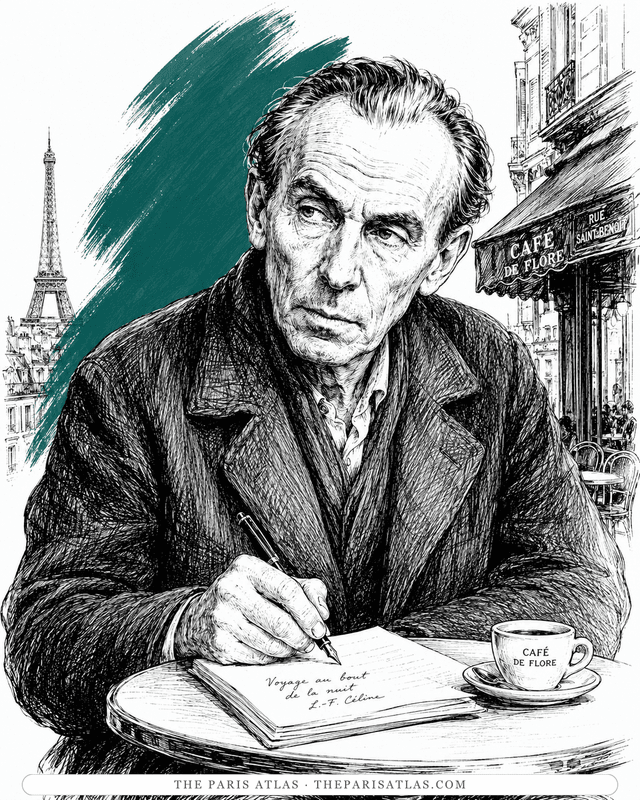
Louis-Ferdinand Céline
The doctor of the Paris slums who wrote the century's blackest, funniest novel — and changed the sound of French prose.
View author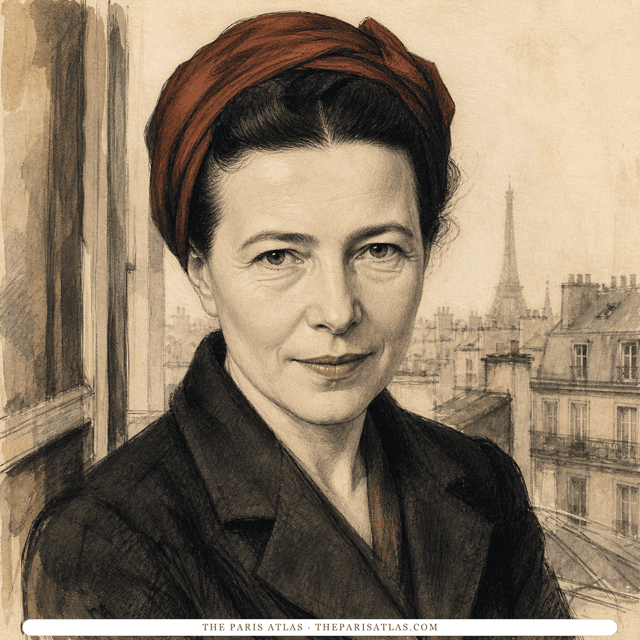
Simone de Beauvoir
French writer and philosopher whose novels, memoirs, and social analysis examined freedom, gender, responsibility, aging, and the material conditions that shape a life.
View author