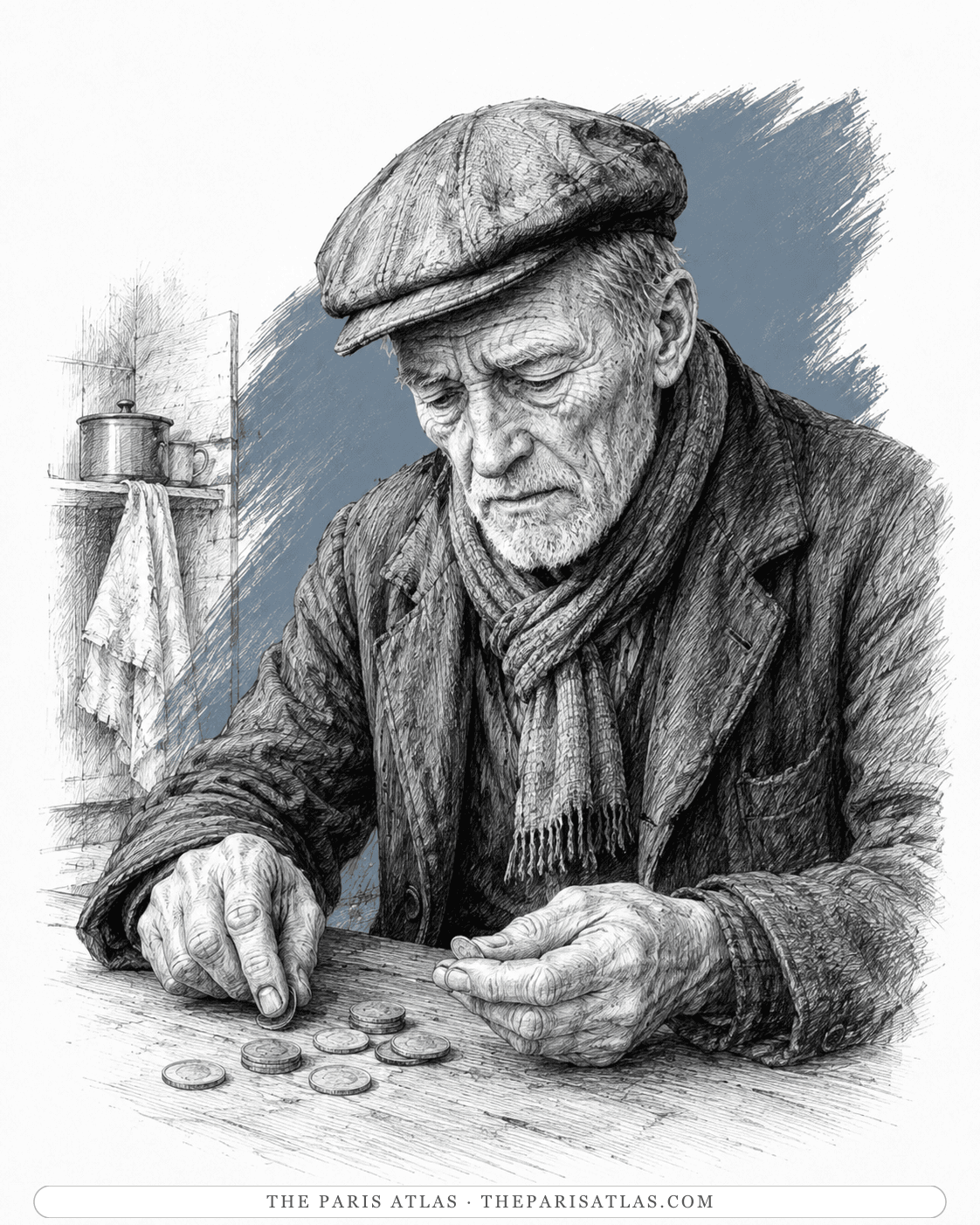
The old-age pensioner
One of two or three men in the Pennyfields lodging-house living on the ten-shilling old-age pension and nothing else. He costed it out for the narrator: ninepence a night for the bed, threepence for a shave on Saturday, three halfpence a week towards a sixpenny haircut, and about four and fourpence left for food and tobacco. He could imagine no other expenses.
In George Orwell's account, to keep his bed, his fire and his Saturday shave out of ten shillings a week. Asked how he managed, he named those three things and could think of nothing else he spent money on.
The book

At a glance
- One of two or three old-age pensioners lodging in a common lodging-house in Pennyfields, east London
- Never given
- Not stated
- Ten shillings a week, the old-age pension, and nothing else
- Ninepence a night, paid by seven in the evening
- Chapter XXV
Who they are in the book
Spoiler-freeGeorge Orwell's Down and Out in Paris and London, published in 1933, is his own account of washing dishes in Paris and then tramping in England, and this man belongs to the London half of it. With eight shillings left, Orwell moved east across London and took a bed in a common lodging-house in Pennyfields. It slept between fifty and a hundred men, fifteen or twenty to a dormitory, at ninepence or a shilling a night, cash down by seven in the evening or out you went.
Two or three of the lodgers were old men living on the state old-age pension of ten shillings a week and nothing else whatever. Orwell writes that until he met them he had not realised there were people in England who lived on the pension alone. One of them was talkative, so Orwell asked him how he managed.
The answer came back in figures. Ninepence a night for the bed made five shillings and threepence a week. Threepence for a shave on Saturday took it to five and six. A sixpenny haircut once a month worked out at another three halfpence a week. That left about four shillings and fourpence for food and tobacco. He could imagine no other expenses.
The four and fourpence bought bread and margarine and tea, and towards the end of the week dry bread and tea without milk. His clothes, Orwell supposed, came from charity. He seemed contented, and he valued his bed and the kitchen fire more than his food. What stopped Orwell was the shave. A man with ten shillings a week in the world was paying threepence of it to be shaved on a Saturday, and Orwell calls that awe-inspiring.
On Orwell's last night in the house there was a quarrel between two lodgers, and one of them was an old-age pensioner of about seventy, naked to the waist because he had been doing his washing. The book does not say whether it was the same man. He stood screaming abuse at a short, thickset dock labourer, making little rushes at him and spitting, working himself up to throw a punch and never quite managing it, until he sat down on a bench, put his face in his hands and cried. Steve, the senior lodger the others called head of the house, explained afterwards what it had been about. The old man had somehow lost his store of bread and margarine and had nothing to eat for three days but what the others gave him, and the other man, who was in work and well fed, had taunted him with it.
How The old-age pensioner Is Portrayed
- What he lived onThe state old-age pension, ten shillings a week, with no other resource of any kind. Two or three men in the house were living the same way.
- How he costed out a weekNinepence a night for the bed, five and threepence a week. Threepence for a shave on Saturday. Three halfpence a week put by towards a sixpenny haircut once a month. About four and fourpence left for food and tobacco.
- Nothing else on the listAsked how he managed, he named the bed, the shave and the haircut and stopped there. Orwell records that he could imagine no other expenses, and guessed that his clothes came from charity.
- What the four and fourpence boughtBread and margarine and tea, and towards the end of the week dry bread and tea without milk.
- The bed and the fireHe struck Orwell as contented, and as valuing his bed and the kitchen fire more than his food.
If you like Down and Out in Paris and London


If you like George Orwell
Explore authors with a similar voice, perspective, and influence.

Henry Miller
The Brooklyn dropout who arrived in Paris broke at thirty-eight and wrote the exuberant, banned books that ended American censorship.
View author
Louis-Ferdinand Céline
The doctor of the Paris slums who wrote the century's blackest, funniest novel — and changed the sound of French prose.
View author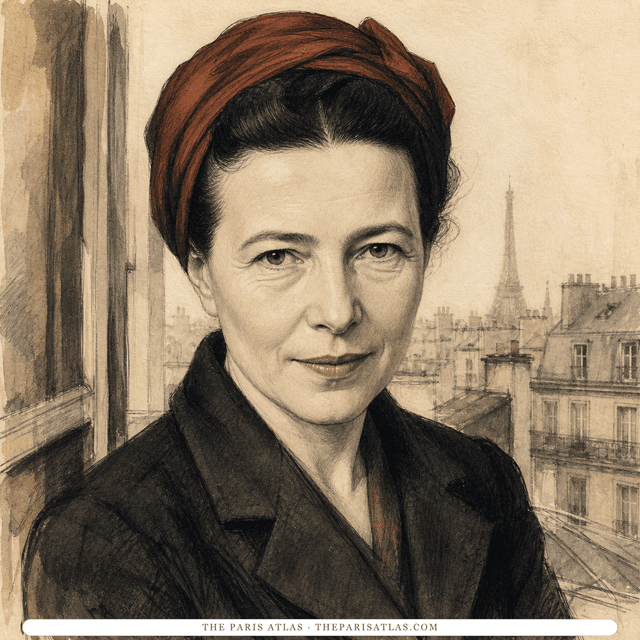
Simone de Beauvoir
French writer and philosopher whose novels, memoirs, and social analysis examined freedom, gender, responsibility, aging, and the material conditions that shape a life.
View author