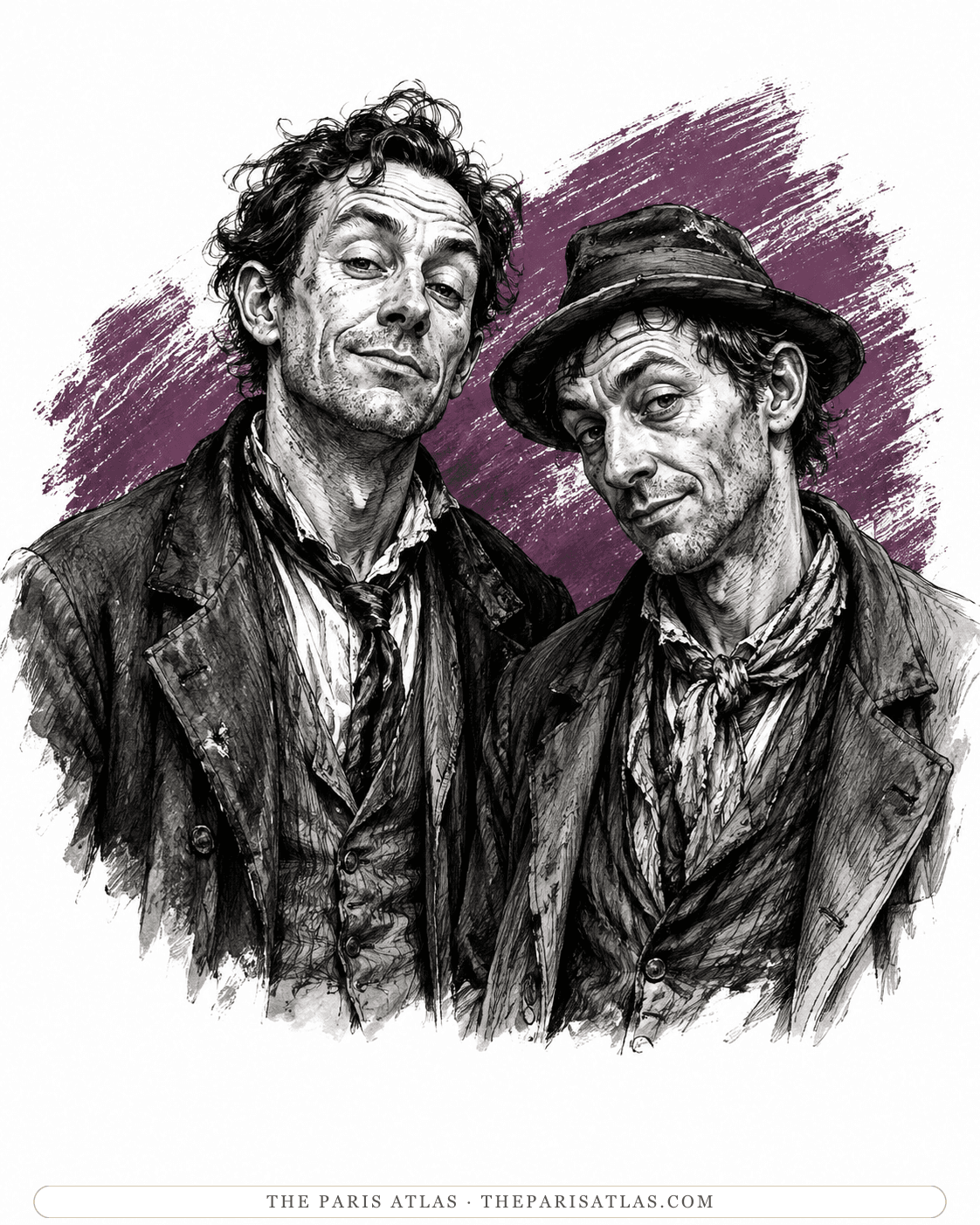
William and Fred
Two young ex-fishermen from Norfolk, met in a Kent casual ward. They sing everywhere they land, and they will ruin a pair of boots for the price of the replacements.
To be entertained, and to come out a shilling ahead. They sing wherever they land, and they will destroy their own boots for the one and ninepence the replacements will fetch.
The book

At a glance
- William and Fred, casuals in the Kent spikes
- Norfolk; ex-fishermen
- Always as a pair. The book never describes one without the other
Who they are in the book
Spoiler-freeGeorge Orwell meets these two in a casual ward in Kent, during the month his narrator spends on the road in England. A casual ward, called a spike by the men who use it, is the overnight shelter attached to a workhouse. He introduces them as two young men named William and Fred, ex-fishermen from Norfolk, a lively pair and fond of singing, and they recur across three of the spikes in the London half.
The book never separates them. They arrive together, are described together, and every sentence about either one is a sentence about both, which is why they are catalogued here as a pair. Orwell calls them thorough scallywags and the sort of men who get tramps a bad name. He also calls them cheerful souls, for tramps, and lets both judgements stand.
How William and Fred Is Portrayed
- Unhappy BellaThey have a song, and Orwell hears them sing it half a dozen times over two days, long enough to learn it by heart apart from a line or two he admits to guessing. He writes the whole thing out in the book: a moralising ballad about a girl ruined and abandoned, which he suspects was written by a woman.
- The bootsThey knew the Tramp Major at Cromley kept a stock of old clothes to issue to casuals in need. Before going in they took their boots off, ripped the seams and cut pieces from the soles, more or less ruining them. They were issued almost new pairs, and had sold them for one and ninepence before they were clear of the spike next morning. It seemed to them well worth making their own boots unwearable for the money.
- The bread on the railingsLeaving another ward with a shilling between them, they impaled their bread ration on the spike railings, as a protest, they said. It was the second casual ward in Kent they had made too hot to hold them, and they thought it a great joke.
- Still singingThe narrator comes across them again on the green at Lower Binfield, waiting with several dozen other men while a clergyman and his daughter stand and stare at them as though they were fish in an aquarium.
If you like Down and Out in Paris and London


If you like George Orwell
Explore authors with a similar voice, perspective, and influence.

Henry Miller
The Brooklyn dropout who arrived in Paris broke at thirty-eight and wrote the exuberant, banned books that ended American censorship.
View author
Louis-Ferdinand Céline
The doctor of the Paris slums who wrote the century's blackest, funniest novel — and changed the sound of French prose.
View author
Simone de Beauvoir
French writer and philosopher whose novels, memoirs, and social analysis examined freedom, gender, responsibility, aging, and the material conditions that shape a life.
View author