Yvonne
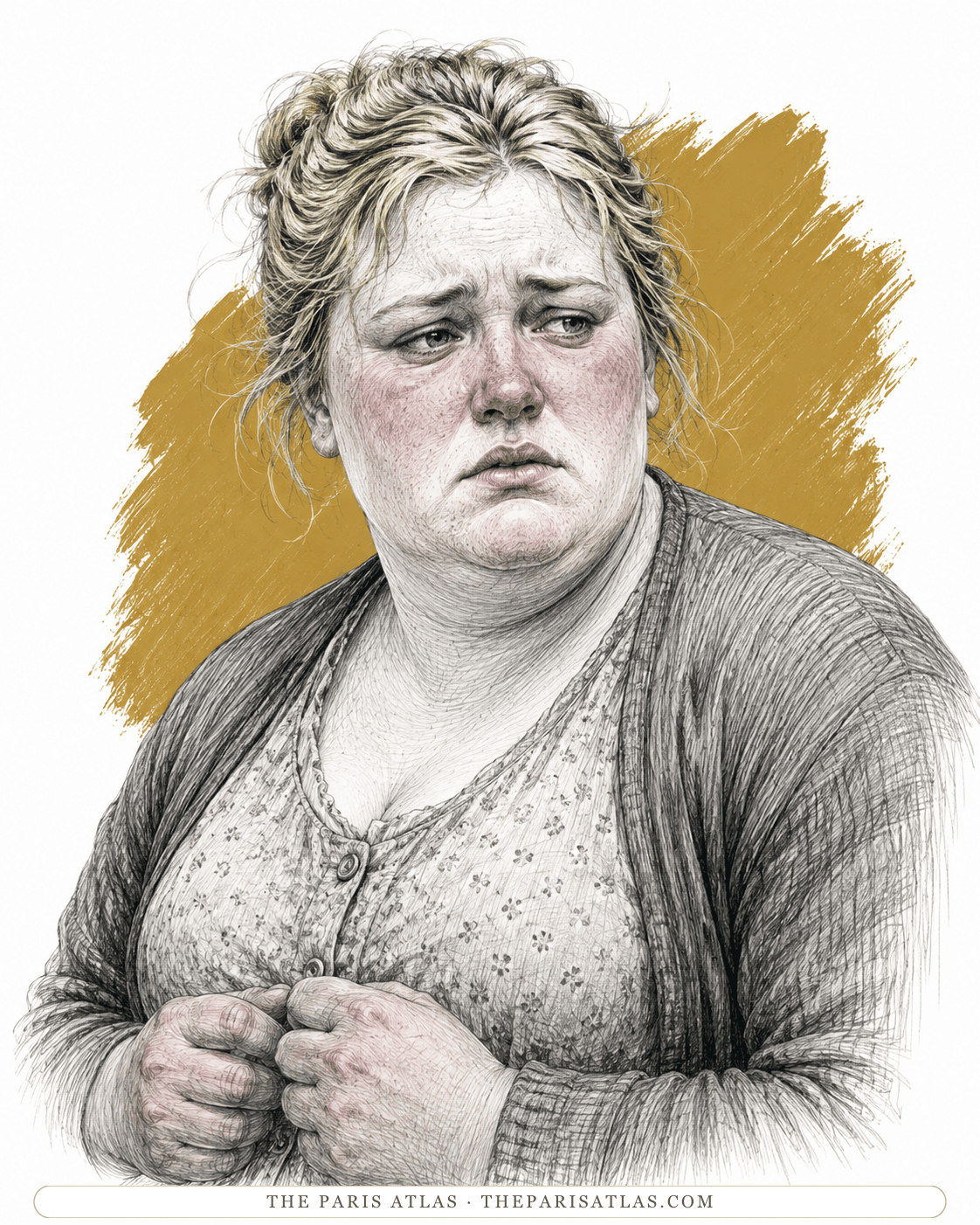
The girl Charlie was living with when his money ran out, and the one who had to carry out his scheme: padded with a borrowed cushion, she claimed the free meals given to pregnant women at a government maternity hospital. Not the Yvonne who wrote Boris a letter refusing him two hundred francs. The book gives the name to two women.
In the story Charlie tells, food. She had gone three days without any when the scheme started, and once the hospital was feeding her she ate to bursting and carried bread and cheese home in her pocket.
The book

At a glance
- Charlie's girlfriend, in the story he tells in Chapter XVIII
- Shared with the woman who answers Boris's begging letter in Chapter VI
- Charlie, drunk, at the bar of the bistro
- Chapter XVIII
Who they are in the book
Spoiler-freeYvonne exists in the book only inside a story Charlie tells. Charlie was a young man of family and education who had run away from home and lived in the quarter on remittances, and Chapter XVIII is one of his performances, delivered drunk at the bar of the bistro under the Hôtel des Trois Moineaux. He describes Yvonne as a great half-witted peasant girl with yellow hair and fat legs, and points at Azaya, who was in the room, as the comparison. George Orwell prints the whole thing in Charlie's voice.
The two of them had eaten nothing in three days. Charlie's account of that stretch is Yvonne walking up and down the room with her hands on her belly, howling like a dog that she was dying of starvation. His own contribution was a refusal to work, which he says he will not do on principle. What he thought of instead were the government maternity hospitals, which fed pregnant women free and asked no questions in order to encourage childbearing. Yvonne said she was not pregnant. Charlie said a cushion would answer, and that nobody could tell without an examination. She was appalled, and in the end she went.
The hospital received her with open arms and gave her cabbage soup, a ragout of beef, a purée of potatoes, bread and cheese and beer, and a good deal of advice about her baby. She ate there every day until Charlie's money came, and slipped bread and cheese into her pocket for him. A year later the two of them were walking down the Boulevard Port Royal near the barracks when the nurse who had been in charge came straight up to them, smiling, and asked after the child. Was it a boy, as she had been hoping? Yvonne said no. A girl, then? Yvonne, shaking so hard that Charlie had to grip her arm, said no again. Charlie said it was twins, and the nurse embraced her on both cheeks in the street.
How Yvonne Is Portrayed
- How Charlie describes herA great half-witted peasant girl with yellow hair and fat legs, like Azaya, who was sitting in the bistro while he said it.
- Three days without foodWalking up and down the room with her hands on her belly, howling that she was dying of starvation. Charlie found this terrible to listen to.
- What she said to the planThat she was not pregnant. It was the only objection she raised, and Charlie answered it with a borrowed cushion.
- At the hospitalCabbage soup, a ragout of beef, a purée of potatoes, bread and cheese and beer, and advice about the baby. She went daily until the money came, and pocketed food for the man who had sent her.
- On the Boulevard Port RoyalRecognised a year later by the nurse and asked whether the baby had been a boy or a girl. She answered no to both and could get no further. Charlie supplied twins, and told the bistro that this proved his intelligence.
If you like Down and Out in Paris and London


If you like George Orwell
Explore authors with a similar voice, perspective, and influence.

Henry Miller
The Brooklyn dropout who arrived in Paris broke at thirty-eight and wrote the exuberant, banned books that ended American censorship.
View author
Louis-Ferdinand Céline
The doctor of the Paris slums who wrote the century's blackest, funniest novel — and changed the sound of French prose.
View author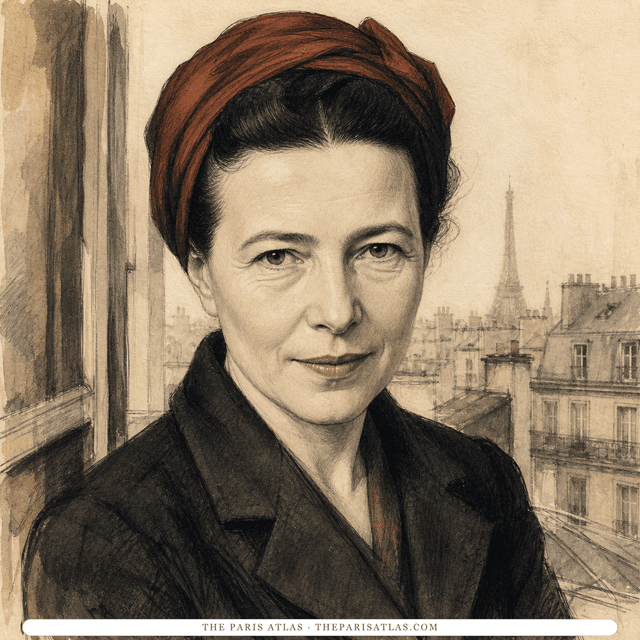
Simone de Beauvoir
French writer and philosopher whose novels, memoirs, and social analysis examined freedom, gender, responsibility, aging, and the material conditions that shape a life.
View author